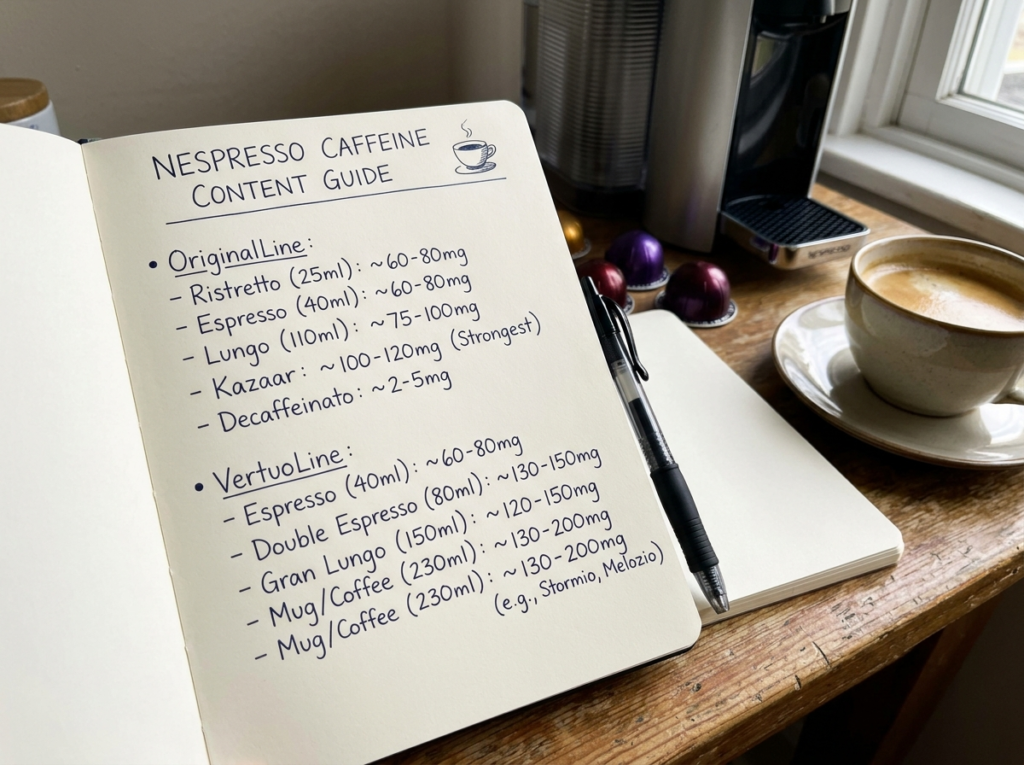
A single Nespresso pod can pack anywhere from 60 mg to over 200 mg of caffeine — and most people have no clue where their favorite capsule falls on that scale. If you’ve been picking pods based on intensity numbers alone, thinking a higher number means more caffeine, you’re not alone. But you’re also probably wrong.
Nespresso has built an entire color-coded, number-rated system that looks like it should tell you everything about caffeine. It doesn’t. That intensity scale? It measures flavor boldness, roast depth, and bitterness — not how wired you’ll be after your morning cup. So the pod you thought was “strong” might actually have less caffeine than the milder one sitting right next to it on the shelf.
This guide breaks down real Nespresso caffeine content across both the Original and Vertuo lines, explains what those intensity numbers actually mean, and helps you pick the right pod for your caffeine needs — whether you want a serious kick or something gentler for the afternoon.
How Much Caffeine Is Actually in a Nespresso Pod?
The caffeine in your Nespresso capsule depends on two big factors: which machine line you’re using (Original vs. Vertuo) and which specific pod you’ve chosen. The difference between these two systems is significant, and it trips up a lot of people.
Original Line capsules brew a smaller shot — typically around 40 ml (1.35 oz), similar to a traditional espresso. Most Original pods contain roughly 60 to 80 mg of caffeine per capsule. That’s comparable to what you’d get from a single espresso shot at a café.
Vertuo Line capsules are a different story. These pods come in multiple sizes — from espresso (40 ml) all the way up to carafe-sized (535 ml). Because the larger pods contain significantly more ground coffee, their caffeine content ranges from around 60 mg for a small espresso pod up to 200+ mg for a full mug-sized capsule.
Here’s a quick reference for the Vertuo line by cup size:
- Espresso (40 ml): ~60–90 mg
- Double Espresso (80 ml): ~120–150 mg
- Gran Lungo (150 ml): ~120–140 mg
- Mug/Coffee (230 ml): ~170–200 mg
- Alto/Carafe (414–535 ml): ~170–220 mg
The takeaway? If you want more caffeine, bigger Vertuo pods almost always win — simply because there’s more coffee in them. It’s not magic. It’s math.
If you’re curious how Nespresso caffeine stacks up against other popular drinks, you might find it useful to check out how much caffeine is in a tablespoon of regular ground coffee for a proper comparison.
Nespresso Intensity vs. Caffeine — Why They’re Not the Same Thing
This is the single biggest source of confusion among Nespresso drinkers, and it deserves its own section.
Every Nespresso capsule has an intensity rating — a number typically ranging from 1 to 13 (sometimes higher for limited editions). When you see a pod rated intensity 11 or 12, your brain naturally assumes it’s loaded with caffeine. That assumption feels logical, but it’s incorrect.
Intensity measures the sensory profile of the coffee. It’s a combination of roast level, body, bitterness, and how bold the flavor hits your palate. A dark-roasted coffee with heavy body and a bitter, smoky taste will score high on intensity. A lighter, fruit-forward coffee with delicate acidity will score low.
Here’s the part that surprises most people: lighter roasts often retain slightly more caffeine than darker roasts. The roasting process breaks down caffeine molecules to some degree. So a pod rated intensity 4 could theoretically have as much caffeine (or even marginally more) than a pod rated intensity 11, assuming the same amount of ground coffee.
The real driver of caffeine content isn’t intensity — it’s the weight of coffee grounds inside the capsule and the type of coffee bean used. Robusta beans contain roughly twice the caffeine of Arabica beans. Some Nespresso pods blend both varieties, and those blends tend to have a caffeine bump compared to pure Arabica capsules.
Pro Tip: If you see a Nespresso pod described as containing Robusta in its blend (common in higher-intensity espresso pods), that pod will likely deliver more caffeine per gram than an all-Arabica capsule — regardless of the intensity number.
Nespresso Original Line: Pod-by-Pod Caffeine Breakdown
The Original Line has been around since Nespresso’s early days, and it uses a standard capsule size with about 5 to 6 grams of ground coffee per pod. Most Original pods deliver between 60 and 80 mg of caffeine, though a few outliers exist.
Espresso Pods (40 ml)
The core of the Original Line. These are your classic espresso-sized shots.
Ristretto (Intensity 10) delivers around 63 mg of caffeine. Despite its high intensity rating, it’s actually on the lower end caffeine-wise. The short extraction and dark roast give it a bold, concentrated flavor without extra caffeine.
Arpeggio (Intensity 9) comes in at roughly 63 mg as well. It’s a pure Arabica blend with intense cocoa notes, but again — intensity 9 doesn’t translate to massive caffeine.
Roma (Intensity 8) provides about 63 mg. Woody, cereal-like flavor. Nothing exceptional on the caffeine front.
Volluto (Intensity 4) — and here’s where it gets interesting — packs around 56–63 mg. That’s barely less than the intensity 10 Ristretto. A pod rated nearly half the intensity, with almost the same caffeine.
Cosi (Intensity 4) sits in the same neighborhood, around 56 mg. Light, citrusy, and delicate, but the caffeine difference from a “strong” pod is maybe 7–10 mg. You’d never feel that gap.
Lungo Pods (110 ml)
Lungo capsules are designed for a longer extraction, producing a larger cup. They generally contain slightly more ground coffee, which bumps the caffeine up a touch.
Fortissio Lungo (Intensity 8) delivers approximately 77 mg of caffeine. That extra water flowing through the pod extracts more caffeine than the shorter espresso pull.
Vivalto Lungo (Intensity 4) provides around 77 mg too. See the pattern? Same caffeine, wildly different intensity ratings.
Envivo Lungo (Intensity 9) is one of the higher-caffeine options in the Original Line at roughly 80 mg. It uses a blend that includes some Robusta, which explains the bump.
Nespresso Kazaar — The Strongest Original Pod
Kazaar (Intensity 12) is often cited as the strongest Nespresso pod in the Original Line. It contains a significant proportion of Robusta beans, pushing its caffeine content to approximately 113–120 mg per capsule. That’s almost double what most Original pods deliver.
If you’re specifically hunting for the strongest Nespresso pod in this line, Kazaar is your answer. The flavor is intensely bold — dense, peppery, almost syrupy. It’s not for everyone, but caffeine-seekers love it.
For context, that 120 mg is roughly what you’d find in a Starbucks drink ranking somewhere in the moderate range — far less than their largest brewed coffees but solid for a single small pod.
Nespresso Vertuo Line: Where the Real Caffeine Lives
The Vertuo system changed the game for Nespresso caffeine content. Because Vertuo capsules come in different physical sizes, they hold varying amounts of coffee — and that directly impacts how much caffeine ends up in your cup.
If you’re deciding between the two systems, our comparison of Nespresso Vertuo vs. Original covers the hardware and brewing differences in detail. But right now, let’s focus purely on what matters here: caffeine numbers.
Vertuo Espresso Pods (40 ml)
These are the smallest Vertuo capsules, and their caffeine content closely mirrors the Original Line.
Altissio (Intensity 9) — one of the most searched Vertuo pods for caffeine — contains approximately 60–65 mg of caffeine. The Nespresso Altissio caffeine level surprises people because they expect more from that intensity 9 rating. But it’s an espresso-sized pod. There’s only so much coffee in there.
Diavolitto (Intensity 11) has roughly the same amount — around 60–65 mg. Highest intensity in the Vertuo espresso range, almost identical caffeine to milder options.
Double Espresso Pods (80 ml)
Here’s where things start to get meaningful for caffeine chasers.
Chiaro (Intensity 6) packs around 120 mg. Scuro (Intensity 8) delivers roughly the same — about 120 mg. Double the coffee grounds compared to a single espresso, so double the caffeine. Simple.
Bianco Leggero (Intensity 6) also falls in the 120 mg range and is specifically designed for milk-based drinks. The caffeine holds up even when you’re adding frothed milk.
Gran Lungo Pods (150 ml)
The Gran Lungo is Nespresso’s answer to the “I want more than an espresso but not a full mug” request.
Fortado (Intensity 8) delivers around 120–130 mg of caffeine. Arondio (Intensity 6) sits in the same zone — approximately 120 mg.
These pods use a moderate amount of ground coffee and brew at a mid-range volume. They’re a sweet spot for people who want decent caffeine without committing to a huge cup.
Mug/Coffee Pods (230 ml)
Now we’re talking serious caffeine.
Melozio (Intensity 6) — one of the most popular Vertuo pods sold — delivers approximately 170 mg of caffeine. That’s more than two standard Original Line espresso pods combined.
Stormio (Intensity 8) hits around 170–195 mg. Bold, rich flavor with enough caffeine to genuinely wake you up.
Odacio (Intensity 7) lands at roughly 170 mg as well.
And then there’s Intenso (Intensity 9), which pushes toward 185–200 mg. This is where Vertuo pods start competing with a standard cup of drip coffee from Dunkin’ or Starbucks.
Alto and Carafe Pods (414–535 ml)
The big boys. Nespresso’s Alto pods (also sometimes called XL or Carafe depending on the line) contain the most coffee grounds and therefore the most caffeine.
Alto Intenso can deliver upwards of 200–220 mg of caffeine. That’s roughly equivalent to what you’d get in a large coffee from McDonald’s, and it puts Nespresso firmly in “real coffee” territory for people who felt pod machines couldn’t deliver enough kick.
What Makes One Nespresso Pod Stronger Than Another?
Three factors determine the caffeine in any given Nespresso capsule, and understanding them lets you make smarter choices without memorizing a spreadsheet of numbers.
Bean Type: Arabica vs. Robusta
This is the biggest variable. Robusta beans contain roughly 2.2% caffeine by weight, while Arabica sits around 1.2%. That’s nearly double. Nespresso uses both, and many of their higher-caffeine pods include Robusta in the blend.
Check the pod description on Nespresso’s website or on the sleeve. If it mentions Robusta (or origins known for Robusta like Uganda, Vietnam, or parts of India), expect a caffeine boost compared to all-Arabica pods from places like Colombia, Ethiopia, or Brazil.
Amount of Coffee in the Pod
This one’s straightforward. A Vertuo Mug capsule holds about 10–12 grams of coffee, while an espresso capsule holds roughly 5–6 grams. More coffee grounds = more caffeine. The extraction method (centrifusion for Vertuo, pressure for Original) also plays a role, but the ground coffee weight is the dominant factor.
Roast Level and Extraction
Darker roasts lose a tiny bit of caffeine during the roasting process. The difference per cup is small — maybe 5–10% — but it exists. Longer extraction times (like Lungo pulls) also draw out more caffeine from the same amount of grounds compared to a short ristretto pull.
So if you want to maximize caffeine from the Original Line, go for a Lungo pod with a Robusta blend. In the Vertuo Line, grab a Mug or Alto pod. The intensity number on the box? Treat it as a flavor guide, not a caffeine indicator.
How Nespresso Caffeine Compares to Other Coffee Sources
People often wonder whether Nespresso pods deliver “enough” caffeine compared to regular brewed coffee or café espresso. Here’s an honest comparison.
A typical café espresso shot contains about 63 mg of caffeine — almost exactly what a single Nespresso Original espresso pod delivers. So for single-shot espresso, Nespresso is right on par.
A standard 8 oz cup of drip-brewed coffee from a regular coffee maker contains roughly 95–100 mg of caffeine. The Nespresso Vertuo Gran Lungo and Mug pods match or exceed this. A Vertuo Melozio at 170 mg actually beats most home-brewed drip coffee.
Compared to energy drinks, a Vertuo Alto pod at 200+ mg delivers caffeine similar to a Monster Energy can, which typically contains 160 mg per 16 oz can. And you’re getting it from actual coffee rather than a synthetic caffeine blend.
Against specialty Starbucks drinks, Nespresso holds its own surprisingly well. Many popular Starbucks Refreshers contain far less caffeine than a Nespresso Mug pod, and even some of their espresso-based drinks fall short when using only one or two shots.
Quick Fact: If you drink two Nespresso Original espresso pods back to back (roughly 126–140 mg total caffeine), you’re getting about the same caffeine as one medium brewed coffee from most coffee shops. Good to know if you’re doubling up for lattes at home.
Picking the Right Nespresso Pod for Your Caffeine Needs
Your ideal pod depends entirely on what you’re trying to get out of your coffee. Here’s a practical breakdown based on real scenarios.
You Want Maximum Caffeine
Go for the Vertuo Mug or Alto pods. Specifically, look at Stormio, Intenso, or Alto Intenso. These will give you 170–220 mg per serving — enough to match or beat a coffee-shop brewed cup. If you’re locked into the Original Line, Kazaar is your best bet at around 113–120 mg.
You Want Moderate Caffeine with Great Flavor
The Vertuo Double Espresso or Gran Lungo pods hit a nice middle ground — roughly 120–140 mg with enough volume to feel like a proper drink. In the Original Line, the Lungo pods (Fortissio Lungo, Envivo Lungo) deliver around 77–80 mg with a longer, smoother cup.
You Want Lower Caffeine (Afternoon or Evening Cups)
Stick with single espresso-sized pods from either line — around 55–65 mg. That’s less caffeine than most Pepsi cans and cola drinks would give you across two servings, so it’s manageable for caffeine-sensitive folks earlier in the evening. Nespresso also offers a few decaf options (like Decaffeinato Intenso and Decaffeinato Lungo) that contain under 3 mg of caffeine per pod — practically zero.
You Drink Nespresso with Milk
If you’re making lattes, cappuccinos, or flat whites, the caffeine content doesn’t change — you’re just diluting the flavor with milk, not reducing the caffeine. A Vertuo Double Espresso pod with steamed milk still gives you 120 mg. Pick your pod based on caffeine needs, then add milk to taste.
If you enjoy comparing espresso-based drinks, our guide on cappuccino vs. coffee caffeine breaks down how different preparations affect what ends up in your cup.
The Decaf Question: How Much Caffeine Is Really in Decaf Nespresso Pods?
“Decaf” doesn’t actually mean “zero caffeine.” This catches people off guard, especially those avoiding caffeine for health reasons.
Nespresso’s decaffeinated pods go through a process that removes the vast majority of caffeine, but a tiny amount remains. Most Nespresso decaf capsules contain roughly 1–3 mg of caffeine per pod. For comparison, a regular Original espresso pod has 60+ mg, so decaf removes about 97–99% of the caffeine.
For most people, 1–3 mg is completely negligible. You’d need to drink 20+ decaf pods to match one regular espresso. But if you have a medical condition that requires strict caffeine avoidance, it’s worth knowing that “decaf” isn’t perfectly caffeine-free.
Nespresso offers decaf options in both lines:
- Original Line: Arpeggio Decaffeinato, Ristretto Decaffeinato, Volluto Decaffeinato, and a few others
- Vertuo Line: Decaffeinato (espresso size), Altissio Decaffeinato, Melozio Decaffeinato, and Half Caffeinato (a half-caff option with roughly 50% the caffeine of regular)
The Half Caffeinato pods are worth a mention for anyone trying to gradually reduce their caffeine intake. They give you about 80–90 mg in the Mug size — enough to avoid withdrawal headaches but significantly less than a full-caffeine pod.
Does Brewing Method Affect Nespresso Caffeine?
Short answer: slightly, but not enough to worry about.
Some people override the default brew size on their Nespresso machine — running more water through an espresso pod to make a longer drink, or stopping a Lungo early for a shorter, more concentrated shot. Does this change caffeine content?
Running more water through a pod extracts marginally more caffeine, but the returns diminish quickly. Most of the caffeine dissolves in the first few seconds of extraction. Adding extra water gets you a weaker-tasting, slightly more caffeinated drink — but the difference is maybe 5–10 mg. Not significant.
Stopping extraction early means you leave some caffeine behind in the used pod. Again, the difference is small because caffeine extracts quickly. You’ll lose more flavor than caffeine.
The biggest variable remains the pod itself — its coffee weight and bean type. Your brewing tweaks are fine-tuning at best. If you want more caffeine, grab a bigger pod. That’s the most reliable approach.
If you’re running into issues getting consistent brews from your machine, that could affect extraction too. Machine maintenance matters — our Keurig troubleshooting guide covers common pod-machine problems, and many of the same principles (descaling, water quality) apply to Nespresso machines.
Caffeine Safety: How Many Nespresso Pods Can You Drink Per Day?
The FDA and most health organizations consider up to 400 mg of caffeine per day safe for healthy adults. That’s a widely cited guideline, and it gives you a useful framework for your Nespresso habit.
Translated to pods, that means:
- Original Line espresso pods (~63 mg): About 6 pods per day stays within the limit
- Vertuo Mug pods (~170 mg): About 2 pods per day, with a little room for a third
- Vertuo Alto pods (~200 mg): 2 pods per day max
- Kazaar (~120 mg): About 3 pods per day
These are general guidelines for average healthy adults. Pregnant individuals, people with heart conditions, anxiety disorders, or caffeine sensitivity should consult their doctor for personalized limits. The American College of Obstetricians and Gynecologists recommends pregnant people stay under 200 mg daily.
Warning: Caffeine sensitivity varies wildly between individuals. Some people metabolize caffeine quickly (fast metabolizers) and barely feel 200 mg, while others are jittery and sleepless after 100 mg. Pay attention to how your body responds rather than blindly following a number.
If you’re also drinking other caffeinated beverages throughout the day — a Coke Zero with lunch, an energy drink in the afternoon — those all count toward your daily total. Stack your caffeine sources carefully.
Frequently Asked Questions
How much caffeine is in a Nespresso Altissio pod?
The Nespresso Altissio capsule (Vertuo Line, espresso size) contains approximately 60–65 mg of caffeine. Despite its intensity rating of 9, which suggests bold flavor, the caffeine content is moderate because it’s a small espresso-sized pod with limited ground coffee inside.
Which is the strongest Nespresso pod for caffeine?
In the Original Line, the Kazaar pod is the strongest at roughly 113–120 mg of caffeine, thanks to its high Robusta content. In the Vertuo Line, the Alto Intenso and large Mug pods like Stormio and Intenso deliver the most caffeine — between 170 and 220 mg per capsule — because they contain significantly more ground coffee.
Does a higher Nespresso intensity number mean more caffeine?
No. Nespresso’s intensity scale measures flavor boldness, roast character, and bitterness — not caffeine content. A pod rated intensity 4 and a pod rated intensity 11 can contain nearly identical amounts of caffeine if they use similar bean types and the same amount of ground coffee. Always check the specific caffeine content rather than relying on the intensity number.
How does Nespresso caffeine compare to regular drip coffee?
A single Nespresso Original espresso pod (~63 mg) contains less caffeine than a standard 8 oz cup of drip coffee (~95–100 mg). But Nespresso Vertuo Mug pods (~170 mg) contain significantly more caffeine than a typical drip coffee cup, putting them closer to what you’d get from a 12–16 oz serving at a coffee shop.
Can I drink Nespresso decaf pods at night without affecting sleep?
Most Nespresso decaf pods contain only 1–3 mg of caffeine — a negligible amount that shouldn’t affect sleep for the vast majority of people. For reference, even a small piece of dark chocolate contains more caffeine than a decaf Nespresso pod. If you’re extremely caffeine-sensitive, you might want to switch to decaf by early evening to be safe.
Your Next Step
Now you’ve got the real numbers, and you know that the intensity dial on those Nespresso sleeves isn’t telling you what you probably thought it was. The best move from here? Check the pods currently sitting in your kitchen. Look up their specific caffeine content against the ranges we’ve covered, and see if your daily intake matches what you actually want.
If you’ve been drinking three Vertuo Mug pods a day thinking they were “just espresso-level,” you might be consuming over 500 mg of caffeine — well past the recommended daily limit. Or maybe you’ve been sticking with single espresso pods and wondering why you still feel groggy by 10 a.m. — at 63 mg per pod, that’s barely more caffeine than a cup of green tea.
Match your pods to your goals. Want energy? Go bigger. Want flavor without the buzz? Go espresso-sized or decaf. And stop letting that intensity number make the decision for you — your taste buds and your body will both thank you for it.