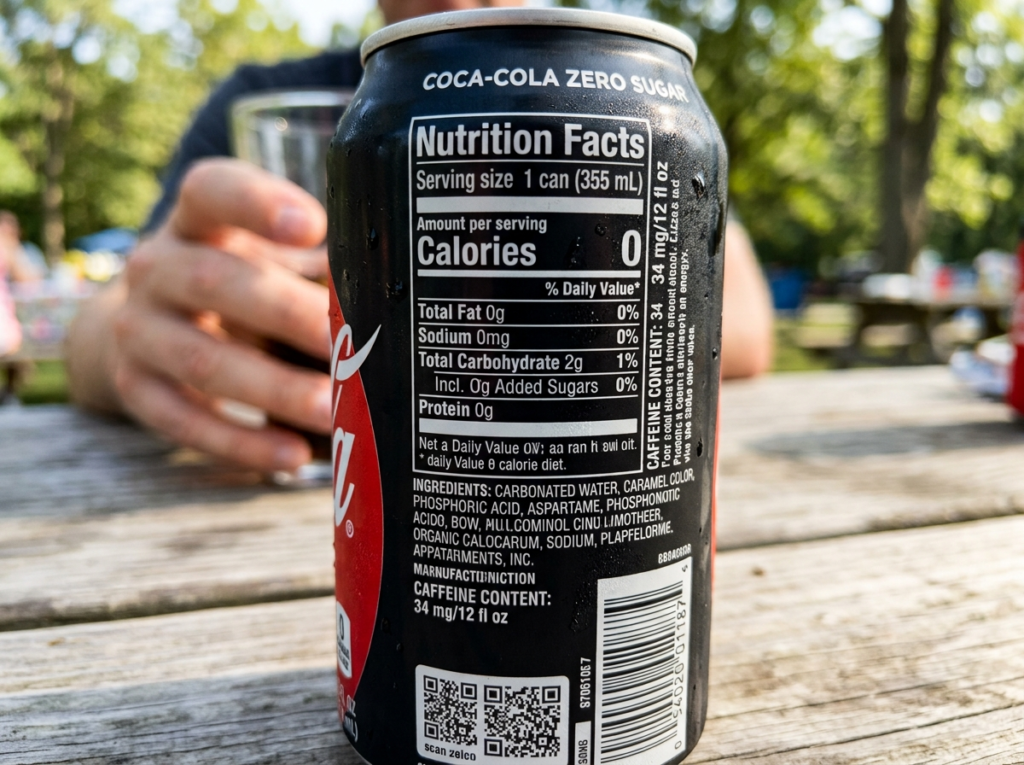
You just grabbed a can of Coke Zero from the fridge, cracked it open, and halfway through your first sip, a thought hits — does Coke Zero have caffeine? Maybe you’re trying to cut back on caffeine. Maybe it’s 9 PM and you don’t want to stare at the ceiling until 3 AM. Or maybe you’re just curious because the word “zero” makes it sound like there’s nothing in there at all.
Whatever brought you here, let’s get straight to the point and then break it all down — the exact caffeine content in milligrams, how Coke Zero stacks up against other drinks, what’s actually inside that black can, and whether it’s a smart pick for your caffeine habits.
Yes, Coke Zero Does Have Caffeine
Let’s not keep you guessing. Coke Zero Sugar contains caffeine. The “zero” in its name refers to zero sugar and zero calories — not zero caffeine.
A standard 12 fl oz (355 ml) can of Coke Zero Sugar has about 34 mg of caffeine. That’s almost identical to a regular Coca-Cola Classic, which has around 34 mg per 12 oz as well.
So if you switched from regular Coke to Coke Zero thinking you’d dodge the caffeine buzz, that didn’t happen. You dodged the sugar and the calories — which is great — but the caffeine stayed.
Quick fact: Coca-Cola does make a caffeine-free version of Coke Zero Sugar. It comes in an orange and black can, and it’s available in many grocery stores. If caffeine is truly what you’re trying to avoid, that’s your pick.
Coke Zero Caffeine mg — By Serving Size
Not everyone drinks a neat 12 oz can. Some people pour a glass from a 2-liter bottle. Others grab a 20 oz bottle from the gas station. The caffeine amount changes with the serving size, and it’s worth knowing the numbers so you can track your daily intake properly.
Here’s the Coca-Cola Zero Sugar caffeine content broken down by common serving sizes:
- 7.5 fl oz (mini can): ~21 mg of caffeine
- 12 fl oz (standard can): ~34 mg of caffeine
- 16 fl oz (tallboy can): ~45 mg of caffeine
- 20 fl oz (bottle): ~57 mg of caffeine
- 1 liter bottle: ~96 mg of caffeine
- 2 liter bottle: ~192 mg of caffeine (total, not per serving)
The concentration stays consistent at roughly 2.83 mg of caffeine per fluid ounce. So whether you’re sipping from a mini can or pouring from a big bottle, the math is simple — just multiply the ounces by about 2.83.
Now, 34 mg in a 12 oz can might sound like a small number. And compared to coffee, it really is. But if you’re drinking three or four cans throughout the day, you’re getting over 100 mg of caffeine from soda alone — and that adds up, especially if you’re also having coffee or tea.
What’s Actually Inside Coke Zero? A Look at the Ingredients
Since we’re already talking about caffeine, let’s pull back the curtain on the full Coke Zero ingredients list. A lot of people pick Coke Zero because they’re watching their sugar intake, but not everyone reads the label closely.
The ingredients in Coca-Cola Zero Sugar (U.S. formulation as of 2024–2025) are:
Carbonated water, caramel color, phosphoric acid, aspartame, potassium benzoate (to protect taste), natural flavors, potassium citrate, acesulfame potassium, and caffeine.
A few things worth noting here. Coke Zero uses two artificial sweeteners — aspartame and acesulfame potassium (sometimes listed as Ace-K). These are what give it that sweet taste without adding calories or sugar. Both are approved by the FDA and have been reviewed extensively by health organizations around the world. The flavor profile was reformulated by Coca-Cola in 2021 to more closely mimic the taste of original Coke, so if you tried Coke Zero years ago and didn’t love it, the current version tastes a bit different.
There’s no sugar, no fat, no protein, and essentially no nutritional value in terms of vitamins or minerals. It’s a zero-calorie drink. That’s the trade-off — you get the cola taste and the caffeine, without the 39 grams of sugar you’d find in a regular Coke.
If you’re curious about how caffeine shows up in other drinks you might not expect, you might find it interesting to check out whether Fanta has caffeine or the caffeine content in Pepsi — the answers might surprise you.
Coke Zero vs Diet Coke Caffeine — Which Has More?
This is probably the most common comparison people make, and it’s a fair one. Both are zero-calorie, zero-sugar Coca-Cola products. Both taste like cola. Both contain caffeine. But they’re not the same drink, and their caffeine levels are slightly different.
Diet Coke has about 46 mg of caffeine per 12 fl oz can. That’s roughly 35% more caffeine than Coke Zero Sugar, which sits at 34 mg per 12 oz.
Why the difference? It comes down to the recipe. Diet Coke wasn’t designed to taste like Coca-Cola Classic — it actually has its own distinct flavor formula that’s been around since 1982. Coke Zero Sugar, on the other hand, was created specifically to replicate the taste of regular Coke, just without the sugar. Different formulas, different caffeine amounts.
Here’s what that looks like in practice. If you drink two cans of Diet Coke in a day, you’re getting about 92 mg of caffeine. Two cans of Coke Zero? That’s 68 mg. Over a week, that gap becomes pretty noticeable, especially for people who are caffeine-sensitive.
So if you’re choosing between the two and caffeine is a concern, Coke Zero is the lighter option in terms of caffeine. But if you prefer the taste of Diet Coke and don’t mind a bit more caffeine, the difference isn’t dramatic. Neither one is going to give you the jolt of a Monster Energy drink, which packs about 160 mg per 16 oz can.
The sweetener blend is also different between the two. Diet Coke uses aspartame as its primary sweetener, while Coke Zero uses a combination of aspartame and acesulfame potassium. Some people taste a noticeable difference. Others can’t tell them apart in a blind test.
How Does Coke Zero’s Caffeine Compare to Coffee and Other Drinks?
Knowing the exact caffeine mg in Coke Zero is helpful, but numbers mean more when you see them next to other drinks you probably consume regularly.
An 8 oz cup of brewed coffee typically contains between 80–100 mg of caffeine. A single shot of espresso has about 63 mg. A Starbucks Vanilla Frappuccino grande (16 oz) has roughly 95 mg.
Compare that to Coke Zero’s 34 mg per 12 oz, and it’s clear — soda is a relatively mild caffeine source. You’d need to drink almost three cans of Coke Zero to match a single cup of drip coffee.
On the other end of the spectrum, some sodas have no caffeine at all. Sprite and root beer are two popular examples of caffeine-free sodas. And then there are energy drinks like Red Bull (80 mg per 8.4 oz) and Monster (160 mg per 16 oz), which blow soda out of the water when it comes to caffeine punch. If you’ve ever wondered how long a Red Bull’s effects last, the answer is closely tied to how much caffeine your body is processing — and it’s a lot more than what Coke Zero delivers.
The takeaway? Coke Zero gives you a gentle caffeine nudge. It’s not going to wire you the way a triple espresso does, but it’s not caffeine-free either. If you’re stacking it on top of coffee and energy drinks throughout the day, those milligrams add up quietly.
Is 34 mg of Caffeine a Lot? Putting It in Perspective
The FDA recommends a daily caffeine limit of 400 mg for most healthy adults. That’s roughly the amount in four 8 oz cups of brewed coffee. For pregnant individuals, most health organizations suggest staying under 200 mg per day. And for children and adolescents, the American Academy of Pediatrics recommends avoiding caffeine altogether or keeping it very low.
With 34 mg per can, Coke Zero sits well within safe limits for adults. Even drinking three cans a day — which would give you about 102 mg — puts you at roughly a quarter of the daily maximum. You’re still under what a single large coffee from most cafes would deliver.
That said, caffeine sensitivity varies widely from person to person. Some people feel jittery after 50 mg. Others can drink 300 mg and feel nothing. Genetics, body weight, medication use, and how regularly you consume caffeine all play a role.
Pro Tip: If you’re sensitive to caffeine and like to drink cola in the evening, switch to the caffeine-free version of Coke Zero after about 2 PM. Caffeine’s half-life is roughly 5–6 hours, meaning half of what you consumed is still active in your body hours later. An afternoon Coke Zero can quietly mess with your sleep without you realizing why.
Who Should Watch Their Coke Zero Caffeine Intake?
Most adults can drink Coke Zero without giving the caffeine a second thought. But certain groups should pay closer attention.
People with anxiety disorders often find that even small amounts of caffeine can amplify symptoms like restlessness, a racing heart, or that general feeling of being “on edge.” If that sounds familiar, 34 mg might seem tiny, but combined with morning coffee, it can push you over your personal comfort threshold.
Pregnant and breastfeeding women should factor Coke Zero’s caffeine into their daily total. It’s not that one can is dangerous — it’s that caffeine from all sources needs to stay under that 200 mg guideline. A can of Coke Zero plus two cups of coffee is already getting close to the limit.
People on certain medications should also be aware. Some antibiotics, antidepressants, and heart medications interact with caffeine by slowing its metabolism. Your doctor or pharmacist can tell you if this applies to your prescriptions.
Kids and teenagers are another group to think about. While 34 mg isn’t an alarming amount, the American Academy of Pediatrics notes that adolescents shouldn’t exceed 100 mg of caffeine per day. A couple of Coke Zeros plus some chocolate or iced tea can get a teenager past that number faster than you’d expect.
Disclaimer: This article is for informational purposes only and isn’t a substitute for medical advice. If you have specific health concerns about caffeine, talk to your doctor.
Caffeine-Free Coke Zero — Your Alternative
Coca-Cola recognized that plenty of people love the taste of Coke Zero but don’t want the caffeine. That’s why they offer Coca-Cola Zero Sugar Caffeine Free.
It’s the exact same drink — same sweeteners, same cola flavor, same zero calories — just without the caffeine. The packaging makes it easy to spot: look for the gold or orange accent on the can alongside the familiar black design.
Availability can be hit-or-miss depending on where you live. Larger grocery chains and big-box stores like Walmart and Target tend to stock it reliably. Convenience stores and gas stations? Not as much. If you can’t find it locally, online retailers like Amazon and Instacart often carry it.
This is a genuinely good option for people who want to enjoy a cola after dinner, during late-night study sessions, or any time caffeine would be inconvenient. You get the same taste experience with zero caffeine, zero sugar, and zero calories.
If you’re exploring more caffeine-free drink options in general, you might want to check out whether Hi-C has caffeine — it’s another common drink where people aren’t always sure.
Does Coke Zero’s Caffeine Actually Give You Energy?
Here’s something worth thinking about. When you crack open a Coke Zero, the caffeine does what caffeine always does — it blocks adenosine receptors in your brain, which temporarily reduces that feeling of drowsiness. At 34 mg, the effect is mild. You probably won’t feel a sudden surge of alertness like you would after a shot of espresso.
What you might feel is a subtle lift. That slight sharpening of focus. A gentle push away from the afternoon slump. It’s not nothing, but it’s also not the kind of energy boost that a Monster Energy drink delivers.
There’s also a psychological component. The ritual of opening a cold, fizzy drink — the sound of the can, the carbonation hitting your tongue — can feel energizing even before the caffeine reaches your bloodstream. Don’t underestimate the power of a refreshing break, especially on a slow afternoon.
But if you’re relying on Coke Zero as your primary energy source throughout the day, you might want to rethink that strategy. The caffeine is modest, and the drink provides zero actual nutrition — no calories means no fuel for your body. Real, sustained energy comes from food, sleep, and hydration. Coke Zero can complement those things, but it can’t replace them.
How Coca-Cola Zero Sugar Compares to Other Coca-Cola Products
Coca-Cola has a pretty sprawling lineup these days, and the caffeine content varies across products more than most people realize.
Coca-Cola Classic has 34 mg per 12 oz — basically identical to Coke Zero. Diet Coke bumps up to 46 mg. Coca-Cola with Coffee (yes, that’s a real product) packs about 69 mg per 12 oz, nearly double what you’ll find in regular Coke or Coke Zero. And Coca-Cola Energy (which has been discontinued in some markets) went even higher at 114 mg per 12 oz.
On the other end, Sprite, Fanta, and Fresca — all Coca-Cola Company brands — contain zero caffeine. So within the same company’s portfolio, your caffeine exposure can range from 0 mg to well over 100 mg depending on which product you pick.
The point here is that brand familiarity can be deceptive. Just because two drinks have the Coca-Cola logo doesn’t mean they’ll affect you the same way. Always check the label if caffeine matters to your health or your sleep.
Frequently Asked Questions
How much caffeine is in Coke Zero compared to regular Coke?
They’re nearly identical. Coke Zero Sugar contains about 34 mg of caffeine per 12 fl oz can, and Coca-Cola Classic has about 34 mg per 12 fl oz as well. The big difference between the two isn’t caffeine — it’s sugar. Regular Coke has 39 grams of sugar per can, while Coke Zero has none.
Can I drink Coke Zero before bed?
You can, but the 34 mg of caffeine might affect your sleep quality, especially if you’re caffeine-sensitive. Caffeine has a half-life of about 5–6 hours, so a can at 8 PM still leaves roughly 17 mg active in your system around midnight. If sleep is a priority, switch to the caffeine-free version of Coke Zero for evening drinking.
Is Coke Zero better than Diet Coke for caffeine-sensitive people?
Yes, slightly. Coke Zero has about 34 mg of caffeine per 12 oz, while Diet Coke has roughly 46 mg — that’s about 35% more. If you’re choosing between the two and want less caffeine, Coke Zero is the better pick. Of course, if you want zero caffeine entirely, go for Coca-Cola Zero Sugar Caffeine Free.
Does Coke Zero have more caffeine than tea?
It depends on the type of tea. A standard 8 oz cup of green tea has about 25–30 mg of caffeine, which is slightly less than a 12 oz Coke Zero. Black tea typically ranges from 40–70 mg per 8 oz cup, which is more than Coke Zero. Herbal teas usually have zero caffeine. So Coke Zero falls somewhere in the middle of the tea spectrum.
Is 34 mg of caffeine safe for teenagers?
For most teenagers, 34 mg from a single can of Coke Zero is within acceptable limits. The American Academy of Pediatrics recommends that adolescents consume no more than 100 mg of caffeine per day. One can is fine for most teens, but parents should consider what other caffeine sources — like chocolate, iced tea, or energy drinks — their teenager might also be consuming.
The Bottom Line on Coke Zero and Caffeine
Coke Zero Sugar has caffeine — about 34 mg in every standard 12 oz can. It won’t hit you like a cup of coffee, but it’s not zero either. The name is about sugar and calories, not caffeine.
If you’re someone who tracks caffeine intake carefully — whether for health reasons, pregnancy, medication interactions, or just better sleep — now you’ve got the exact numbers. And if you love the taste of Coke Zero but want to skip the caffeine completely, the caffeine-free version exists and tastes virtually the same.
Your next step? Take a quick look at how much caffeine you’re actually getting across your entire day. Coffee, tea, soda, chocolate, energy drinks — it all counts toward that 400 mg daily ceiling. Knowing where each drink falls on the scale puts you in control of how caffeine fits into your life, rather than letting it sneak up on you one can at a time.