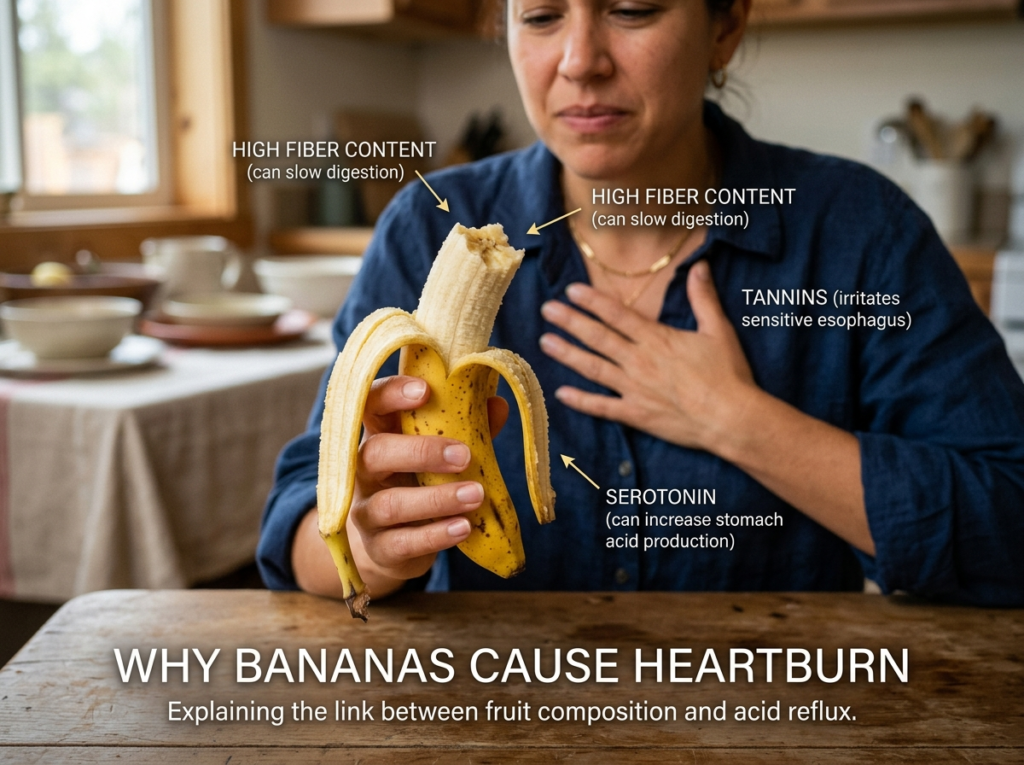
You grabbed a banana as a quick snack — healthy, easy, no mess. Ten minutes later, there’s a burning sensation creeping up your chest. Wait, aren’t bananas supposed to be one of the safest foods for your stomach?
That’s the confusing part. Bananas sit on almost every “foods good for acid reflux” list you’ll find online. Doctors recommend them. Nutritionists love them. Yet here you are, dealing with heartburn after eating one. You’re not imagining things, and you’re definitely not alone.
Roughly 20% of adults in the U.S. experience acid reflux symptoms at least once a week, according to data from the American College of Gastroenterology. And a surprising number of those people report bananas as a trigger — the very fruit they were told would help.
So what’s actually going on? Let’s break down why bananas cause heartburn for some people, what’s happening inside your body when they do, and how you can still enjoy this fruit without the burn.
The Banana Paradox: A “Safe” Fruit That Backfires
Here’s what makes this so frustrating. Bananas have a pH of about 4.5 to 5.2, which makes them a low-acid fruit. Compare that to oranges (pH 3.0–4.0) or tomatoes (pH 4.3–4.9), and bananas look pretty tame. They also contain natural antacid properties — the fruit actually stimulates mucus production in the stomach lining, which should protect you from acid.
So on paper, bananas should be your stomach’s best friend. And for many people, they genuinely are.
But your body doesn’t always follow what looks good on paper. Several real, science-backed reasons explain why this mild-mannered fruit can trigger heartburn in certain individuals. The answer isn’t simple — it’s usually a combination of factors working together.
How Banana Ripeness Changes Everything
This is probably the biggest factor most people overlook, and it makes a massive difference.
A green, unripe banana and a brown-spotted, overripe banana are practically two different foods when it comes to your digestive system. The chemical composition shifts dramatically as a banana ripens.
Unripe bananas contain high levels of resistant starch — a type of starch your small intestine can’t break down easily. This resistant starch passes through to your large intestine mostly intact. While that’s great for gut bacteria, it can slow down your overall digestion. Slower digestion means food sits in your stomach longer. The longer food stays in your stomach, the more gastric acid your body produces to break it down. More acid, more pressure, more chances of that acid pushing back up into your esophagus.
That slow-moving, starch-heavy mass can also cause bloating and gas. The increased abdominal pressure pushes against your lower esophageal sphincter (LES) — that little muscular valve between your stomach and esophagus. When the LES gets enough pressure, it can relax or open slightly, allowing stomach acid to escape upward. That’s your heartburn right there.
Overripe bananas have a different problem. As bananas ripen, that resistant starch converts into simple sugars — glucose, fructose, and sucrose. A fully ripe banana can contain up to 12–14% sugar by weight. High sugar content can trigger acid production in some people. It can also relax the LES directly, which is the exact opposite of what you want if you’re prone to acid reflux.
So you’re stuck in a frustrating middle ground: too green causes banana digestion issues through starch, too ripe causes problems through sugar. The sweet spot — pun intended — is a yellow banana with minimal brown spots. That’s when the starch-to-sugar ratio is most balanced.
The Fiber Factor and Your Digestive System
Bananas are often praised for their fiber content, and rightfully so. A medium banana packs about 3 grams of dietary fiber. That’s roughly 10% of your daily recommended intake.
But fiber is a double-edged sword for people with sensitive stomachs.
Soluble fiber — the kind bananas have plenty of — absorbs water and forms a gel-like substance during digestion. This gel slows the movement of food through your digestive tract. For someone with a healthy digestive system, that’s a benefit. It helps you feel full longer and stabilizes blood sugar.
For someone prone to acid reflux, though, that slower transit time can be a problem. Your stomach has to work harder and produce more acid to process the fiber-rich food. If your LES is already weak or easily triggered, that extra acid production creates the perfect setup for heartburn.
There’s a practical thing to keep in mind here. If you eat a banana on a completely empty stomach, the fiber hits your digestive system with nothing to buffer it. Your stomach acid production ramps up quickly, and without other foods to absorb and distribute that acid, you feel the burn more intensely. Pairing your banana with something like oatmeal or yogurt can make a real difference — more on that later.
Your Body’s Unique Response to Bananas
Here’s something the generic health articles usually skip over: your individual biology matters more than any food chart.
Some people have a naturally weaker lower esophageal sphincter. It’s partly genetic, partly age-related, and partly influenced by lifestyle factors. If your LES doesn’t close tightly after food passes through, even mild triggers — like a banana — can cause acid reflux symptoms.
Then there’s the histamine angle. Bananas don’t contain high levels of histamine themselves, but they are what researchers call “histamine liberators.” They can trigger your body to release its own histamine. Histamine stimulates stomach acid production. If you’re someone with histamine sensitivity — and many people don’t even realize they have it — a banana can quietly set off a chain reaction that ends in heartburn.
Your gut microbiome also plays a role. The balance of bacteria in your intestines affects how you process every food you eat. Two people can eat the exact same banana and have completely different digestive responses. One person feels fine; the other is reaching for antacids. That’s not weakness or imagination — it’s genuine biological variation.
People taking certain medications should pay attention too. Some common drugs — including blood pressure medications, certain antidepressants, and anti-anxiety meds — can weaken the LES as a side effect. If you’re on any of these, your threshold for heartburn triggers drops, and a banana that never bothered you before might start causing issues.
Bananas and Acid Reflux: The Timing and Quantity Problem
You know how people say “the dose makes the poison”? That principle applies perfectly here.
How much you eat matters. One banana might be totally fine for your stomach. Two or three in a day? That’s a lot of fiber, sugar, and potassium hitting your system. Your stomach acid production scales up accordingly, and the cumulative effect can trigger heartburn even if a single banana never would.
When you eat matters just as much. Eating a banana right before bed is one of the most common triggers people report. When you lie down, gravity stops helping keep stomach acid where it belongs. Any food — banana included — that’s still being digested when you go horizontal increases your heartburn risk significantly. Gastroenterologists typically recommend finishing your last snack at least 2–3 hours before lying down.
There’s also the “what else did you eat” factor. A banana after a heavy, fatty meal is a different experience than a banana after a light salad. Fatty foods already slow gastric emptying and relax the LES. Add a banana’s fiber and sugar into that mix, and you’ve created the perfect storm for acid reflux. If you’ve ever wondered why you sometimes get heartburn from bananas and sometimes don’t, this combination effect is often the answer.
It’s worth noting here that if you’re someone who relies on caffeine-heavy drinks throughout the day — whether that’s coffee, energy drinks like Monster, or even caffeinated sodas like Pepsi — you might already have elevated stomach acid levels before the banana even enters the picture. Caffeine stimulates gastric acid secretion, so a banana on top of an already acidic stomach environment is a recipe for discomfort.
Is Banana Good for Acid Reflux or Not? The Real Answer
This is the question that confuses everyone, so let’s clear it up.
For the majority of people, bananas are genuinely helpful for acid reflux. The natural antacid properties are real. The mucus-stimulating effect is real. The low acidity is real. Studies published in journals like Alimentary Pharmacology & Therapeutics have consistently shown that high-fiber, low-acid fruits can reduce GERD symptoms in most patients.
But “most” doesn’t mean “all.” About 1 in 5 people with GERD report that bananas worsen their symptoms, based on patient survey data from multiple gastroenterology practices. If you’re in that 20%, knowing why it happens — which you now do — is the first step toward managing it.
The answer to “is banana good for acid reflux” isn’t yes or no. It’s “it depends on your body, the banana’s ripeness, when you eat it, what you eat it with, and how much you eat.” Not as catchy as a simple yes or no, but it’s the truth.
Smart Ways to Eat Bananas Without the Burn
If you love bananas but they keep triggering heartburn, you don’t necessarily have to give them up. A few adjustments can make a big difference.
Pick the right ripeness. Go for bananas that are yellow with just a few small brown spots. They’re past the high-resistant-starch phase but haven’t converted fully to sugar yet. This middle stage is easiest on your stomach.
Don’t eat them solo. Pair your banana with a protein or a healthy fat. A banana with a tablespoon of almond butter, mixed into yogurt, or sliced over oatmeal is much gentler on your digestive system than a plain banana on an empty stomach. The other foods help buffer the acid response.
Watch your timing. Morning or early afternoon is the best window. Your digestive system is most active during these hours, and you’ll be upright for hours afterward. Skip the bedtime banana snack if you’re prone to reflux.
Start small. If you’ve been having issues, try half a banana instead of a whole one. See how your body responds. You might find that a smaller portion doesn’t trigger any symptoms at all.
Keep a food diary. This sounds tedious, but even a week of tracking what you eat and when symptoms appear can reveal patterns you’d never notice otherwise. You might discover it’s not the banana itself — it’s the banana after your morning coffee, or the banana combined with that spicy lunch.
If you’re already making smart choices about what you drink — maybe you’ve switched to non-coffee options or lower-calorie drinks to reduce acidity — applying that same thoughtfulness to how you eat bananas can really pay off.
Other Foods That Cause Heartburn (That Often Get a Free Pass)
Bananas aren’t the only “healthy” food that can trigger heartburn. If you’re dealing with regular acid reflux, keep an eye on these common culprits too.
Tomatoes are highly acidic (pH 4.3–4.9) and contain citric and malic acid. Cooked tomatoes in sauces are even more concentrated. Onions and garlic, especially raw, can relax the LES and increase acid production. Chocolate contains methylxanthine, which relaxes the esophageal sphincter. Peppermint — often used as a “digestive aid” — actually relaxes the LES and can worsen reflux.
Even whole milk and high-fat dairy can be problematic. While milk initially feels soothing, the fat content can trigger more acid production once digestion kicks in.
The pattern here is clear: foods that cause heartburn aren’t always the ones you’d expect. Spicy food gets all the blame, but these everyday “healthy” foods catch people off guard because nobody warns them.
Pay attention to your total daily intake of acidic and trigger foods. A banana might be completely fine on a day when you eat mild foods. But on a day when you’ve had tomato sauce for lunch, chocolate after dinner, and then a banana — your stomach has been dealing with trigger after trigger, and the banana becomes the final straw.
When to Talk to a Doctor
Occasional heartburn from bananas is annoying but usually manageable with the adjustments above. But there are clear signs that something bigger might be going on.
If you’re getting heartburn more than twice a week, that could be gastroesophageal reflux disease (GERD), which needs proper medical attention. If swallowing feels difficult or painful, if you’re losing weight without trying, or if you notice your voice getting hoarse frequently, see a gastroenterologist.
Persistent acid reflux that goes untreated can damage your esophageal lining over time, potentially leading to a condition called Barrett’s esophagus. That’s not meant to scare you — it’s meant to encourage you to take recurring symptoms seriously.
A doctor can run tests to check your LES function, measure your esophageal acid exposure, and rule out other conditions like hiatal hernia or H. pylori infection that might be making your heartburn worse. They can also check whether any medications you’re taking — like the blood pressure or anxiety meds mentioned earlier — are contributing to the problem.
Quick note: If you’re consuming energy drinks regularly, that’s worth mentioning to your doctor too. The combination of caffeine, sugar, and carbonation in these drinks is a triple threat for acid reflux, and it could be amplifying your banana-related symptoms.
FAQ
Can I eat bananas every day if I have acid reflux?
Many people with acid reflux eat bananas daily without any problems. The key is choosing moderately ripe bananas (yellow with minimal spots), eating them with other foods rather than alone, and avoiding them close to bedtime. If you notice consistent symptoms, try reducing your intake to a few times per week and see if that helps. Your individual tolerance level is what matters most.
Are green bananas or ripe bananas worse for heartburn?
Both can be problematic, but for different reasons. Green bananas are high in resistant starch, which slows digestion and can increase acid production. Overripe bananas are high in sugar, which can also trigger acid and relax the lower esophageal sphincter. A medium-ripe banana — solid yellow with only a few brown spots — is generally the safest choice for people prone to heartburn.
What’s a good substitute for bananas if they keep causing heartburn?
Melons — especially cantaloupe and honeydew — are excellent alternatives. They have a higher pH (closer to 6.0), lower sugar content than ripe bananas, and are high in water content, which dilutes stomach acid. Papaya is another strong option because it contains papain, a natural enzyme that actually helps break down proteins and ease digestion. Both make great smoothie bases or snack options.
Does banana digestion take longer than other fruits?
Yes, compared to high-water fruits like watermelon or grapes, bananas take longer to digest — roughly 30 to 40 minutes for a ripe banana vs. about 20 minutes for watermelon. The fiber and starch content, especially in less-ripe bananas, is the main reason. That extended digestion time means more acid production, which is why banana digestion issues and heartburn often go hand in hand.
Can cooking bananas reduce the heartburn risk?
Cooking breaks down some of the resistant starch and fiber in bananas, which can make them easier to digest. Baked banana slices or lightly sautéed banana in a bit of coconut oil may cause less acid production than eating a raw banana. The heat also changes the texture, which some people find more comfortable to digest. It’s not a guaranteed fix, but it’s worth trying if raw bananas consistently bother you.
What This All Comes Down To
Bananas and acid reflux have a complicated relationship — more complicated than any simple “good” or “bad” label can capture. Your body, your banana’s ripeness, your timing, your portion size, and what else you ate that day all play a role.
The good news? Now that you understand the mechanics behind why bananas cause heartburn, you can make small, targeted changes instead of cutting out a nutritious fruit entirely. Try the right ripeness, pair it with other foods, watch your timing, and pay attention to what your body tells you.
And if those adjustments don’t help, or if heartburn becomes a frequent visitor regardless of what you eat, don’t just push through it. A conversation with your doctor can uncover what’s really going on — and get you back to enjoying your food without the burn.
Your stomach has its own rules. The smartest thing you can do is learn them.