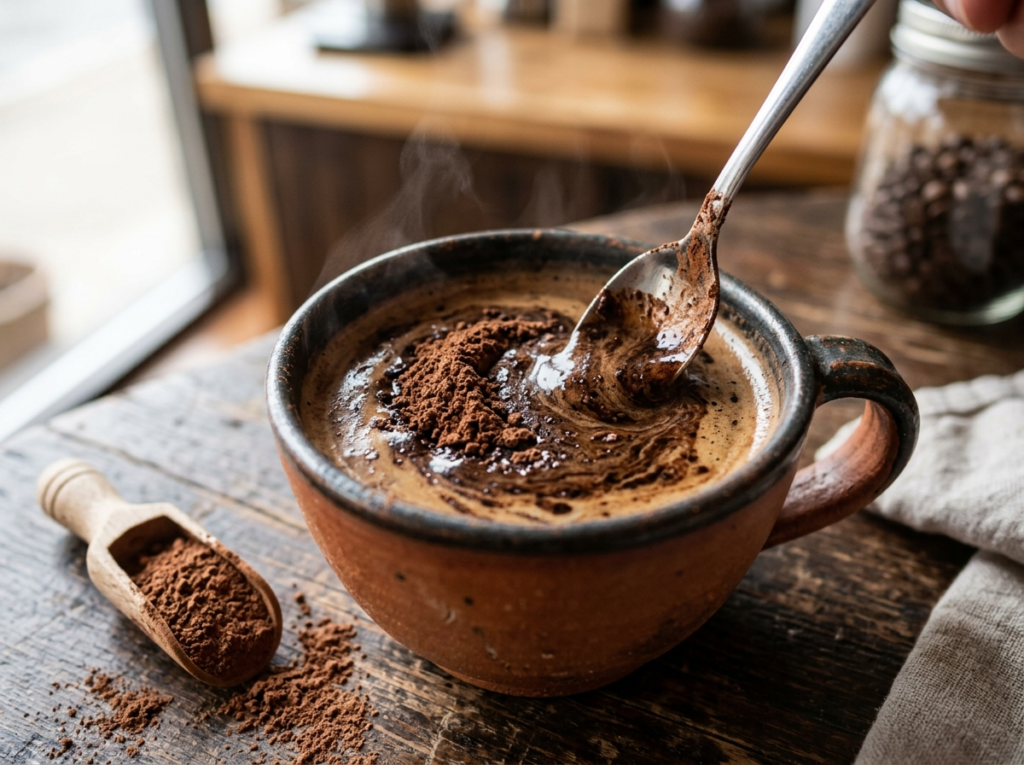
There’s a reason every coffee shop charges you extra for a mocha. That combination of deep, roasted coffee and rich, bittersweet chocolate isn’t just delicious — it’s borderline addictive. But here’s the thing: you don’t need a barista or a $6 drink to get that flavor. A tablespoon of cacao powder, your regular coffee, and about two minutes of effort — that’s all it takes.
Blending coffee with cacao powder is one of those small kitchen moves that feels like a cheat code. You get a more complex flavor, a smoother drinking experience, and a handful of actual health perks that your plain black coffee can’t offer alone. Whether you’re trying to make a mocha at home recipe without the sugar bomb, or you’re curious about the cacao coffee benefits people keep talking about, this guide walks you through everything — ratios, recipes, mistakes to avoid, and why this combo works so well on a biological level.
Why Coffee and Cacao Powder Work So Well Together
Before we get into recipes, it helps to understand why these two ingredients feel like they were made for each other.
Coffee and cacao share more than 600 aromatic compounds. They’re both tropical crops, both roasted to develop flavor, and both carry that earthy, slightly bitter profile that hits similar receptors on your tongue. When you mix them, you don’t get two competing flavors — you get one layered, rounded experience.
Think of it like this: coffee gives you the sharp, bright, wake-up punch. Cacao adds warmth, depth, and a chocolate-like smoothness that rounds off coffee’s rough edges. If your morning coffee sometimes tastes a bit too acidic or one-dimensional, cacao fills in those gaps beautifully.
There’s also a chemical reason this pairing feels so satisfying. Cacao contains theobromine, a mild stimulant that’s chemically similar to caffeine but works differently. Caffeine hits fast and hard — theobromine comes on slower, lasts longer, and gives a gentler lift. Together, they create an energy curve that feels more sustained and less jittery. More on that later.
Cacao Powder vs. Cocoa Powder — Which One Should You Use?
This is the first question most people get wrong, and it matters more than you’d think.
Cacao powder is made from raw or cold-pressed cacao beans. The beans aren’t roasted at high temperatures, so more of the natural nutrients — flavonoids, magnesium, iron, antioxidants — stay intact. It tastes bitter, earthy, and deeply chocolatey. No sugar. No sweetness.
Cocoa powder goes through a higher-heat roasting process. Dutch-processed cocoa powder is also treated with an alkaline solution to reduce acidity, which makes it milder and darker in color. It tastes smoother but has lower antioxidant levels compared to raw cacao.
So which one should you put in your coffee?
If you care about maximizing cacao coffee benefits — the antioxidants, the minerals, the polyphenols — go with raw cacao powder. If you just want a smoother, more familiar chocolate flavor and don’t mind losing some nutritional punch, regular unsweetened cocoa powder in coffee works perfectly fine.
Quick tip: Avoid anything labeled “hot chocolate mix” or “chocolate drink powder.” Those products are mostly sugar and milk solids. You want 100% pure cacao or cocoa powder with zero additives.
The Health Side — What Cacao Actually Brings to Your Coffee
Let’s talk about why this isn’t just a flavor thing. Adding cacao powder to your coffee brings some genuinely useful compounds to the table.
Antioxidant Power
Cacao is one of the most antioxidant-rich foods on the planet. Raw cacao scores an ORAC value (a measure of antioxidant capacity) of around 95,500 per 100g — that’s higher than blueberries, acai, and green tea. Coffee already contains antioxidants, but adding cacao takes your morning cup to a completely different level.
These antioxidants, especially flavonoids like epicatechin, help reduce oxidative stress in your cells. Over time, that matters for heart health, skin health, and even brain function.
The Theobromine + Caffeine Duo
Here’s where it gets interesting. Caffeine alone can spike your energy fast and drop it just as fast — you know the feeling, that mid-morning crash around 10:30 AM. Theobromine from cacao has a longer half-life than caffeine. It doesn’t hit your central nervous system as aggressively, but it keeps working for hours.
When you blend both in one cup, the energy curve smooths out. You still get that quick alertness from caffeine, but the theobromine keeps you feeling focused without the crash. Some people describe it as “calm energy,” which sounds like marketing fluff until you actually try it.
If you’re someone who’s sensitive to caffeine content in your daily drinks, this combo might actually help you manage that sensitivity better — the cacao doesn’t reduce caffeine, but the theobromine changes how the whole experience feels.
Magnesium and Minerals
Most adults don’t get enough magnesium. It affects sleep, muscle function, mood — the list is long. One tablespoon of cacao powder contains about 27mg of magnesium, which is roughly 7% of your daily recommended intake. Not a game-changer on its own, but as a free bonus in your morning coffee? You won’t complain.
Cacao also provides small amounts of iron, potassium, and zinc. Again, not supplement-level doses, but consistent daily intake adds up.
Mood and Mental Clarity
Cacao stimulates the production of phenylethylamine (PEA), sometimes called the “love chemical.” It also contains anandamide, a compound that binds to the same brain receptors as certain cannabinoids — promoting a subtle feeling of well-being and relaxation. Pair that with coffee’s dopamine-boosting effects, and you’ve got a mood-lifting morning drink without any questionable additives.
How to Blend Coffee with Cacao Powder — The Right Way
Here’s where most people mess up. They dump cacao powder into a cup of brewed coffee, stir it with a spoon, take a sip, and wonder why it’s clumpy, grainy, and weird. Cacao powder doesn’t dissolve like sugar. It’s a fat-containing, fiber-rich powder, and it needs a bit more effort to blend smoothly.
Method 1: The Paste Method (Best for Smooth Results)
This is the method that works every time.
Start with 1 to 2 teaspoons of cacao powder in your empty mug. Add just a splash of hot water — maybe 2 tablespoons — and stir vigorously until it forms a smooth paste with no lumps. Then pour your brewed coffee over the paste while stirring. The result is a silky, fully integrated cup with no gritty surprises at the bottom.
If you use milk or a creamer, add it after the coffee. The fat in milk or cream actually helps emulsify the cacao even further, making everything richer and smoother. If you’re watching your coffee creamer choices and their shelf life, oat milk and coconut cream both pair beautifully with cacao and don’t overwhelm the chocolate notes.
Method 2: Blend It (Literally)
If you own a small blender, a milk frother, or even a handheld immersion blender, this is the easiest path to café-quality results. Brew your coffee, pour it into the blender with 1–2 teaspoons of cacao powder, and blend for 15–20 seconds. You’ll get a frothy, creamy texture that feels like a proper mocha — without any cocoa clumps.
This method also works perfectly for iced versions. Blend with ice cubes, a splash of milk, cacao powder, and cold brew coffee. You just made yourself an iced mocha at home that rivals anything from Starbucks.
Method 3: Add It to Your Coffee Grounds
This one surprises people, but it’s fantastic. Before you brew your coffee — whether you use a drip machine, French press, or pour-over — add a teaspoon of cacao powder directly to your coffee grounds. The hot water extracts flavor from both the coffee and the cacao simultaneously. The result is a cup that has chocolate notes woven into the coffee itself, rather than sitting on top of it.
For French press, use a slightly longer steep time (4.5 to 5 minutes instead of the usual 4) to let the cacao fully extract. For pour-over, you won’t need to change anything — the water contact time is usually enough.
If you’re brewing with a machine and dealing with common troubleshooting issues, just make sure your filter isn’t too fine, as cacao powder is finer than coffee grounds and can clog paper filters slightly. A reusable metal filter handles the mix better.
Mocha at Home Recipe — Three Versions Worth Trying
Classic Hot Mocha
You don’t need an espresso machine for this. Strong brewed coffee works just fine.
Brew 8 oz of coffee — make it a bit stronger than usual, because the cacao and milk will dilute the coffee flavor. While the coffee is brewing, mix 1 tablespoon of raw cacao powder with 1 teaspoon of maple syrup (or honey, or coconut sugar — your call) and a splash of hot water to form a paste. Pour the hot coffee into the paste and stir. Add 2–3 oz of steamed or warmed milk. Stir once more.
That’s it. The whole thing takes under five minutes and costs roughly 50 cents per cup. Compare that to the $5–$7 you’d pay at a coffee shop, and the math is pretty convincing.
Pro tip: If you want a more authentic café mocha experience, use a dark roast coffee. The roasted, smoky notes blend more naturally with cacao than a light or medium roast. If you’re curious about how different coffee preparations compare in terms of caffeine, darker roasts actually have slightly less caffeine per scoop — but the flavor pairing with cacao is unbeatable.
Iced Cacao Coffee
For summer days or just when you want something cold and satisfying. The night before, cold brew your coffee (or just brew a strong batch and refrigerate it). In the morning, blend 1 cup of cold coffee with 1 tablespoon of cacao powder, a handful of ice cubes, 1/2 cup of your preferred milk, and a small drizzle of sweetener if you want one. Blend until smooth and frothy.
What you’ll get is basically a healthier, less sugary version of a coffee hot chocolate mix — served cold. You can even add a pinch of cinnamon or a drop of vanilla extract if you’re feeling fancy.
Bulletproof-Style Cacao Coffee
If you’re into the high-fat, keto-friendly coffee thing, cacao powder fits right in. Brew your coffee, then blend it with 1 tablespoon of cacao powder, 1 tablespoon of grass-fed butter or ghee, and 1 tablespoon of MCT oil or coconut oil. Blend for 20–30 seconds until it’s frothy and emulsified.
The fats help your body absorb the fat-soluble nutrients in cacao more effectively, and the whole thing tastes like a rich, creamy hot chocolate that also happens to be your breakfast. The energy from this cup lasts for hours — between the caffeine, theobromine, and slow-digesting fats, you’re looking at sustained focus well into the afternoon.
Getting the Ratios Right
There’s no single “correct” ratio, because everyone’s taste is different. But here’s a starting framework:
For a subtle chocolate hint, use 1 teaspoon of cacao powder per 8 oz of coffee. You’ll notice a richer, more complex flavor without it tasting like a dessert drink.
For a proper mocha flavor, go with 1 tablespoon per 8 oz. This gives you a clear chocolate presence that balances nicely with the coffee.
For an intense, chocolate-forward drink, try 1.5 to 2 tablespoons per 8 oz. At this level, the cacao really dominates, and you’ll want to add milk or cream to keep it drinkable, because that much raw cacao powder can be quite bitter on its own.
A word of caution: Start low and work your way up. Cacao powder is more intensely flavored than regular cocoa powder, so if you’re switching from cocoa to cacao, cut your usual amount in half at first. You can always add more.
Common Mistakes People Make
Using sweetened chocolate powder. This is the most common one. Hot cocoa mixes, chocolate drink powders, and sweetened cocoa blends are designed to be mixed with water or milk on their own. When you add them to coffee, you end up with something overly sweet and one-dimensional. Stick to pure, unsweetened cacao or cocoa powder.
Not blooming the powder first. Just tossing dry cacao powder into hot coffee creates lumps. Always make a paste first, or use a blender. Five seconds of extra effort makes all the difference.
Using low-quality cacao. Not all cacao powders are equal. Look for organic, single-origin cacao if possible. The flavor difference between cheap cacao powder and a quality one — like those from brands such as Navitas Organics, Terrasoul, or Viva Naturals — is enormous. You’ll taste more complexity, less bitterness, and a smoother finish.
Ignoring your coffee quality. Great cacao can’t fix bad coffee. If you’re starting with stale, pre-ground beans that have been sitting in your pantry for six months, the cacao will mask some of the flatness, but you’re still building on a weak foundation. Fresh-ground, well-roasted coffee beans make this blend shine. Getting the right coffee scoop measurements also helps you nail the right strength every time.
Who Should Try This — And Who Should Be Careful
This blend works for most people, but a few groups should pay attention.
If you’re pregnant or breastfeeding, both caffeine and theobromine cross the placenta and pass into breast milk. The combined stimulant load of coffee + cacao might be more than you’d want. Talk to your doctor about appropriate amounts.
If you take MAO inhibitors or certain antidepressants, the tyramine and phenylethylamine in cacao can potentially interact with those medications. Again — consult with your healthcare provider before making cacao a daily habit.
For everyone else, this is a straightforward upgrade to your morning routine. The biggest “risk” is that you’ll enjoy it so much you won’t want to go back to plain coffee.
Beyond the Cup — Other Ways to Use This Combo
Once you get comfortable with cacao in your coffee, you start seeing possibilities everywhere.
Cacao coffee smoothie: Blend cold brew, a frozen banana, a tablespoon of cacao powder, a scoop of protein powder, and some almond milk. It’s basically breakfast and coffee in one glass.
Coffee cacao overnight oats: Mix rolled oats with cold brew coffee instead of milk, stir in a tablespoon of cacao powder, add chia seeds, and let it sit in the fridge overnight. You wake up to a chocolate-coffee breakfast that’s ready to eat.
Cacao mocha energy bites: Blend dates, oats, cacao powder, a shot of espresso (cooled), and some nut butter in a food processor. Roll into balls and refrigerate. Perfect 3 PM snack when that energy drink’s effects have worn off and you need something more natural.
What About Pre-Made Cacao Coffee Blends?
You’ve probably seen brands selling pre-mixed cacao and coffee blends. Companies like Cacao Bliss, Four Sigmatic, and MUD\WTR (which leans more into mushroom-cacao territory) have made this concept mainstream.
Are they worth it? They’re convenient, sure. But you’re paying a premium for something you can easily make at home for a fraction of the cost. A bag of quality cacao powder costs about $10–$15 and lasts for weeks. A bag of pre-blended cacao coffee can run $25–$40 for the same number of servings.
If you want to explore functional coffee blends beyond cacao, mushroom coffee has been gaining serious traction lately — and some people actually combine mushroom extracts with cacao and coffee for a triple-stack morning drink.
FAQ
Can I use cocoa powder in coffee instead of cacao powder?
Absolutely. Cocoa powder in coffee works well and gives you a milder, smoother chocolate flavor. You’ll lose some of the antioxidant and mineral benefits that raw cacao provides, but the taste experience is still excellent. Dutch-processed cocoa is especially smooth and blends easily. Use the same ratios — 1 teaspoon for subtle flavor, 1 tablespoon for a full mocha taste.
Does adding cacao powder to coffee increase caffeine?
Only slightly. Cacao powder contains a small amount of caffeine — about 12mg per tablespoon — so your total caffeine intake goes up marginally. The bigger story is theobromine, which isn’t caffeine but acts as a mild, longer-lasting stimulant. The combination of caffeine and theobromine is what gives cacao coffee its unique, sustained energy feel.
Is a coffee hot chocolate mix the same as adding cacao to coffee?
Not really. Most coffee hot chocolate mixes you find in stores are loaded with sugar, milk powder, and artificial flavors. When you blend pure cacao powder into coffee, you’re getting the real deal — the actual chocolate flavor, the health benefits, and full control over sweetness. The taste difference is significant, and so is the nutritional profile. Making a mocha at home with real cacao powder puts you in charge of every ingredient.
Can I drink cacao coffee every day?
For most healthy adults, yes. One to two cups of cacao coffee per day falls well within safe limits for both caffeine and theobromine. The antioxidants and minerals actually make it a smarter daily habit than many alternatives. Just watch your total caffeine intake across the day — if you’re also drinking energy drinks or other caffeinated beverages, factor everything together.
Does cacao powder make coffee less acidic?
It can help. Cacao, especially Dutch-processed cocoa, has a slightly alkaline pH that can offset some of coffee’s acidity. If you find regular black coffee hard on your stomach, adding a tablespoon of cacao powder might make it more tolerable. It won’t eliminate acidity entirely, but many people notice a smoother, less harsh feeling.
Your Morning Cup Just Got Better
Blending coffee with cacao powder is one of those rare things that’s genuinely simple, genuinely healthy, and genuinely delicious — all at the same time. You don’t need special equipment, fancy ingredients, or barista training. A bag of good cacao powder, your regular coffee setup, and thirty seconds of stirring or blending.
Start with a teaspoon tomorrow morning. Make the paste, pour your coffee over it, and take that first sip. If it doesn’t change the way you think about your daily cup, you’ve lost nothing. But if it does — and there’s a good chance it will — you’ve just found a morning ritual that’s better for your brain, your body, and your taste buds.
That’s a solid return on a tablespoon of powder.