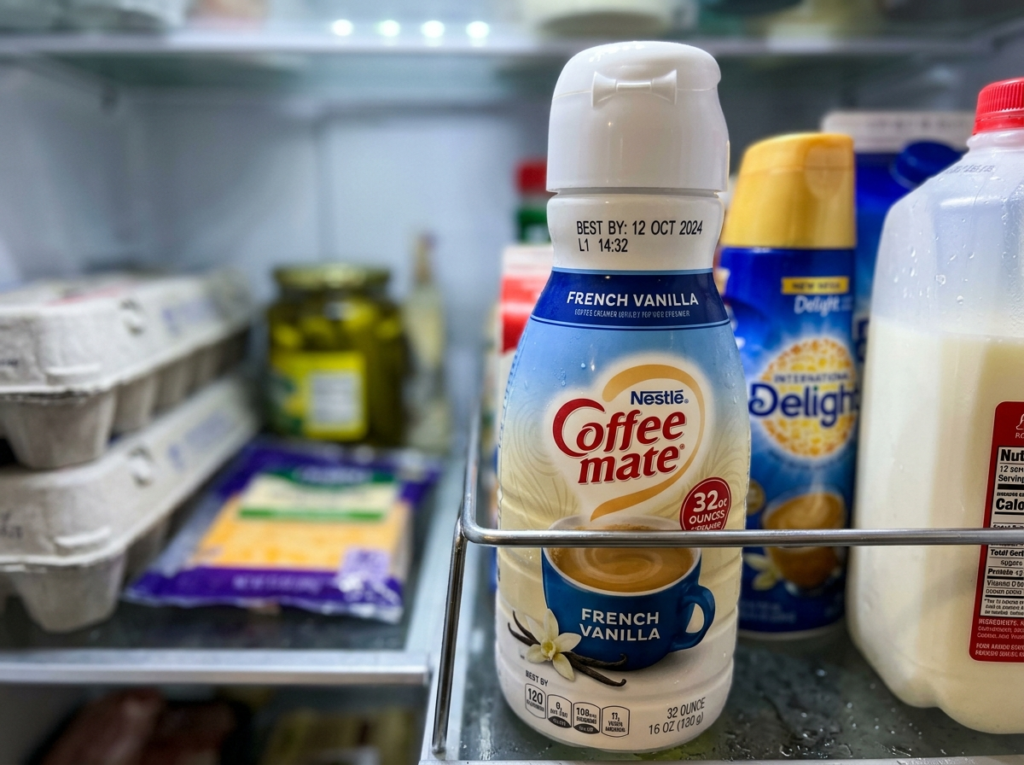
That half-used bottle of coffee creamer sitting on your counter since this morning — is it still safe to pour into your afternoon cup? You’re not alone in wondering. Millions of coffee drinkers toss perfectly good creamer out of fear, while others push their luck way too far with a bottle that should’ve been trashed days ago.
Here’s the thing: coffee creamer shelf life isn’t one-size-fits-all. A tiny liquid cup from a hotel room, a big jug of dairy creamer from Costco, and a powdered canister from your office pantry all play by different rules. And those rules matter — because spoiled creamer doesn’t just ruin your coffee. It can genuinely make you sick.
This guide breaks down exactly how long each type of coffee creamer lasts, how to tell if yours has gone bad, and the smartest way to store it so you get every last good drop out of the bottle.
Why Coffee Creamer Shelf Life Varies So Much
Walk down the creamer aisle at any grocery store, and you’ll notice something interesting. Some bottles are in the refrigerated section. Others sit on a regular shelf at room temperature. Some come in those little single-serve cups that seem to last forever. And then there’s powdered creamer, which your grandma probably still has a can of from 2019.
Each type has a completely different formulation, and that’s what determines how long it stays fresh. Dairy-based creamers contain milk proteins and fats that bacteria love. Non-dairy liquid creamers use oils and stabilizers that extend their life. Powdered creamers have virtually no moisture, which means bacteria can’t really grow in them at all.
The packaging matters too. That sealed, shelf-stable mini cup has been ultra-pasteurized and vacuum-sealed, so it can sit at room temperature for months. But crack it open, and the clock starts ticking fast.
Understanding these differences is the key to knowing whether your creamer is still good — or whether it’s time to grab a fresh one.
How Long Does Each Type of Coffee Creamer Last?
Let’s get specific. Because “it depends” isn’t helpful when you’re standing in your kitchen at 6 AM, sniffing a bottle and trying to decide.
Liquid Dairy Creamer (Refrigerated)
This is your classic half-and-half style creamer — brands like Coffee mate Natural Bliss, Chobani, or International Delight’s dairy-based options. These are made with real milk or cream, and they behave a lot like milk.
Unopened, a refrigerated dairy creamer typically lasts until the “use by” date printed on the carton, and sometimes a few days beyond that if it’s been stored properly at or below 40°F (4°C). That window is usually about 2–3 weeks from the date you bought it.
Once opened, you’ve got roughly 7 to 10 days before it starts to turn. Some brands recommend using it within 7 days, and honestly, that’s a smart target. After 10 days, even if it smells okay, the quality drops noticeably.
⚠️ Quick Tip: Always check the printed date, but don’t rely on it blindly. A dairy creamer that’s been left on the counter repeatedly or stored in a warm fridge might spoil well before that date.
Liquid Non-Dairy Creamer (Refrigerated)
Non-dairy refrigerated creamers — think oat milk creamers, almond milk creamers, or the standard Coffee mate liquid — last slightly longer than their dairy cousins because they don’t contain actual milk proteins.
Unopened, they’re good until the printed date, sometimes up to a week beyond. Opened, they hold up for about 10 to 14 days in the fridge, though you should use your senses to confirm before that two-week mark.
If you’re someone who enjoys low-calorie Starbucks drinks and watches what goes into your coffee at home too, these non-dairy options are popular — but they still absolutely need refrigeration after opening.
Shelf-Stable Liquid Creamer (Unrefrigerated Bottles & Cups)
These are the creamers you find on regular grocery shelves, not in the cold section. They’ve been ultra-high temperature (UHT) pasteurized, which kills virtually all bacteria and allows them to sit at room temperature safely.
Unopened, shelf-stable liquid creamers can last 6 to 12 months past the manufacturing date. Those little individual cups you grab at diners or hotels? They often stay good for 9 months or more, sealed.
Opened, the rules change dramatically. Once air hits that creamer, you need to refrigerate it immediately and use it within 7 to 14 days, depending on the brand. The UHT magic only works while the seal is intact.
Powdered Coffee Creamer
Powdered creamer is the survival champion of the creamer world. Brands like Nestlé Coffee mate powder or store-brand dry creamers contain almost no moisture, which means bacteria have no environment to grow in.
Unopened, powdered creamer can last 1 to 2 years past its printed date. Even opened, if you keep the lid sealed tight and store it in a cool, dry place, it can easily stay good for 3 to 6 months. Some people use opened powdered creamer for even longer without any issues.
That said, it won’t last forever. Over time, powdered creamer can absorb moisture from the air, clump up, and develop off-flavors. It’s not dangerous at that point — just unpleasant.
Plant-Based Creamers (Oat, Almond, Coconut, Soy)
Plant-based creamers have exploded in popularity, and they come in both refrigerated and shelf-stable versions. The rules above apply based on the type — but plant-based creamers tend to separate faster once opened, which can make them look spoiled even when they’re fine.
A quick shake usually fixes separation. But if shaking doesn’t bring it back together, or if the texture stays chunky, that’s a different story.
How Long Can Creamer Sit Out at Room Temperature?
This is probably the most common real-world question. You pour your morning coffee, leave the creamer on the counter, go to work, come back eight hours later — is it still safe?
For dairy and refrigerated non-dairy creamers, the USDA’s food safety guideline is straightforward: perishable foods shouldn’t sit at room temperature for more than 2 hours. If the room is warmer than 90°F (32°C) — like a sunny kitchen in summer — that window shrinks to just 1 hour.
After that 2-hour mark, bacteria like Staphylococcus aureus and Bacillus cereus can multiply to levels that cause food poisoning. And here’s the tricky part — the creamer might still look and smell completely normal even after bacteria have reached unsafe levels.
For powdered creamer, sitting out is basically a non-issue. Since there’s no moisture to support bacterial growth, an open canister of powdered creamer on your desk or in the office break room is fine for months.
For sealed, shelf-stable individual cups, room temperature is literally where they’re designed to live. No worries there — until you open one. Once opened, treat it like any other perishable liquid.
🔴 Warning: If your dairy or refrigerated creamer has been out for more than 2 hours, throw it away. No sniff test, no “it’s probably fine.” The risk of foodborne illness isn’t worth it over a $4 bottle of creamer.
Signs Your Coffee Creamer Is Spoiled
Your senses are surprisingly good at detecting spoiled creamer — if you know what to look for. Here’s how to tell if that bottle needs to go.
Smell It First
Fresh creamer has a mild, slightly sweet, neutral smell. Spoiled creamer? You’ll know. It takes on a sour, tangy odor — almost like yogurt that’s gone wrong. With dairy creamers, the smell is unmistakable. Non-dairy creamers can develop a stale, chemical-like off-smell instead.
If you open the cap and your nose wrinkles involuntarily, trust that reaction.
Check the Texture
Pour a small amount into a clear glass or spoon. Fresh creamer is smooth and pours evenly. Spoiled creamer often looks lumpy, chunky, or curdled. You might see it separate into watery and thick layers that won’t mix back together no matter how much you shake.
One caveat — some plant-based creamers naturally separate. If a good shake brings it back to smooth consistency, it’s fine. If shaking doesn’t help, toss it.
Look at the Color
Dairy creamers that have gone bad sometimes develop a yellowish tint instead of their usual white or cream color. Non-dairy creamers might darken slightly. Any mold — even a tiny spot near the cap or on the surface — means the entire container is compromised.
Taste Test (Cautiously)
If it passed the smell and visual tests but you’re still unsure, a tiny taste won’t hurt you. Spoiled creamer tastes sour, bitter, or just… off. You’ll spit it out immediately. Obviously, if the smell or look was already suspicious, skip this step entirely.
The Coffee Test
Sometimes you won’t notice anything until the creamer hits hot coffee. If your coffee suddenly looks curdled, has floating chunks, or tastes noticeably sour, the creamer was the problem. This can happen even with creamer that smelled “okay” in the bottle, especially if it was near the end of its usable life.
How to Store Coffee Creamer the Right Way
Proper storage is the single biggest factor in how long your creamer stays fresh. A well-stored creamer can outlast its printed date. A poorly stored one might spoil days before that date arrives.
Refrigerated Liquid Creamers
Keep them at the back of the fridge, not in the door. This matters more than most people think. The fridge door is the warmest spot, and it fluctuates in temperature every time you open the fridge — which might be 15–20 times a day in a busy household.
The back of the middle shelf maintains the most consistent temperature, usually around 35–38°F (2–3°C). Your creamer will last noticeably longer stored there.
After every use, screw the cap on tightly and put it back within a couple of minutes. That half hour it sits on the counter while you browse your phone during breakfast? It adds up over days and weeks, and it genuinely shortens the creamer’s life.
Shelf-Stable Creamers (Before Opening)
Store them in a cool, dry pantry. Avoid places that get warm — above the stove, near a window with direct sunlight, or in a garage that heats up during summer. Heat is the enemy of shelf-stable products, and consistent high temperatures can degrade the product even inside a sealed container.
Once opened, these move to the fridge and follow the same rules as refrigerated creamers.
Powdered Creamers
Keep them sealed in a dry, cool spot. Moisture is the main threat here. If you live in a humid climate, consider transferring powdered creamer to an airtight container with a good seal rather than relying on the original canister’s flip-top lid.
Never use a wet spoon to scoop powdered creamer. Even a few drops of water can cause clumping and create a pocket where mold could eventually grow. And if you’re the type who enjoys your morning coffee ritual — maybe with a perfectly measured scoop using a proper coffee scoop — just make sure that scoop is dry.
Coffee Creamer Expiration Dates: What They Actually Mean
Here’s something that confuses a lot of people. The date printed on your creamer might say “sell by,” “use by,” “best by,” or “best before.” These don’t all mean the same thing, and none of them are a hard expiration date in the way most people assume.
“Sell By” is for the store, not for you. It tells the retailer when to pull the product from shelves. Your creamer is typically still good for several days (or even weeks) after this date if properly stored.
“Best By” or “Best Before” is about quality, not safety. The manufacturer is saying the product will taste its best before this date. After that, flavor and texture might decline, but it isn’t necessarily unsafe.
“Use By” is the strictest of the three. This is the manufacturer’s last recommended date for consuming the product at peak quality. For dairy-based creamers, it’s smart to take this one more seriously.
Here’s the practical takeaway: an unopened, properly refrigerated dairy creamer that’s 3–5 days past its “best by” date is likely fine — but use your senses to verify. An opened dairy creamer that’s 2 weeks past its “use by” date? Don’t risk it.
For powdered and sealed shelf-stable creamers, these dates are even more conservative. Unopened powdered creamer that’s 6 months past its “best by” date is almost certainly still safe, though it might taste a bit flat.
Can You Freeze Coffee Creamer?
Yes, you can — and it’s a smart move if you’ve bought more than you can use before it goes bad. Liquid creamers freeze reasonably well, though there are a couple of things to know.
Freeze creamer in its original sealed container if it’s new, or pour it into an airtight freezer-safe container with about half an inch of headspace (liquids expand when they freeze). Some people use ice cube trays to freeze individual portions, which is actually brilliant — you pop out a creamer cube and drop it straight into hot coffee.
Frozen creamer keeps for 4 to 6 months in the freezer. When you’re ready to use it, thaw it in the fridge overnight. After thawing, it might look slightly separated or grainy. Give it a vigorous shake, and it should come back together. The flavor will be close to fresh, though texture-sensitive people might notice a slight change.
Note: Powdered creamer doesn’t need freezing — it already lasts long enough at room temperature.
What Happens If You Use Spoiled Creamer?
Let’s say you didn’t check, poured questionable creamer into your coffee, and drank it. What now?
If the creamer was only slightly past its prime — maybe a day or two beyond its comfortable window — you’ll probably be fine. You might notice an off-taste but experience no actual symptoms.
If the creamer was genuinely spoiled, you could experience symptoms of mild food poisoning: nausea, stomach cramps, diarrhea, or vomiting, usually within a few hours. For most healthy adults, this passes within 24 hours without treatment.
People with weakened immune systems, pregnant women, elderly individuals, and young children are more vulnerable and should be more cautious about dairy product freshness in general.
💡 Did You Know? According to the USDA, foodborne illness from dairy products is one of the most commonly reported categories of food poisoning in the U.S. — and improperly stored creamers and milk contribute to those numbers every year.
If you do get sick and symptoms are severe or last more than 48 hours, see a doctor. It’s almost never that serious from a bit of old creamer, but it’s worth mentioning.
Special Situations You Might Not Have Thought About
Office Break Room Creamer
That communal bottle of liquid creamer in the office fridge? It gets opened, poured, and put back by a dozen people throughout the day. Every time someone leaves the cap off for an extra 30 seconds, every time it sits on the counter during a conversation — it all adds up. Office creamers typically don’t last as long as the same product would in your home fridge. If your workplace uses liquid creamer, switching to individual cups or powdered creamer is genuinely safer.
Traveling or Camping
If you’re taking creamer on the road — say, for a camping trip or a long drive — stick with powdered creamer or sealed shelf-stable cups. Don’t pack refrigerated creamer in a bag and assume it’ll be fine. Even a cooler with ice isn’t as reliable as a fridge, especially on a warm day.
Creamer in Hot Coffee Left to Cool
Here’s a scenario: you make a coffee with creamer, then forget about it. Two hours later, it’s room temperature. Is it safe to drink? If it’s been under 2 hours in a normal room, it’s fine — just not very tasty. Past 2 hours, the dairy in the creamer (combined with the warm, moist environment of a coffee cup) creates a breeding ground for bacteria. Make a fresh cup.
Speaking of making great coffee at home, if your coffee maker itself is acting up, that’s a whole different headache. A well-maintained machine makes a big difference — check out this Cuisinart coffee maker troubleshooting guide or these Keurig troubleshooting tips if you’re having issues.
Dairy vs. Non-Dairy Creamer: Which Lasts Longer?
The short answer: non-dairy creamer almost always lasts longer, and powdered creamer lasts the longest of all.
Dairy creamers contain lactose, casein, and other milk components that bacteria feed on eagerly. They spoil faster, require stricter refrigeration, and have shorter windows once opened.
Non-dairy liquid creamers use vegetable oils, emulsifiers, and preservatives that naturally resist bacterial growth better than real milk does. They still need refrigeration after opening, but they’re more forgiving if you leave them on the counter for 20 extra minutes.
Powdered creamers — whether dairy-based or non-dairy — sit in a league of their own. With virtually no moisture content, they simply don’t support the kind of microbial growth that makes liquid creamers go bad. If shelf life is your main concern, powder wins every time.
That said, many coffee enthusiasts prefer the taste and texture of liquid dairy or plant-based creamers. It’s a trade-off between convenience and flavor — and there’s no wrong answer as long as you store what you pick correctly.
If you’re curious about other coffee and drink comparisons, you might enjoy reading about the difference between Kahlúa and Baileys — two creamy coffee liqueurs with very different shelf lives of their own. Or if you’ve ever wondered does Kahlúa go bad, the answer might surprise you.
FAQ
How long does coffee creamer last after opening?
Dairy-based liquid creamers last about 7–10 days after opening when properly refrigerated. Non-dairy liquid creamers typically stay good for 10–14 days. Powdered creamers can last 3–6 months after opening if stored in a cool, dry place with the lid sealed tight. Always check for signs of spoilage — smell, texture, and color — before using any opened creamer, regardless of how many days it’s been.
Can you use coffee creamer past the expiration date?
It depends on the type. Unopened refrigerated creamer may be safe for 3–7 days past a “best by” date if it was continuously stored at the correct temperature. Shelf-stable and powdered creamers are often fine for weeks or even months past their printed dates. An opened creamer that’s past its date should be judged by your senses — if it smells sour, looks lumpy, or tastes off, discard it immediately regardless of the date on the label.
Does powdered coffee creamer go bad?
Technically, yes — but it takes a very long time. Unopened powdered creamer can last 1–2 years past its printed date. Opened containers stay good for 3–6 months under proper storage. The most common way powdered creamer “goes bad” isn’t from bacteria — it’s from moisture absorption. Once it clumps, absorbs odors, or develops an off-flavor, it’s past its prime. It’s unlikely to make you sick, but it won’t taste good either.
How long can coffee creamer sit out unrefrigerated?
For dairy and refrigerated non-dairy creamers, the USDA recommends no more than 2 hours at room temperature (1 hour if the ambient temperature exceeds 90°F). Shelf-stable sealed creamers can sit out indefinitely until opened. Powdered creamer is also safe at room temperature for extended periods. Once any refrigerated creamer has been out beyond the 2-hour window, it’s safest to throw it away.
Is it safe to drink coffee with curdled creamer?
If your creamer curdles when it hits coffee, it could mean two things. Sometimes highly acidic coffee causes even fresh creamer to curdle slightly — that’s a chemistry reaction, not spoilage, and it’s safe (just unappealing). But if the creamer was already lumpy or sour-smelling before you added it, those curdles are a sign of genuine spoilage, and you shouldn’t drink it.
Your Creamer, Your Call — But Play It Smart
Here’s the bottom line. Coffee creamer shelf life isn’t complicated once you understand the basics: dairy spoils fastest, non-dairy liquid buys you a few extra days, shelf-stable containers are your friend until you break the seal, and powder is practically immortal.
The simplest habit you can build? Check before you pour. A two-second sniff and a quick glance at the texture tells you almost everything you need to know. And if you’re ever in doubt — if there’s even a moment of “hmm, I’m not sure” — grab a fresh one. Your stomach will thank you.
Keep your creamer cold, sealed tight, and stored at the back of the fridge. Do that, and you’ll almost never have to worry about whether your morning cup is safe. Now go make a great coffee — you’ve earned it. And if you’re looking for some fresh drink inspiration, check out these best Dunkin’ Donuts drinks or explore some fun Starbucks secret menu options for your next order out.