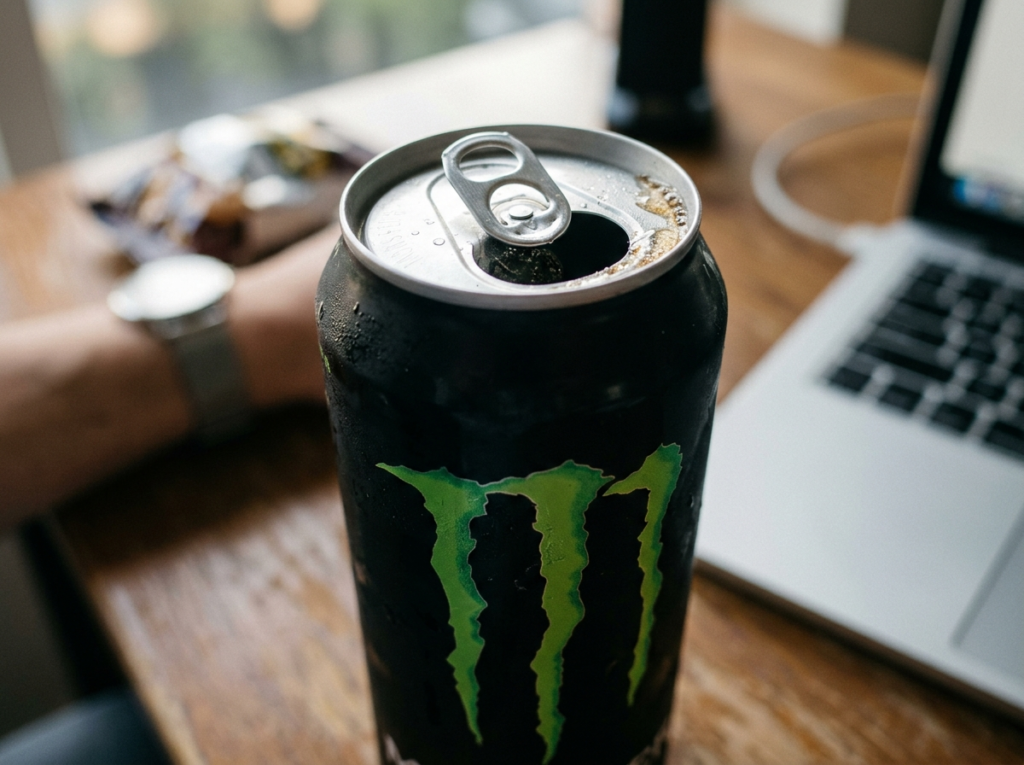
You cracked open a Monster Energy about an hour ago. The buzz was real — you felt sharp, focused, almost unstoppable. But now? That energy is fading fast, and you’re wondering whether you should grab another can or just ride it out.
Here’s the short answer: a typical Monster Energy drink lasts about 5 to 6 hours in your system, though the peak “energized” feeling usually only sticks around for 1 to 3 hours. The rest of that window is your body slowly processing the caffeine, sugar, and other ingredients.
But there’s way more to this than a single number. Your body weight, caffeine tolerance, whether you ate before drinking it, and even your genetics all change how long that Monster energy duration really plays out. Let’s break this down hour by hour so you know exactly what’s happening inside your body — and when that crash is likely to hit.
What’s Actually in a Monster That Gives You Energy?
Before we talk about timing, it helps to understand what you’re putting into your body. Because the “energy” in Monster doesn’t come from one magic ingredient — it’s a combination of several things working together.
A standard 16 oz (473 ml) can of Monster Energy contains 160 mg of caffeine, about 54 grams of sugar (in the original version), and a blend of B-vitamins, taurine, ginseng, and L-carnitine. That caffeine content is roughly equal to a strong cup and a half of coffee. If you’re curious about how that stacks up against other drinks, you can check out this detailed breakdown of Monster Energy caffeine content.
The caffeine does most of the heavy lifting. It blocks adenosine receptors in your brain — adenosine is the chemical that makes you feel sleepy — so you feel more alert and awake. The sugar gives you a quick burst of glucose energy. And ingredients like taurine and B-vitamins play supporting roles in your body’s energy metabolism, though their individual effects at these doses are still debated by researchers.
The reason this matters for timing is simple: caffeine and sugar hit your system at different speeds and wear off at different rates. That’s why the Monster energy effects timeline feels like a rollercoaster for most people — a quick climb, a peak, and then a noticeable drop.
The Monster Energy Effects Timeline: Hour by Hour
This is what most people actually want to know. So here’s a realistic breakdown of what happens in your body after you drink a can of Monster. Keep in mind, this timeline is based on an average adult (around 150–180 lbs) with moderate caffeine tolerance.
The First 10 Minutes: Caffeine Enters Your System
The moment that first sip hits your stomach, your body starts absorbing the caffeine. Within about 10 minutes, the caffeine begins entering your bloodstream. You probably won’t feel much yet, but the process has already started.
Your heart rate might tick up slightly. If you drank it on an empty stomach, absorption happens even faster — sometimes within 5 minutes.
15 to 45 Minutes: The Energy Kicks In
This is where things get interesting. The caffeine concentration in your blood starts rising noticeably. You’ll feel more awake, more focused, and probably more motivated. Your pupils may dilate slightly. Blood pressure edges up. Your brain is getting a nice hit of dopamine, which is why you feel not just alert but actually good.
If your Monster has sugar (the original does), your blood glucose also spikes during this window. That sugar rush pairs with the caffeine hit to create that classic “I can do anything” feeling. This is the honeymoon phase.
45 Minutes to 1 Hour: Peak Energy
Somewhere around the 45-minute mark, caffeine levels in your blood hit their peak. This is when you feel the Monster working hardest. You’re sharp, energetic, and your reaction time is faster. For most people, this is the sweet spot — the reason you bought the drink in the first place.
Your body has also fully absorbed the sugar by now, and your liver is hard at work processing it. Insulin levels are elevated to deal with all that glucose. Everything feels great at this point.
1 to 3 Hours: The Plateau
After that initial peak, you’re riding a plateau. The energy effect is still there, but it’s leveling off rather than climbing. You still feel alert and functional, just not as “amped” as that first hour.
During this window, your body starts metabolizing the caffeine. The half-life of caffeine — the time it takes for your body to eliminate half of it — is roughly 5 to 6 hours for most adults. So if you consumed 160 mg, you’ll still have about 80 mg buzzing through your system after 5 hours. That’s still roughly the caffeine in a cup of green tea.
3 to 5 Hours: The Decline
Now the effects start fading. The sugar crash usually hits first. If you drank a regular (non-sugar-free) Monster, your blood glucose drops after that initial spike, and you might feel a dip in energy — sometimes worse than before you drank it. This is the classic Monster crash time that people complain about.
The caffeine is still in your system, but at lower concentrations. You might feel okay mentally but physically sluggish. Some people describe it as feeling “tired but wired” — your brain is still slightly stimulated, but your body wants to rest.
5 to 6+ Hours: The Tail End
By now, about half the caffeine has been processed and eliminated. You’re past the active energy phase. Most people wouldn’t say they “feel” the Monster anymore at this point, but the caffeine isn’t completely gone.
Here’s what surprises a lot of people: it takes about 10 to 12 hours for caffeine to fully clear your system. So that Monster you drank at 2 PM? It’s still affecting your body (even if subtly) at midnight. This is exactly why sleep experts recommend cutting off caffeine intake by early afternoon.
Monster Energy vs. Red Bull: Which Lasts Longer?
People ask this one a lot, so let’s address it directly. A standard Red Bull (8.4 oz) has about 80 mg of caffeine — exactly half of what a 16 oz Monster contains. So on paper, Monster should last longer simply because there’s more caffeine to process.
And in practice, that’s generally true. Most people report that Monster’s effects feel stronger and last about an hour or so longer than a standard Red Bull. But Red Bull also comes in larger sizes now (12 oz and 16 oz cans), which narrows that gap.
The other difference is sugar content. Monster Original has more sugar than Red Bull, which can make the crash feel more noticeable. If you want to compare these two drinks in more detail, here’s a good read on how long Red Bull lasts that covers similar timing questions.
The real takeaway? The caffeine amount is what primarily determines how long an energy drink lasts. More caffeine = longer duration. The other ingredients modify how that energy feels, but they don’t dramatically change the overall window.
Why Monster Lasts Longer for Some People (and Shorter for Others)
Ever noticed how your friend can drink a Monster at 8 PM and sleep like a baby, while you have one at noon and you’re still jittery at dinner? That’s not imagination — there are real biological reasons why Monster energy duration varies wildly from person to person.
Caffeine Tolerance
If you drink caffeine regularly — coffee every morning, energy drinks a few times a week — your body builds tolerance. Your adenosine receptors adapt, and you need more caffeine to get the same effect. This means the “felt” effects might wear off sooner for heavy caffeine users, even though the caffeine is still in their system.
Someone who rarely touches caffeine? They’ll feel a Monster much more intensely, and the effects may stretch out longer and feel stronger.
Body Weight and Composition
Caffeine is distributed through your body’s water content. A person weighing 200 lbs will dilute that 160 mg across a larger volume than someone weighing 120 lbs. Lighter individuals tend to feel the effects more strongly and for a longer period.
Genetics (Yes, Really)
Your liver uses an enzyme called CYP1A2 to metabolize caffeine. Some people have a genetic variant that makes this enzyme work faster — they’re “fast metabolizers” who process caffeine quickly. Others are “slow metabolizers” and caffeine lingers in their system much longer.
Research published in journals like Nature Genetics has confirmed that this genetic difference is real and significant. A slow metabolizer might feel the effects of Monster for 7-8 hours, while a fast metabolizer clears it in 3-4 hours. You can’t change your genetics, but knowing which camp you fall into helps you plan your caffeine intake.
Food in Your Stomach
Drinking Monster on an empty stomach means faster absorption, a quicker peak, and often a more noticeable crash. Having food in your stomach — especially something with protein and fat — slows down absorption. The energy comes on more gradually and tends to last a bit longer without such a sharp crash.
This is actually a practical tip worth remembering: if you want Monster’s energy to last longer and feel smoother, eat something before you drink it. Even a handful of nuts or a banana makes a difference.
Medications and Health Conditions
Certain medications (like oral contraceptives, some antidepressants, and antibiotics like ciprofloxacin) slow down caffeine metabolism significantly. If you’re on any medication, caffeine from a Monster can hang around in your system longer than usual. Pregnancy also dramatically slows caffeine clearance — the half-life can stretch to 15 hours or more, which is one reason doctors recommend limiting caffeine during pregnancy.
The Monster Crash: Why It Happens and How to Handle It
Let’s talk about what nobody puts on the can — the crash. If you’ve ever felt suddenly tired, irritable, or foggy a few hours after drinking Monster, you’ve experienced it. And it’s not just “in your head.”
The Monster crash time typically hits somewhere between 3 to 5 hours after drinking, though it varies. Two things drive it. First, the sugar crash: your body released a bunch of insulin to handle the sugar spike, and once that glucose is stored away, your blood sugar dips below its baseline temporarily. That dip makes you feel fatigued, hungry, and sometimes even shaky.
Second, as caffeine wears off, all that adenosine your brain has been blocking comes flooding back. It’s been building up the whole time you were feeling energized, and now the dam breaks. Your brain gets hit with a wave of “you should be tired” signals all at once. That’s why the post-Monster fatigue can feel worse than normal tiredness.
So how do you minimize the crash?
Eat a balanced meal before or alongside your Monster. The fiber, protein, and fat slow sugar absorption and keep your blood glucose more stable. Staying hydrated helps too — caffeine is a mild diuretic, and dehydration makes fatigue worse.
Some people switch to Monster Zero Sugar or Monster Ultra varieties to avoid the sugar crash component entirely. You still get the caffeine timeline, but without the glucose spike and subsequent drop. It genuinely makes a difference in how the tail end of the experience feels.
And here’s an unconventional tip: if you feel the crash coming on, a short 15-20 minute walk can blunt it. Light movement helps stabilize blood sugar and clears that groggy feeling faster than sitting still and waiting it out.
Does Monster Last Long Enough for a Workout?
A lot of people reach for Monster before hitting the gym, so this is a fair question. And the answer depends on your workout length and timing.
If you drink a Monster about 30 to 45 minutes before working out, you’ll be hitting your caffeine peak right as you start. For a typical 60-90 minute gym session, the energy should carry you through without any issues. Studies on caffeine and exercise performance consistently show improved endurance, strength output, and perceived effort reduction within this window.
Where it gets tricky is if you’re doing a 2-3 hour endurance activity — a long run, cycling session, or hiking trip. The Monster will start fading in the back half. Some athletes have a second, smaller caffeine dose (like a caffeinated gel or half a can) around the 2-hour mark, but that’s getting into territory where you should be mindful of total daily caffeine intake.
The American FDA suggests keeping total caffeine consumption under 400 mg per day for most healthy adults. One Monster puts you at 160 mg, which is well within that limit. But if you already had a morning coffee and then grab a Monster pre-workout, you might be creeping closer to that ceiling. For context on how other caffeinated drinks compare, this guide on which energy drinks have the most caffeine is worth a look.
If you’re concerned about whether Monster is affecting your health beyond just the energy question, here’s an honest look at whether Monster Energy is bad for you.
How Monster Energy Affects Your Sleep
This is where people consistently underestimate energy drinks. You might not “feel” wired at bedtime, but caffeine can still be disrupting your sleep architecture without you realizing it.
Research from the Journal of Clinical Sleep Medicine found that caffeine consumed even 6 hours before bedtime reduced total sleep time by more than an hour. And participants in the study didn’t always notice the difference — they thought they slept fine, but sleep monitoring showed less deep sleep and more nighttime awakenings.
So if you drink a Monster at 4 PM, the caffeine is actively interfering with your sleep quality at 10 PM. You might fall asleep okay, but the quality of that sleep is compromised. Less deep sleep means you wake up less rested, which makes you want more caffeine the next day. It’s a cycle that sneaks up on you.
The practical rule: try to finish your last Monster (or any caffeinated drink) at least 8 hours before you plan to sleep. If you’re going to bed at 11 PM, your cutoff is 3 PM. If you’re a slow caffeine metabolizer, you might need an even earlier cutoff.
Can You Make Monster Energy Last Longer?
You can’t change the caffeine half-life (that’s biology), but you can influence how long the useful energy lasts. Here are some approaches that actually work.
Sip it slowly instead of chugging. Drinking a Monster over 30-45 minutes rather than 5 minutes extends the absorption window. Your caffeine levels rise more gradually, peak a bit later, and the decline is gentler. You won’t get as dramatic a spike, but the usable energy window stretches out.
Pair it with L-theanine. This amino acid (found naturally in green tea) smooths out caffeine’s jittery edges and extends the feeling of calm focus. Some people take 100-200 mg of L-theanine alongside their Monster. It doesn’t change the caffeine half-life, but it makes the experience feel longer and more productive because you’re not wasting energy on anxious jitters.
Stay hydrated. Dehydration amplifies fatigue and accelerates the “crash” feeling. Drinking water alongside your Monster keeps your body running more efficiently, which makes the energy feel more sustained.
Don’t fight the crash with another Monster. Stacking energy drinks back to back might seem logical, but it pushes your total caffeine high, increases the eventual crash severity, and messes with your sleep even more. If you need a second wind later in the day, a small cup of regular coffee or cappuccino might be a better choice — lower caffeine dose, easier to control.
How Long Does Monster Energy Last if It’s Opened but Not Finished?
Quick side note because people ask this too: if you’re wondering about the drink itself rather than the effects, an opened can of Monster starts losing carbonation almost immediately. The taste stays okay for about 1-2 days if you refrigerate it, but the fizz will be gone. The caffeine doesn’t degrade, so it’ll still work — it just won’t taste great.
An unopened can has a shelf life of about 18-24 months. The expiration date is printed on the bottom. After that date, the drink is usually still safe but may taste flat or slightly off.
FAQ
How long does it take for Monster Energy to kick in?
Most people start feeling the effects within 15 to 45 minutes. Caffeine enters your bloodstream within about 10 minutes of drinking, but the noticeable alertness and energy boost typically hits around the 15-20 minute mark. If you drank it on an empty stomach, it might kick in even faster — sometimes within 10 minutes.
How long does the Monster Energy crash last?
The crash typically lasts about 1 to 2 hours. It usually hits between the 3 and 5-hour mark after drinking. The severity depends on whether you had the sugared or sugar-free version, whether you ate beforehand, and your individual caffeine sensitivity. Eating a small snack and staying hydrated can shorten the crash window.
Is it safe to drink Monster Energy every day?
One can of Monster Energy per day stays within the FDA’s recommended caffeine limit of 400 mg for healthy adults. That said, the sugar content in regular Monster (54 grams per can) is a concern for daily consumption — the American Heart Association recommends no more than 36 grams of added sugar per day for men and 25 grams for women. If you’re drinking Monster daily, the sugar-free versions are a better bet for your overall health.
How long does caffeine from Monster stay in your system?
Caffeine’s half-life is about 5-6 hours, meaning half of the 160 mg is still in your body after that time. It takes roughly 10-12 hours for caffeine to fully clear your system. So a Monster you drink at noon could still have trace effects at midnight, especially on your sleep quality.
Does Monster Zero Sugar last as long as regular Monster?
Yes — Monster Zero Sugar has the same amount of caffeine (160 mg per 16 oz can) as the original. The energy duration from caffeine is identical. The only difference is you won’t get the sugar spike and subsequent sugar crash, so the overall experience tends to feel smoother and more even.
Your Next Move
So now you know the real answer: Monster Energy’s active effects last about 5 to 6 hours, with the peak hitting in the first hour and a gradual decline after that. The caffeine itself hangs around in your body for 10-12 hours, even when you can’t feel it anymore.
The smartest way to use Monster? Time it intentionally. Know when you need the energy, drink it 30-45 minutes before that window, eat something alongside it, and respect the 8-hour-before-bed cutoff. Treat it as a tool, not a habit, and it’ll work a lot better for you.
And if you’re someone who reaches for energy drinks regularly, it’s worth paying attention to your total daily caffeine from all sources — your morning coffee, that afternoon Starbucks Refresher, and your Monster all add up. Staying aware of that total keeps you in the sweet spot where caffeine helps without causing problems.