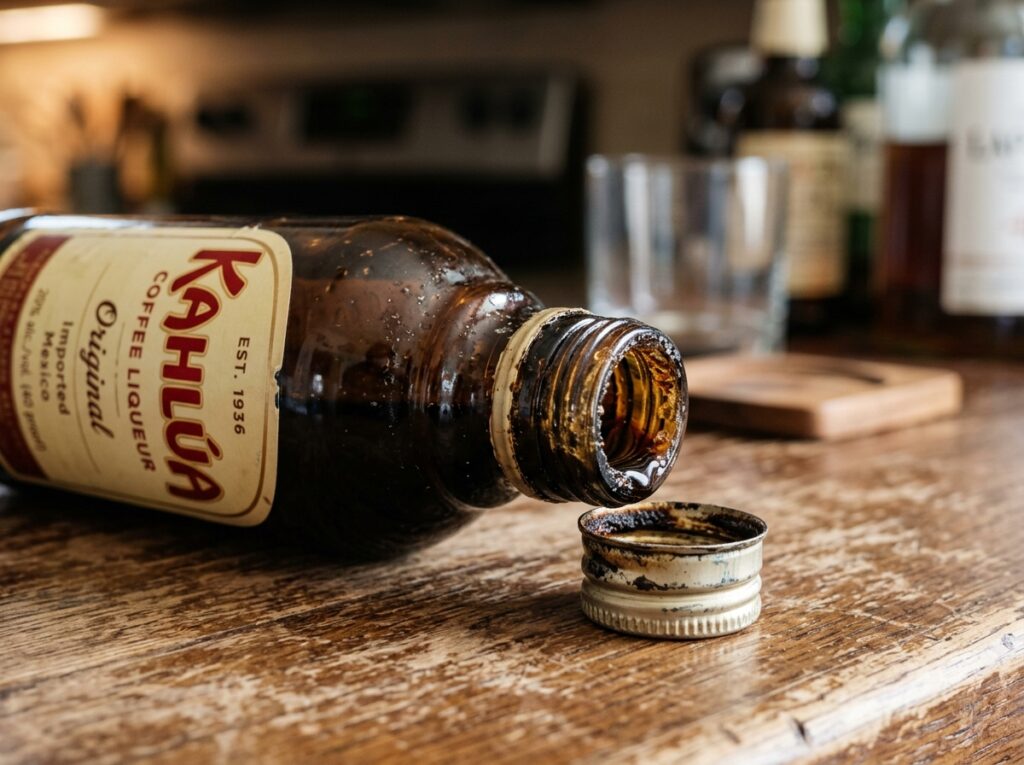
You’re rummaging through your liquor cabinet, and there it is — a bottle of Kahlua you bought for that White Russian night… three years ago. The cap’s still sealed, the liquid looks fine, and now you’re standing there wondering: is this still good?
You’re not alone. Kahlua is one of those bottles that people buy for a specific occasion and then forget about for months (or years). Unlike vodka or whiskey, Kahlua isn’t a pure spirit. It’s a coffee liqueur made with rum, sugar, vanilla, and arabica coffee — and that combination makes its shelf life a bit more complicated than your average bottle of booze. So does Kahlua actually go bad? The short answer is yes, it can — but probably not the way you think. Let’s break it all down so you can figure out whether to pour that old bottle or toss it.
What Exactly Is Kahlua Made Of?
Before you can understand why Kahlua goes bad, it helps to know what’s actually inside the bottle.
Kahlua is a Mexican coffee liqueur produced by Pernod Ricard. The original recipe combines arabica coffee beans, rum, sugar, and vanilla. The alcohol content of Kahlua Original sits at 20% ABV (alcohol by volume), which is significantly lower than hard liquors like vodka or rum that clock in at 40% ABV or higher. If you’re curious about the specifics, you can read more about Kahlua’s alcohol content and how it compares to other popular drinks.
Why does the ABV matter here? Because alcohol acts as a preservative. The higher the alcohol content, the longer a spirit tends to last. At 20% ABV, Kahlua has enough alcohol to prevent bacterial growth, but not enough to preserve itself indefinitely the way a bottle of bourbon would. Add in the coffee and sugar — both of which degrade over time — and you’ve got a product with a finite shelf life.
There are also flavored Kahlua varieties like Kahlua Especial (with 36% ABV), Kahlua Mint Mocha, and Kahlua Vanilla. These have different formulations, and their shelf lives can vary slightly from the original.
Does Kahlua Go Bad?
Yes — but let’s be specific about what “go bad” means.
Kahlua doesn’t spoil the way milk or fresh juice does. You won’t open a bottle and find mold floating on top (under normal storage conditions, at least). The alcohol and sugar content prevent that kind of microbial spoilage. So if your concern is food safety, an old bottle of Kahlua is very unlikely to make you sick.
What does happen is quality degradation. Over time, the flavors in Kahlua — especially the coffee notes — start to fade, flatten, and lose their richness. The aroma becomes dull. The taste might turn slightly off or just… boring. It won’t harm you, but it won’t taste like the Kahlua you remember either.
Think of it like ground coffee sitting in your pantry. After a few months, it’s still technically “coffee,” but it’s lost that deep, aromatic punch. Same idea applies here. The caffeine in Kahlua comes from real coffee, and just like any coffee product, those flavors don’t last forever.
So the real question isn’t “will it make me sick?” — it’s “will it still taste good?”
Kahlua Shelf Life: Opened vs. Unopened
This is where most people get confused, so let’s lay it out clearly.
Unopened Kahlua has a recommended shelf life of 4 years from the date of production. Kahlua’s manufacturer (Pernod Ricard) has stated this directly. The product doesn’t carry a hard “expiration date” in the traditional sense — instead, you’ll find a production date or lot code stamped on the bottle. From that date, you’ve got roughly four years of optimal quality.
Opened Kahlua is a different story. Once you break that seal, air starts interacting with the liquid. Oxidation slowly begins to alter the flavor profile, and the aromatic compounds from the coffee start to dissipate faster. The general recommendation for opened Kahlua is to use it within 18 months for the best experience. Some sources stretch it to two years, but the sweet spot for flavor is that 12-to-18-month window after opening.
Here’s a quick breakdown:
- Unopened Kahlua Original: Up to 4 years from production date
- Opened Kahlua Original: Best within 18 months of opening
- Kahlua Flavored Varieties: Shorter shelf life; best used within 2 years unopened
- Kahlua Ready-to-Drink (premixed): Check the label; these often have shorter windows due to dairy or other perishable ingredients
One thing to keep in mind — these timelines assume proper storage. If you’ve been leaving your Kahlua on the kitchen counter next to the stove, those numbers shrink.
How to Read the Date on a Kahlua Bottle
Here’s something that trips people up: Kahlua doesn’t have a straightforward “best by” date printed in plain English on most bottles. Instead, you’ll find a lot code — a string of numbers and letters, usually stamped on the back or bottom of the bottle.
The format typically looks something like L5260 09:21. The key information is in the first few characters. Here’s how to decode it:
The letter “L” stands for “lot.” The first digit after “L” represents the last digit of the production year. The next three digits represent the day of the year (out of 365). So in the example L5260, the “5” could mean 2015 or 2025, and “260” means the 260th day of that year — which falls in mid-September.
If math isn’t your thing, don’t worry too much. Just estimate. If you remember roughly when you bought the bottle, count four years from that date for an unopened bottle. If you opened it a long time ago and can’t remember when, use your senses (more on that in a minute).
Signs Your Kahlua Has Gone Bad
Your nose and taste buds are your best tools here. Since Kahlua doesn’t “spoil” in a dangerous way, what you’re really looking for are signs of quality loss.
Smell it first. Fresh Kahlua has a rich, sweet coffee aroma with hints of vanilla and caramel. If your bottle smells flat, musty, or just “off” — like stale coffee grounds — the flavor has likely degraded past its prime.
Look at it. Kahlua should be a dark, uniform brown color. If you notice any separation, cloudiness, or particles floating around, that’s a red flag. A slight change in color over many years isn’t unusual, but anything dramatic deserves suspicion.
Taste a tiny sip. If the smell checks out, take a small taste. Good Kahlua is smooth, sweet, and distinctly coffee-forward. Old Kahlua often tastes thin, overly sweet without depth, or has an unpleasant bitter edge that wasn’t there before. If you mix it into a Kahlua and milk and the drink tastes dull or weird, the Kahlua is likely past its best.
Check the cap area. If the area around the cap is sticky, crusty, or shows signs of leakage, air has been getting in. This accelerates oxidation, and the contents are probably compromised in flavor.
⚠️ Warning: If you ever see actual mold, a foul fermented smell, or anything growing inside the bottle, throw it away immediately. This would be extremely rare with a 20% ABV liqueur, but if the seal was damaged or the bottle was stored in terrible conditions, it’s not impossible.
How to Store Kahlua Properly
Proper storage isn’t complicated, but it does make a real difference in how long your Kahlua holds up.
Keep it cool and dark. A liquor cabinet, pantry shelf, or closet works perfectly. Direct sunlight and heat are the two biggest enemies of Kahlua’s flavor. UV light breaks down the organic compounds in coffee, and heat accelerates oxidation. That shelf above your refrigerator? Terrible spot — it gets warm up there.
Keep the cap tight. This seems obvious, but a loosely closed cap lets air in steadily. After every pour, make sure you seal the bottle properly. If the original cap doesn’t seal well anymore, consider transferring the Kahlua to a bottle with a tighter closure.
You don’t need to refrigerate it — but you can. Kahlua is fine at room temperature. The alcohol and sugar content keep it stable. That said, if you prefer your Kahlua chilled (many people do), storing it in the fridge won’t hurt it at all. In fact, cold temperatures can slow down flavor degradation slightly. It’s a personal preference, not a requirement.
Don’t freeze it. At 20% ABV, Kahlua won’t freeze solid in a standard home freezer, but it’ll get extremely thick and slushy. Repeated freezing and partial thawing can mess with the texture and flavor. Just skip the freezer.
Pro Tip: If you know you won’t finish a bottle within the next year, consider pouring the remaining Kahlua into a smaller bottle. Less air space inside the bottle means less oxidation, which means the flavor holds up longer.
Kahlua Original vs. Flavored Varieties: Does Shelf Life Differ?
Yes, and this is a detail most articles gloss over.
Kahlua Original (20% ABV) has the longest shelf life of the standard product line — about 4 years unopened. Its relatively simple ingredient profile (rum, coffee, sugar, vanilla) keeps things stable.
Kahlua Especial has a higher ABV (36%), which actually gives it a slightly better preservation profile. The higher alcohol content slows degradation. That said, Pernod Ricard still recommends a similar consumption timeline for best quality.
Flavored varieties like Mint Mocha, French Vanilla, or Salted Caramel often contain additional flavorings and additives. These extra ingredients can be more volatile, meaning they break down faster. For flavored Kahlua, aim to consume the bottle within 2 years of production if unopened, and within 12 months once opened.
Ready-to-Drink Kahlua products (premixed cocktails that sometimes contain dairy) have the shortest shelf life. Always check the printed date on these, and treat them more like a perishable beverage than a shelf-stable liqueur.
If you’re comparing Kahlua to other cream-based liqueurs, the difference is even more significant. Something like Baileys Irish Cream, for example, contains actual dairy and has a shelf life of about 2 years from production — shorter than Kahlua Original. You can read a full comparison of Kahlua vs. Baileys to understand how they stack up.
Can Old Kahlua Make You Sick?
This is the safety question everyone really wants answered, so let’s be direct.
It’s extremely unlikely that old Kahlua will make you sick. The 20% alcohol content, combined with the high sugar concentration, creates an environment where harmful bacteria, mold, and yeast can’t easily thrive. Even if your bottle is five or six years old, as long as it was stored reasonably well and the seal wasn’t compromised, it should be safe to consume from a health standpoint.
That said, “safe” and “enjoyable” are two different things. Drinking a glass of Kahlua that’s 7 years old and has been sitting in a warm garage won’t send you to the hospital, but it’ll taste pretty awful. Flat, overly sweet, with none of the coffee complexity you’d expect.
The exception — and it’s an important one — is any Kahlua product that contains dairy or cream. If you have a premixed Kahlua cocktail with cream components and it’s past its date, treat it like any other dairy product. When in doubt, throw it out. This is different from coffee creamer shelf life, which follows its own rules based on whether it’s dairy-based or non-dairy.
What to Do With Kahlua That’s Past Its Prime
So you’ve determined your Kahlua is still safe but the flavor isn’t great. Don’t pour it down the drain just yet. There are a few ways to use up an older bottle.
Baking. Kahlua is fantastic in desserts — brownies, tiramisu, chocolate cake, coffee-flavored frosting. The heat from baking and the other strong flavors in these recipes can mask the slight quality loss of older Kahlua. You’ll still get that coffee-liqueur character without noticing the degradation as much.
Coffee cocktails with strong mixers. An Espresso Martini with fresh espresso, or a mudslide with ice cream, can carry the weight even if the Kahlua itself isn’t at peak flavor. The other bold ingredients compensate.
Marinades and sauces. Some people use Kahlua in glazes for pork or in barbecue sauces. The sugar and coffee notes add depth to savory dishes, and cooking the sauce eliminates any concern about off flavors.
If the Kahlua smells genuinely bad or has visible issues, though, just toss it. No recipe is worth using a product that’s clearly gone off.
Quick Facts About Kahlua Shelf Life
Did you know? Kahlua has been produced in Veracruz, Mexico since 1936. The original recipe has stayed remarkably consistent for nearly 90 years, and the brand is now one of the best-selling coffee liqueurs in the world.
The shelf life recommendations from Pernod Ricard aren’t just marketing — they’re based on actual sensory analysis. The company tests batches over time to determine when the flavor profile noticeably drops below their quality standard. That 4-year window for unopened bottles isn’t arbitrary; it’s the point where most tasters agree the product starts to lose its defining characteristics.
One more interesting detail: because Kahlua uses real arabica coffee — the same type of bean used in most quality coffee shops — the caffeine content is genuine but modest. A standard serving of Kahlua has roughly 5 mg of caffeine. For comparison, a regular cup of brewed arabica coffee has about 95 mg. The caffeine degrades over time just like the flavor does, so very old Kahlua has even less.
FAQ
Does Kahlua have an expiration date?
Kahlua doesn’t carry a traditional “expiration date” or “best by” date on most bottles. Instead, the manufacturer stamps a production date (lot code) on the packaging. From that production date, the recommended shelf life is 4 years for Kahlua Original when unopened. After opening, you should aim to use it within about 18 months for the best taste.
How long does unopened Kahlua last?
Unopened Kahlua Original lasts about 4 years from the production date when stored properly in a cool, dark place. It won’t suddenly become unsafe after 4 years, but the flavor — especially the coffee notes — will start declining noticeably. Flavored Kahlua varieties may have a slightly shorter optimal window of around 2–3 years.
Can you drink 10-year-old Kahlua?
Technically, you can drink it — the alcohol and sugar content make it very unlikely to be unsafe. But will it taste good? Almost certainly not. After 10 years, even properly stored Kahlua will have lost most of its coffee aroma and depth. It’ll probably taste flat and one-dimensionally sweet. Your best bet is to taste a tiny sip and decide if it’s worth using.
Does Kahlua need to be refrigerated after opening?
No, refrigeration isn’t required. Kahlua is shelf-stable at room temperature thanks to its alcohol and sugar content. But if you prefer it cold or want to slightly extend its post-opening quality, storing it in the fridge is perfectly fine. Just make sure the cap is sealed tightly regardless of where you store it.
What’s the difference between Kahlua going “bad” and losing quality?
Going “bad” in the food safety sense means a product becomes unsafe to consume — think bacterial growth, mold, or fermentation. Kahlua almost never reaches that point under normal conditions. “Losing quality” means the taste, aroma, and overall drinking experience have deteriorated. With Kahlua, quality loss is the realistic concern, not safety.
Your Next Move
Here’s the bottom line: if your bottle of Kahlua is within 4 years of its production date and has been stored decently, you’re almost certainly fine. If it’s been opened for more than 18 months, give it the smell-and-taste test before mixing up a cocktail. And if it’s been sitting in a warm spot for half a decade? You can probably still drink it safely, but you might want to pick up a fresh bottle if you actually want to enjoy it.
Kahlua is one of those liqueurs that rewards a little bit of attention. Store it properly, seal it after every use, and keep it away from heat and light. Do that, and your bottle will deliver great flavor for a long time. Ignore those basics, and you’ll be doing this exact same Google search again with your next bottle.
If you’re getting into Kahlua-based drinks, it’s worth knowing how it compares to Baileys and what caffeine kick you’re actually getting when you mix it into your after-dinner coffee. The more you know about what’s in your glass, the better the experience.