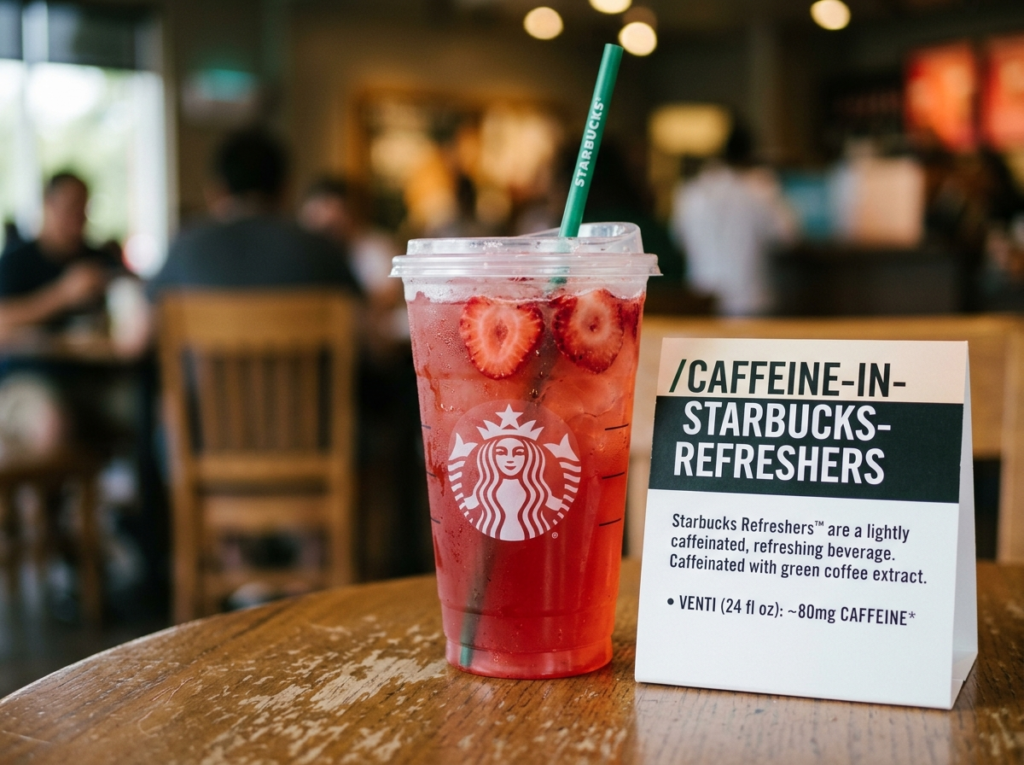
You just ordered a Strawberry Açaí Refresher because you wanted something “light.” No coffee. No espresso. Just a fruity, icy drink to get through the afternoon. But here’s the thing — that pretty pink drink sitting in your hand? It’s got caffeine. More than you probably expected.
Most people assume Starbucks Refreshers are caffeine-free because they don’t taste anything like coffee. They’re fruity, they’re cold, and they look like something you’d sip at the beach. But every single Refresher on the menu contains caffeine from green coffee extract, and the amounts aren’t exactly tiny.
So if you’ve been handing these to your kids, drinking three a day because “it’s not coffee,” or choosing them specifically to avoid caffeine — you need to read this. Let’s break down exactly how much caffeine is in every Starbucks Refresher, what that number actually means for your body, and how it compares to your usual cup of coffee.
What Are Starbucks Refreshers, Exactly?
Before we talk numbers, it helps to understand what you’re actually drinking. Starbucks Refreshers aren’t juice. They aren’t tea. And they definitely aren’t caffeine-free fruit drinks.
The Starbucks Refresher ingredients list includes fruit juice concentrates, water, natural flavors, and — here’s the key part — green coffee extract. That extract comes from unroasted coffee beans, which means the caffeine is still very much present. The roasting process doesn’t create caffeine; the bean naturally contains it. So even though your Refresher doesn’t taste like coffee at all, the caffeine source is essentially the same plant.
Starbucks introduced the Refresher line back in 2012 as a way to offer a lighter caffeine option for people who didn’t love the taste of traditional coffee. The idea was simple: give customers a mild energy lift without the bitterness. And it worked. Refreshers are now among the most popular items on the Starbucks menu, especially during summer months.
But “lighter caffeine” doesn’t mean “no caffeine.” And depending on which size you order, the numbers can add up fast.
How Much Caffeine Is in Each Starbucks Refresher Size?
Here’s where things get specific. The Starbucks Refresher caffeine mg count changes depending on the size you order. The flavoring doesn’t significantly affect the caffeine — it’s the amount of green coffee extract base that scales with size.
A Tall (12 oz) Refresher contains roughly 35–45 mg of caffeine. That’s about what you’d get from a can of Coca-Cola. Not nothing, but not overwhelming either.
A Grande (16 oz) bumps that up to around 45–55 mg. This is the size most people order, and it’s sitting right in the range of a standard cup of green tea.
A Venti (24 oz) pushes you to approximately 70–85 mg of caffeine. Now you’re getting into territory that’s comparable to a full cup of black tea, or roughly half a standard cup of brewed coffee.
And then there’s the Trenta (30 oz), which is available for Refreshers. That giant cup can deliver somewhere around 90–110 mg of caffeine. That’s genuinely significant — roughly the same as a shot of espresso or a small cup of drip coffee.
Quick Fact: The exact caffeine number can vary slightly between locations because of how the base concentrate is mixed. Starbucks provides approximate figures, not lab-precise measurements for every single cup.
These numbers might seem moderate on paper. But consider this — a lot of people drink Refreshers because they think they’re avoiding caffeine. If you’re having two Venti Refreshers in a day, you’ve consumed close to 170 mg of caffeine without ever touching a coffee cup.
Caffeine Breakdown by Refresher Flavor
You might be wondering whether the Strawberry Açaí hits differently than the Mango Dragonfruit in terms of caffeine. The short answer is: not really, but there are small differences worth knowing.
All Starbucks Refreshers use the same green coffee extract base. The caffeine in your drink comes from that base, not from the fruit juice or flavorings. So the core caffeine content stays pretty consistent across flavors.
The Strawberry Açaí Refresher — which is also the base for the famous Pink Drink — typically contains about 45 mg of caffeine in a Grande. The Mango Dragonfruit Refresher sits in the same range, around 45–50 mg for a Grande. The Paradise Drink and Dragon Drink are essentially Refreshers made with coconut milk instead of water, and they carry the same caffeine since the base doesn’t change.
Starbucks occasionally rotates seasonal flavors, and newer additions like the Pineapple Passionfruit Refresher follow the same formula. If it’s called a “Refresher,” you can expect it to fall in that same ballpark of caffeine per size.
Where things do change slightly is if you’re ordering a Starbucks Refresher with lemonade instead of water. Lemonade itself has no caffeine, but it does replace some of the green coffee extract base, which can actually lower the overall caffeine content by a small amount. It’s not a dramatic difference — maybe 5–10 mg less — but it’s there.
Pro Tip: If you want the absolute lowest caffeine Refresher possible, ask for it made with lemonade and extra ice. Both reduce the proportion of green coffee extract base in your cup.
Refresher vs Coffee Caffeine: How Do They Really Compare?
This is the comparison everyone wants to see. You skipped your morning coffee and grabbed a Refresher instead. Did you actually cut back on caffeine, or was it a wash?
Let’s put real numbers side by side. A Grande (16 oz) Pike Place brewed coffee from Starbucks contains approximately 310 mg of caffeine. A Grande Refresher has about 45–55 mg. That’s roughly six times less caffeine in the Refresher. So yes, if you’re switching from a standard drip coffee to a Refresher, you are genuinely reducing your caffeine intake by a huge margin.
But compare it to other drinks and the gap narrows. A Grande Starbucks Vanilla Frappuccino has around 95 mg of caffeine — about double a Refresher. A single shot of espresso sits at roughly 75 mg. Even a Grande chai tea latte has around 95 mg.
Now look at it from the other direction. If you’re comparing a Refresher to genuinely caffeine-free drinks — like Sprite, Fanta, or Hi-C — the Refresher suddenly looks caffeinated enough to matter. A Venti Refresher has more caffeine than a can of Pepsi, which sits around 38 mg.
Here’s a quick reality check for context:
- Grande brewed coffee: ~310 mg
- Espresso (single shot): ~75 mg
- Grande Vanilla Frappuccino: ~95 mg
- Grande Refresher: ~45–55 mg
- Can of Coca-Cola (12 oz): ~34 mg
- Can of Monster Energy (16 oz): ~160 mg
So where does a Refresher land? It’s solidly in the “mild caffeine” category. Not zero. Not heavy. But enough to feel something, especially if you’re caffeine-sensitive.
If you’re someone who’s exploring non-coffee drinks at Starbucks because you want to reduce caffeine, Refreshers are a decent middle-ground option — just don’t mistake them for caffeine-free.
Why Do Starbucks Refreshers Have Caffeine at All?
This is a fair question. If Refreshers are supposed to be the “not coffee” option, why put caffeine in them?
The answer comes down to the purpose of the product. Starbucks designed Refreshers as a light energy drink alternative, not a caffeine-free fruit punch. The whole marketing angle was “a refreshing boost” — something that gives you a gentle pick-me-up without the heaviness of a latte or the bitterness of an Americano.
Green coffee extract was the perfect fit. It’s derived from the same Coffea arabica plant that produces your morning espresso, but because the beans aren’t roasted, the flavor is much milder. You get the caffeine benefit without the coffee taste. It’s essentially caffeinated water at its base level, dressed up with fruit juices and sweeteners.
This is actually similar to what energy drink companies do. Monster Energy uses caffeine content from various sources. Red Bull uses synthetic caffeine. Starbucks chose green coffee extract — a natural caffeine source that fits their brand image.
The takeaway? Refreshers were never meant to be caffeine-free. They were meant to be a lighter-caffeine option with a fruit-forward flavor profile. And on that promise, they deliver.
Who Should Watch Their Refresher Intake?
For most healthy adults, the caffeine in a Starbucks Refresher isn’t going to cause any issues. The FDA considers up to 400 mg of caffeine per day safe for most adults, and even a Trenta Refresher only gets you about a quarter of the way there.
But “most adults” doesn’t mean everyone. There are certain groups who should pay closer attention to that Starbucks Refresher caffeine mg number.
Pregnant women are generally advised to keep caffeine under 200 mg per day. A single Grande Refresher won’t blow that budget, but if you’re also having tea, chocolate, or other caffeinated foods throughout the day, those 45–55 mg start to matter.
Kids and teenagers are another group. The American Academy of Pediatrics recommends that children under 12 avoid caffeine entirely, and that adolescents cap it at around 100 mg per day. Parents who grab their kid a Refresher thinking it’s just a “juice drink” might not realize they’re giving them a caffeinated beverage.
People with caffeine sensitivity — you know who you are. If a cup of green tea makes your heart race or keeps you up at night, a Venti Refresher with 70+ mg of caffeine could definitely affect you.
And if you’re someone who’s specifically looking for zero-caffeine Starbucks options, a Refresher isn’t it. You’d be better off with a steamer, an iced fruit juice blend, or a Puppuccino — okay, that last one is for your dog.
⚠️ Note: If you have specific health concerns about caffeine, talk to your doctor. This article is informational, not medical advice.
Starbucks Refresher Ingredients: What Else Is in There?
Caffeine gets the spotlight, but it’s worth knowing what else you’re sipping on. The Starbucks Refresher ingredients list is relatively straightforward, though a few things might surprise you.
The main components are water, sugar (from the fruit juice concentrates and added sweeteners), natural flavors, citric acid for tartness, and of course, green coffee extract. Some Refreshers also contain fruit inclusions — those freeze-dried strawberry pieces or dragonfruit chunks floating in your drink.
The sugar content is where some people do a double-take. A Grande Strawberry Açaí Refresher has about 24 grams of sugar. That’s roughly six teaspoons. It’s less than a Grande Caramel Frappuccino (around 50 grams), but it’s still a meaningful amount if you’re tracking sugar intake. Looking for lighter options? You might want to check out low calorie Starbucks drinks for alternatives.
There’s no artificial coloring in the current formulations — the colors come from fruit and vegetable juice concentrates. And despite containing green coffee extract, Refreshers contain zero grams of fat and very little protein.
One ingredient that catches attention on the label is “white grape juice concentrate.” It’s used primarily as a natural sweetener and doesn’t contribute any caffeine. You’ll find it listed high on the ingredients for most Refresher flavors.
How Do Refreshers Compare to Dunkin’ Refreshers?
If you’re a Refresher fan, you’ve probably wondered how the Starbucks version stacks up against Dunkin’s take on the same concept. The two aren’t identical, and the caffeine content actually differs.
Dunkin’ Refreshers also contain caffeine, but they source it from green tea extract rather than green coffee extract. A medium Dunkin’ Refresher typically contains around 66 mg of caffeine — roughly 10–20 mg more than a comparable Grande from Starbucks.
The flavor profiles are also different. Dunkin’ tends to lean slightly sweeter, while Starbucks Refreshers have a more tart, juice-forward taste. But the caffeine difference is the more important takeaway for anyone comparing the two.
Both brands position their Refreshers the same way — as a lighter, fruitier alternative to traditional iced coffee. And both contain real caffeine that should be accounted for, especially if you’re monitoring your daily intake.
How to Order a Refresher With Less (or More) Caffeine
Here’s where things get practical. You can actually customize your Refresher order to adjust the caffeine content, and it doesn’t require any complicated hacks.
Want less caffeine? Order your Refresher with extra ice. More ice means less liquid, and less liquid means less green coffee extract base. You can also ask for it with lemonade instead of water — the lemonade displaces some of the base, slightly reducing caffeine. Ordering a smaller size is the most obvious move, but sometimes a Tall just doesn’t feel like enough drink.
Want more caffeine? This is trickier. You can’t add extra green coffee extract because Starbucks uses a pre-mixed base. But you can ask for a shot of espresso added to your Refresher. It sounds odd, but some regulars swear by it. That’ll add roughly 75 mg of caffeine per shot, turning your mild Refresher into something with genuine kick.
Some Starbucks secret menu drinks actually combine Refresher bases with other caffeinated components. If you’re curious about those combinations, they can significantly change both the flavor and the caffeine content of your order.
Did You Know? The Pink Drink — one of Starbucks’ most Instagram-famous beverages — is just a Strawberry Açaí Refresher made with coconut milk instead of water. Same caffeine content, different texture and flavor.
Starbucks Refreshers vs Energy Drinks: A Cleaner Option?
A lot of people reach for Refreshers as an alternative to energy drinks. And honestly? That comparison makes more sense than the coffee comparison.
A standard 16 oz Monster Energy drink contains about 160 mg of caffeine, plus taurine, B-vitamins, and guarana. A same-sized Grande Refresher has about 45–55 mg of caffeine and none of those additional stimulants. If you’re just looking for a mild boost to fight the 2 PM slump, a Refresher is clearly the gentler choice.
Energy drinks also tend to hit you faster and harder because of the additional ingredients that amplify the caffeine effect. A Refresher, with its simpler ingredient profile, gives you a more gradual lift. You probably won’t feel jittery, and you likely won’t crash as hard — if at all.
That said, if you actually need the caffeine level of an energy drink, a Refresher isn’t going to replace it. You’d need to drink nearly three Grande Refreshers to match a single can of Monster. That’s a lot of fruit juice and sugar.
For a deeper look at how long energy drinks actually last and how they affect your body, the difference becomes even clearer. Refreshers are playing a different game entirely.
Tracking Your Total Daily Caffeine From Refreshers
Here’s a scenario that happens more often than you’d think. You have a Grande Refresher at 10 AM. You grab another one at 2 PM because it’s hot and it tastes good. Maybe a Tall later in the afternoon. You haven’t had any “coffee” today, so you feel like you’re being responsible about caffeine.
But let’s add it up. Grande (50 mg) + Grande (50 mg) + Tall (40 mg) = 140 mg of caffeine. That’s more than you’d get from a cup of black tea. It’s close to what you’d get from a double espresso. And you did it all through “fruit drinks.”
This isn’t meant to scare you — 140 mg is well within the safe daily limit for most adults. But it’s worth being aware of, especially if you’re also consuming caffeine from other sources like chocolate, tea, soda, or even certain medications like Excedrin.
A good practice is to treat your Refreshers the same way you’d treat any caffeinated drink. Track them. Count them. And if you’re having trouble sleeping, feeling anxious, or getting heart palpitations, consider whether those “innocent” Refreshers might be part of the equation.
If you’re curious about how all Starbucks drinks rank by caffeine, that comparison can help you make smarter choices across the entire menu.
FAQ
How much caffeine is in a Grande Starbucks Refresher?
A Grande (16 oz) Starbucks Refresher contains approximately 45–55 mg of caffeine. The exact amount can vary slightly depending on the specific flavor and how the drink is prepared, but all Refreshers in this size range fall within this window. The caffeine comes from green coffee extract, not from traditional brewed coffee.
Are Starbucks Refreshers safe for kids?
Starbucks Refreshers do contain caffeine, so they aren’t truly “kid-friendly” in the way a pure juice or milk drink would be. A Tall Refresher has about 35–45 mg of caffeine, which is similar to a can of soda. The American Academy of Pediatrics recommends children under 12 avoid caffeine. For older teens, a small Refresher is unlikely to cause issues, but parents should factor it into their child’s total daily caffeine intake.
Do Starbucks Refreshers have more caffeine than tea?
It depends on the tea. A Grande Refresher (about 45–55 mg) has less caffeine than a Grande Starbucks Chai Tea Latte (around 95 mg) and about the same as a Grande green tea. It has more caffeine than most herbal teas, which are naturally caffeine-free. The comparison really comes down to which specific tea you’re measuring against.
Can I get a caffeine-free Refresher at Starbucks?
No. All Starbucks Refreshers contain green coffee extract, which is the caffeine source. There’s no option to remove it because it’s built into the base concentrate. If you want a completely caffeine-free fruity drink at Starbucks, you’d need to look at options like blended juices, steamers, or flavored lemonades — none of which are technically “Refreshers.”
Is the caffeine in Refreshers the same as coffee caffeine?
Yes, chemically it’s the same molecule — caffeine is caffeine regardless of the source. Green coffee extract comes from unroasted coffee beans of the same plant used to make regular coffee. Your body processes it the same way. The difference is the quantity (Refreshers have much less) and the absence of other coffee compounds that affect flavor and absorption.
Your Refresher, Your Choice
Starbucks Refreshers aren’t what most people think they are. They’re not caffeine-free fruit drinks, and they’re not stealth energy bombs either. They sit in a genuinely useful middle ground — enough caffeine to give you a gentle lift, not enough to wire you for the night.
The key is knowing what you’re drinking. Now you do. Whether that changes your order or simply gives you peace of mind, you’re making a more informed choice the next time you walk up to that counter.
If you’re trying to manage your daily caffeine, treat each Refresher like what it is — a lightly caffeinated beverage that deserves a spot in your mental tally, right alongside your tea, your soda, and your morning brew. And if you’ve been giving them to your kids thinking they’re just juice? Maybe switch to a lemonade next time.