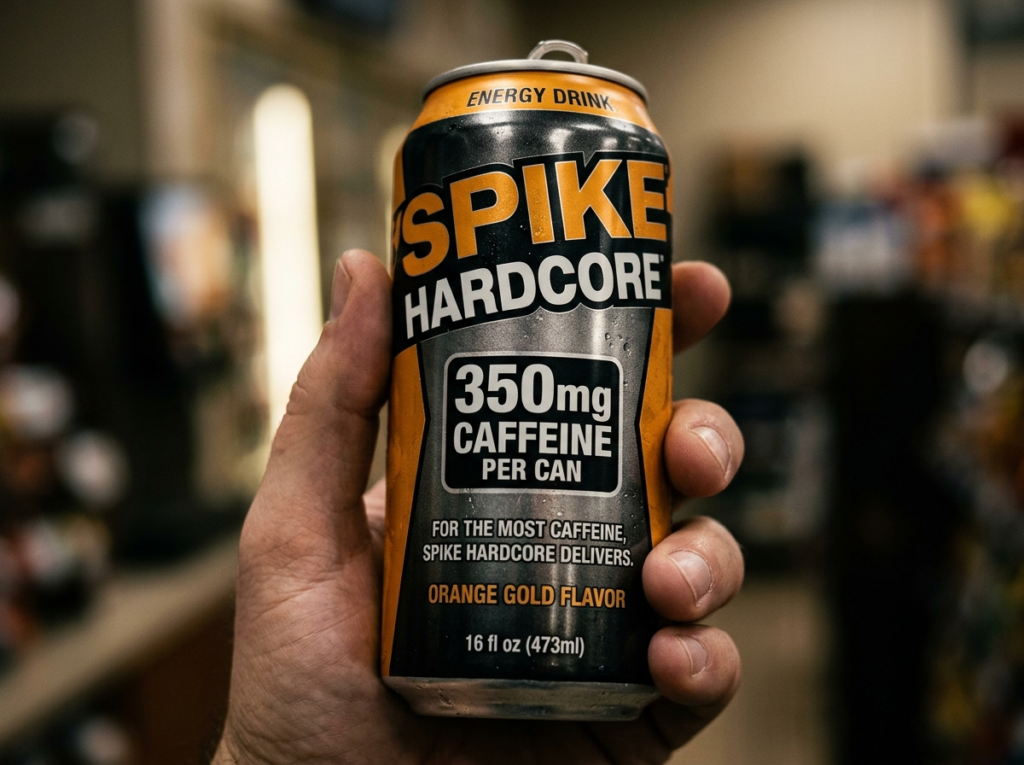
A single can of some energy drinks packs more caffeine than five cups of coffee. That’s not a typo — we’re talking 300, 350, even 400+ milligrams of caffeine in one serving. And most people crack these open without checking the label.
If you’re searching for the energy drink with most caffeine, you probably fall into one of two camps. Either you want the absolute strongest option for those brutal shifts, late-night study sessions, or intense workouts. Or you’re curious about how much caffeine you’re actually consuming and whether you should be worried. Either way, you’re in the right place.
This article breaks down exactly which energy drinks sit at the top of the caffeine chart, how they compare against each other, and what all that caffeine actually does to your body. No fluff, no scare tactics — just straight answers backed by real numbers.
Why Caffeine Content Varies So Much Between Energy Drinks
You’d think an energy drink is an energy drink, right? Grab any can, get a jolt, move on. But the caffeine gap between different brands is honestly wild.
A standard 8.4 oz Red Bull gives you about 80 mg of caffeine. That’s roughly one cup of coffee. Now compare that to a Spike Hardcore Energy, which packs 350 mg into a single 16 oz can. That’s over four times the caffeine in just double the liquid.
So why the huge difference? It comes down to a few things.
Target audience matters. Red Bull markets to a broad crowd — students, casual drinkers, people mixing it with vodka at a bar. Brands like Spike, Bang, or Reign go after gym-goers, night shift workers, and people who specifically want maximum stimulation. Their entire selling point is strength.
Can size plays tricks on you too. Some brands sell 8 oz cans, some sell 16 oz, and a few sell massive 24 oz cans. A drink might have “moderate” caffeine per ounce but deliver a huge total dose because the can is enormous. Always check the total per container, not just per serving.
Formulation philosophy also differs. Some brands rely purely on caffeine. Others blend caffeine with ingredients like taurine, guarana, B-vitamins, and L-theanine. Guarana itself contains caffeine, so that “natural energy blend” on the label? It’s adding more caffeine than you think.
If you’re curious how long these drinks actually keep you wired, we covered how long Monster Energy effects typically last and the timeline for Red Bull’s effects in separate guides.
The Highest Caffeine Energy Drinks Available Right Now
Let’s get to what you came for. Here are the strongest energy drinks ranked by total caffeine per container. These are all widely available either in stores or online in the U.S. as of 2025.
Spike Hardcore Energy (16 oz) — 350 mg caffeine. This one consistently sits at or near the top of every ranking. It’s not something you’ll find in every gas station, but it’s widely available online and in supplement stores. The brand doesn’t mess around with branding either — they literally put “Hardcore” in the name. At 350 mg per can, you’re getting the caffeine equivalent of about four cups of brewed coffee in one go.
Reign Total Body Fuel (16 oz) — 300 mg caffeine. Reign positions itself as a fitness-focused energy drink, and it’s owned by Monster Beverage Corporation. Each 16 oz can delivers 300 mg of caffeine alongside BCAAs, CoQ10, and B-vitamins. Zero sugar, zero calories. You’ll spot this in most gyms and convenience stores.
Bang Energy (16 oz) — 300 mg caffeine. Here’s where the Bang energy caffeine content conversation gets interesting. Bang shot to fame around 2018–2020 and became one of the most popular high-caffeine energy drinks in the U.S. Each 16 oz can contains 300 mg of caffeine, plus their proprietary “Super Creatine” and CoQ10. The brand has faced some controversy (including lawsuits about their ingredient claims), but purely on caffeine numbers, Bang sits right alongside Reign at 300 mg.
Celsius Heat (16 oz) — 300 mg caffeine. Don’t confuse this with regular Celsius, which has 200 mg. The “Heat” version targets pre-workout energy and bumps the caffeine up to 300 mg. It also includes L-citrulline and extra vitamins. The regular Celsius is already popular in fitness circles, but Heat is the heavy hitter.
G Fuel Cans (16 oz) — 300 mg caffeine. Originally known as a powder mix for gamers, G Fuel expanded into canned drinks. Their cans pack 300 mg of caffeine with zero sugar. The powder version varies depending on how many scoops you use, but the canned variety gives you a consistent 300 mg.
Monster Energy (regular, 16 oz) — 160 mg caffeine. Wait, Monster at only 160 mg? Yep. The standard green Monster that most people grab at the gas station actually has relatively modest caffeine compared to the brands above. It’s still more than a Red Bull, but it’s roughly half what Bang or Reign deliver. If you want the deep dive on that, check out our full breakdown of Monster Energy caffeine content.
Red Bull (8.4 oz) — 80 mg caffeine. The original mainstream energy drink sits at the lower end. An 80 mg dose is comparable to a weak cup of coffee. Red Bull has always leaned more on marketing and brand lifestyle than raw caffeine power.
Quick Fact: The FDA considers 400 mg of caffeine per day generally safe for healthy adults. One can of Spike Hardcore gets you to 87.5% of that limit in a single drink.
Bang vs Monster Caffeine: A Real Comparison
This is one of the most searched comparisons, and for good reason — Bang and Monster are two of the best-selling energy drink brands in the country. But putting them side by side reveals just how different they are.
Bang delivers 300 mg of caffeine per 16 oz can. Monster delivers 160 mg in the same size can. That means Bang has almost double the caffeine of a standard Monster. If you’re switching from Monster to Bang thinking “it’s just another energy drink,” you might be in for a surprise.
The experience is different too. Monster’s 160 mg hits more gradually, partly because of its sugar content (54g in a regular Monster) which blends with the caffeine for a smoother energy curve. Bang, with zero sugar and nearly twice the caffeine, tends to hit harder and faster. Many people report feeling a sharper alertness with Bang but also a more noticeable crash later.
Here’s where body weight and tolerance come in. If you’re a 130-lb person who normally drinks one cup of coffee a day, jumping to a Bang is a massive caffeine leap. Someone who weighs 200 lbs and drinks three cups of coffee daily will handle it very differently.
The price point differs too. Monster typically runs $2–$3 per can at convenience stores. Bang usually costs $2.50–$3.50, though prices vary by retailer.
One thing worth mentioning: Monster Beverage Corporation actually sued Bang’s parent company (Vital Pharmaceuticals) over various marketing claims, and Vital Pharmaceuticals filed for bankruptcy in 2022. Bang has since been acquired by Monster itself. So the competitive dynamic between these two brands has a complicated corporate history behind it.
Pro Tip: If you’re currently a Monster drinker thinking about trying Bang, don’t do it on an empty stomach. The 300 mg caffeine dose on an empty stomach can cause jitters, rapid heartbeat, and anxiety — especially if your tolerance is calibrated to Monster’s 160 mg.
What About Those “Ultra-High” Caffeine Drinks?
Beyond the mainstream brands, there’s a niche category of energy drinks that push caffeine content even higher. These aren’t sitting on every shelf at 7-Eleven, but they’re real products you can buy.
Redline Xtreme (8 oz) — 316 mg caffeine. What makes Redline scary is the concentration. You’re getting 316 mg in just 8 ounces. That’s almost 40 mg per ounce, compared to about 18.75 mg per ounce in Bang. The brand explicitly warns you not to drink the entire bottle at once — they recommend half a bottle for your first time. When a brand tells you to go easy on their own product, pay attention.
Adrenaline Shoc (16 oz) — 300 mg caffeine. Rebranded as “A Shoc” and now called “Adrenaline Shoc” again in some markets, this one delivers 300 mg with a focus on “natural” caffeine sourced from coffee fruit and green coffee beans. Whether the source matters for the caffeine effect is debatable (caffeine is caffeine, chemically speaking), but it appeals to people who prefer plant-derived stimulants.
5-Hour Energy (1.93 oz) — about 200 mg caffeine. This isn’t technically an “energy drink” in the traditional sense — it’s a shot. But at roughly 200 mg in less than 2 ounces, its caffeine density is extremely high. The rapid consumption format means all that caffeine hits your system very quickly compared to sipping a 16 oz can over 30 minutes.
A pattern you’ll notice: the strongest energy drinks tend to come in either very large cans (delivering high total caffeine through volume) or very small containers (delivering high caffeine through concentration). Both approaches get tons of caffeine into your body, just through different routes.
How Much Caffeine Is Actually Safe?
You can’t talk about the strongest energy drink without addressing safety, and this isn’t something to brush off.
The FDA’s general guideline is 400 mg of caffeine per day for healthy adults. The European Food Safety Authority (EFSA) agrees with this number. For pregnant women, most health organizations recommend staying under 200 mg daily. Adolescents? The American Academy of Pediatrics says energy drinks have no place in their diet at all.
But 400 mg is a guideline, not a hard ceiling. Your actual tolerance depends on genetics (specifically how your liver metabolizes caffeine through the CYP1A2 enzyme), body mass, sleep habits, medication interactions, and how regularly you consume caffeine.
Here’s the reality most articles don’t spell out: one can of Bang, Reign, or Celsius Heat uses up 75% of your daily recommended caffeine limit. If you also drink coffee in the morning, a soda at lunch, and maybe some chocolate — you’re easily blowing past 400 mg without realizing it.
Warning: Caffeine overdose is rare but real. Symptoms include rapid or irregular heartbeat, muscle tremors, nausea, confusion, and in extreme cases, seizures. Emergency rooms have seen caffeine-related visits linked to energy drinks, particularly among teens and young adults. If you experience chest pain or heart palpitations after an energy drink, don’t shrug it off. That warrants medical attention.
Curious about caffeine levels in other everyday drinks? We’ve covered the caffeine content in Pepsi, whether Coke Zero has caffeine, and even caffeine in a single tablespoon of ground coffee — so you can add up your real daily intake.
Who Actually Needs the Strongest Energy Drink?
Here’s an honest question most articles won’t ask: do you actually need the energy drink with the most caffeine?
For most people, the answer is no. A regular coffee (95 mg) or a standard Red Bull (80 mg) provides enough of a boost for normal daily tasks. The people who genuinely benefit from 300 mg+ caffeine drinks tend to fall into specific categories.
Shift workers pulling 12-hour overnight rotations often need sustained alertness that a single cup of coffee won’t provide. Truck drivers, ER nurses, factory workers — these folks sometimes rely on high-caffeine drinks as a functional tool, not a lifestyle flex.
Athletes and lifters sometimes use high-caffeine energy drinks as pre-workout supplements. Research published in the Journal of the International Society of Sports Nutrition has shown that caffeine doses of 3–6 mg per kilogram of body weight can improve endurance, strength output, and reaction time. For a 180-lb (82 kg) person, that’s 246–492 mg — which is right in the range of one can of Bang or Reign.
Students during finals week are another common group, though this is where things get risky. Younger bodies, lower average body weight, and inconsistent eating habits make high-caffeine consumption more dangerous for college-age adults.
If your goal is just “I need to stay awake for a 2-hour meeting,” a 300 mg caffeine bomb is overkill. You’d be better off with a cup of coffee or a smaller energy drink and saving your caffeine tolerance for when you actually need it.
The Caffeine Tolerance Trap
Speaking of tolerance — this is something most people learn the hard way.
Caffeine tolerance builds fast. If you drink a Bang every day for two weeks, by week three, that same 300 mg won’t feel as strong. Your adenosine receptors adapt, and you need more caffeine to get the same effect. This is the exact same mechanism that drives coffee drinkers from one cup to three cups over a few years.
The problem with tolerance is the exit strategy. Once you’re used to 300+ mg daily, cutting back means withdrawal symptoms: headaches, fatigue, irritability, difficulty concentrating. These symptoms typically peak 24–48 hours after your last dose and can last up to a week.
Pro Tip: Cycle your caffeine intake if you rely on high-dose energy drinks. Take 2–3 days off per week, or do a full “caffeine reset” every month by going caffeine-free for 7–10 days. Your tolerance drops back down, and when you do use a strong energy drink, it actually works like it’s supposed to.
Reading the Label: What Else Is in These Drinks?
Caffeine isn’t the only active ingredient in most energy drinks. Understanding what’s in the can alongside caffeine helps you make a smarter choice.
Taurine shows up in almost every energy drink — Red Bull, Monster, Bang, Reign. It’s an amino acid that plays a role in nerve function and may help moderate the jittery effects of caffeine. Despite the myth, it doesn’t come from bull urine (it was first isolated from ox bile in 1827, but modern taurine is synthetically produced).
Guarana is basically plant-based caffeine. If a label lists guarana extract, that adds to the total caffeine load. Some brands include this in their “energy blend” without clearly stating how much additional caffeine it contributes. Sneaky? A little.
B-Vitamins (B6, B12, niacin) are added to almost every energy drink in mega-doses. The idea is that B-vitamins support energy metabolism. They do, but your body excretes excess B-vitamins through urine. If you’re eating a normal diet, you’re already getting enough. The neon-yellow color of your urine after an energy drink? That’s excess riboflavin (B2) leaving your body.
Sugar is the elephant in the room for some brands. A regular Monster has 54g of sugar — that’s about 13.5 teaspoons. Most of the highest-caffeine drinks (Bang, Reign, Celsius Heat) have gone sugar-free, using sucralose or stevia instead. If you’re choosing between two similar-caffeine options, the sugar-free version avoids the inevitable sugar crash.
For anyone interested in comparing caffeine across different types of beverages beyond energy drinks, our Starbucks drinks ranked by caffeine guide puts things in perspective.
Picking the Right High-Caffeine Energy Drink for You
Not every strong energy drink is the right fit for every person. Here’s a practical framework for choosing.
If you want maximum caffeine with wide availability, Bang or Reign are your best bets. Both deliver 300 mg per can, both are sugar-free, and both are stocked in most grocery stores, gas stations, and gyms across the U.S. The flavor variety for both brands is extensive — Bang alone has over 25 flavors.
If you want the absolute highest caffeine you can get in a can, Spike Hardcore Energy at 350 mg is the king. But it’s harder to find in physical stores. You’ll likely need to order online or hit up a dedicated supplement shop.
If you want high caffeine but prefer “cleaner” branding, Celsius Heat or Adrenaline Shoc market themselves as better-for-you options with natural caffeine sources and no artificial colors. The caffeine is still 300 mg, and caffeine doesn’t care whether it came from a coffee bean or a lab — but if the ingredient list matters to you, these brands offer a more curated formula.
If 300 mg feels like too much, regular Celsius (200 mg), standard Monster (160 mg), or Rockstar Original (160 mg) give you a solid boost without pushing you near daily limits in a single can. There’s no shame in choosing a moderate-caffeine option. Smarter, really.
Did you know? Some people mix a low-caffeine energy drink with an electrolyte drink during long gym sessions instead of relying on one high-caffeine bomb. The idea is sustained energy without a sharp crash. It’s worth trying if you find that 300 mg drinks leave you wired for two hours and useless for the next three.
What About Coffee vs. Energy Drinks?
This question comes up constantly, and it deserves a straight answer.
A standard 8 oz cup of brewed coffee has about 95 mg of caffeine. A 16 oz grande drip coffee from Starbucks? Around 310 mg. That’s actually more than a Monster and comparable to a Bang.
So purely on caffeine numbers, a large drip coffee from a café can match or beat most energy drinks. The difference is everything else. Energy drinks bring taurine, guarana, B-vitamins, and sometimes amino acids or creatine. Whether those extras provide meaningful benefits beyond caffeine alone is debated. Most sports nutrition researchers say caffeine is doing the heavy lifting, and the other ingredients have modest or unproven effects at the doses found in energy drinks.
Coffee also gives you antioxidants and polyphenols that energy drinks don’t. On the flip side, a well-formulated energy drink might include electrolytes or specific amino acids that coffee doesn’t provide.
The honest takeaway: if you just want caffeine, black coffee is cheaper, simpler, and has decades of research supporting moderate consumption. If you want caffeine plus convenience, flavor variety, and zero-calorie options without brewing anything, energy drinks fill that gap.
FAQ
Which energy drink has the most caffeine per can?
Spike Hardcore Energy leads widely available brands with 350 mg of caffeine per 16 oz can. If you’re looking at caffeine per ounce (concentration), Redline Xtreme packs about 316 mg into just 8 oz, making it the most concentrated mainstream option. Among the most popular and easily accessible brands, Bang and Reign both deliver 300 mg per 16 oz can.
Is 300 mg of caffeine in one energy drink dangerous?
For most healthy adults, 300 mg in a single sitting isn’t dangerous — it’s within the FDA’s 400 mg daily guideline. But it can cause side effects like jitters, increased heart rate, and anxiety, especially if you have low caffeine tolerance, weigh under 150 lbs, or drink it on an empty stomach. People with heart conditions, anxiety disorders, or caffeine sensitivity should avoid high-dose energy drinks entirely. When in doubt, talk to your doctor.
How does Bang energy caffeine content compare to coffee?
Bang’s 300 mg per 16 oz can is roughly equal to a 16 oz (grande) Starbucks drip coffee, which has about 310 mg. It’s significantly more than a standard home-brewed 8 oz cup of coffee (95 mg). So if you can handle a large Starbucks coffee without issues, you can likely tolerate a Bang — assuming you don’t add other caffeine sources on top of it.
Can you drink two high-caffeine energy drinks in one day?
Technically, yes. Should you? Probably not. Two cans of Bang would put you at 600 mg of caffeine — well above the 400 mg daily recommendation. Drinking that much regularly increases your risk of insomnia, digestive issues, elevated blood pressure, and caffeine dependency. If you feel like one can isn’t enough, that’s a sign of tolerance buildup, not a reason to double down.
What’s the strongest energy drink you can buy at a gas station?
Bang and Reign (both 300 mg per can) are the strongest options you’ll consistently find at gas stations and convenience stores. Spike Hardcore (350 mg) has more caffeine but isn’t stocked as widely in typical gas station coolers. Your local availability may vary, but Bang and Reign are the safest bet for finding a 300 mg option on the road.
Your Next Move
So now you know the numbers. Spike Hardcore sits at the top with 350 mg. Bang, Reign, Celsius Heat, and G Fuel cluster around 300 mg. Standard Monster and Red Bull are more moderate at 160 mg and 80 mg respectively.
The strongest energy drink isn’t always the best energy drink for your situation. Match the caffeine dose to what you actually need. If a 160 mg Monster gets you through your shift, there’s zero reason to upgrade to 300 mg just because it exists. And if you do reach for the heavy hitters, keep tabs on your total daily caffeine from all sources — coffee, tea, soda, chocolate, pre-workout supplements, and yes, even that caffeine hiding in drinks you wouldn’t expect.
Your body keeps a running tab on caffeine even when you don’t. Might be worth checking the receipt once in a while.