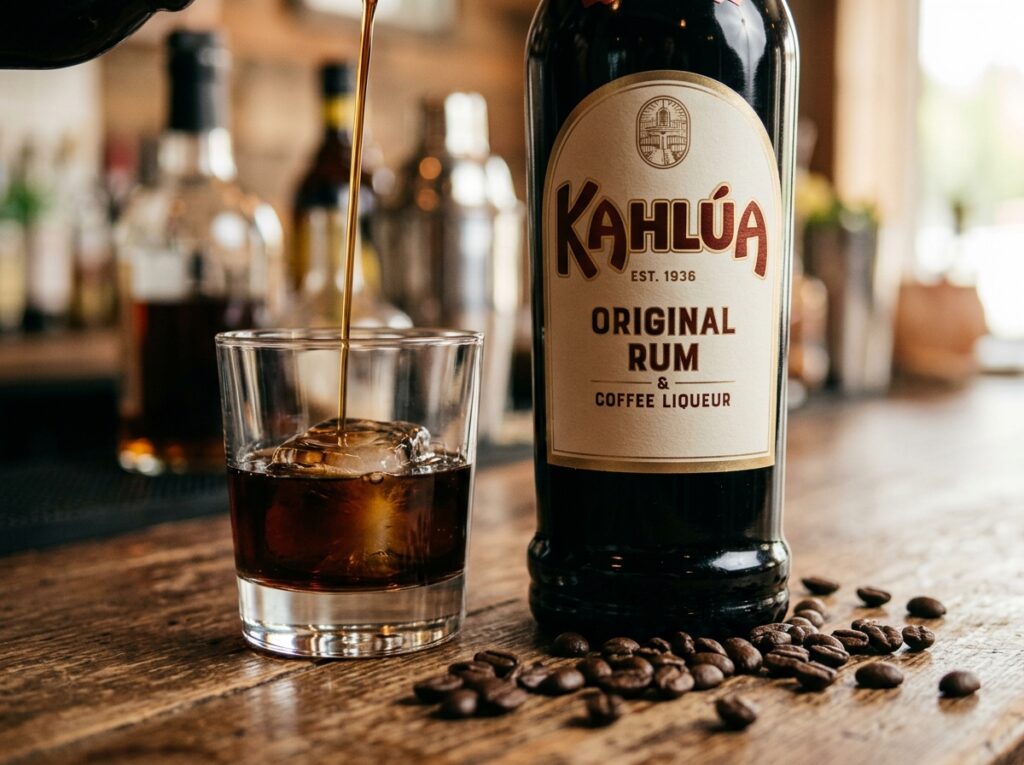
You’re at a party, someone hands you an Espresso Martini, and halfway through your second one, a thought pops up — “Wait, is there actual caffeine in this?” If you’ve ever sipped a White Russian before bed or mixed Kahlúa into your dessert recipe and then found yourself staring at the ceiling at 2 AM, you’re not imagining things. Kahlúa does contain caffeine, and there’s a real reason behind it.
But here’s the thing most people get wrong: they either assume it has as much caffeine as a cup of coffee (it doesn’t) or assume the caffeine is so negligible it doesn’t matter (that’s not entirely true either). The real answer sits somewhere in the middle, and it depends on how much you’re drinking, what you’re mixing it with, and how sensitive your body is to caffeine.
Let’s break down the Kahlúa caffeine content, what else is inside that dark, sweet bottle, and whether you should think twice before pouring it into your nightcap.
What Exactly Is Kahlúa Made Of?
Before we talk caffeine numbers, it helps to know what’s in the bottle. Kahlúa is a coffee liqueur that originated in Veracruz, Mexico, back in 1936. The brand has been around for almost nine decades, and its recipe has stayed surprisingly consistent.
The core Kahlúa ingredients include 100% Arabica coffee beans, sugarcane rum, sugar, and vanilla. That’s the foundation. The coffee beans are grown in Veracruz, and they go through a roasting process before being combined with the rum base. The vanilla and sugar give Kahlúa its characteristic sweetness — the kind that makes it easy to forget you’re drinking something with alcohol and caffeine in it.
So yes, Kahlúa uses real coffee. Not “coffee flavoring.” Not some synthetic substitute. Actual brewed coffee is part of the production process, which is exactly why caffeine shows up in the final product.
If you’re curious about how Kahlúa stacks up against other coffee-based drinks, you might find our comparison of Kahlúa vs Baileys helpful — especially if you’re trying to decide between the two for cocktails.
So, How Much Caffeine Is in Kahlúa?
Here’s the number everyone’s looking for. According to Kahlúa’s parent company (Pernod Ricard), a standard 1.5 oz serving (one shot) of Kahlúa Original contains roughly 5 milligrams of caffeine.
To put that in perspective, a regular 8 oz cup of brewed coffee has about 95 mg of caffeine. That means you’d need to drink approximately 19 shots of Kahlúa to match the caffeine in one cup of coffee. Clearly, you’d have much bigger problems than caffeine at that point — that’s a lot of alcohol and sugar hitting your system.
Here’s a quick comparison to help you visualize where Kahlúa sits on the caffeine spectrum:
- Kahlúa (1.5 oz shot): ~5 mg caffeine
- Brewed coffee (8 oz): ~95 mg caffeine
- Espresso (1 oz shot): ~63 mg caffeine
- Cola (12 oz): ~34 mg caffeine
- Decaf coffee (8 oz): ~2–7 mg caffeine
- Green tea (8 oz): ~25–50 mg caffeine
Looking at those numbers, Kahlúa’s caffeine content is closer to decaf coffee than anything else. For most people, 5 mg per serving won’t cause any noticeable stimulant effect. Your body processes that amount pretty quickly.
But — and this is important — most people don’t stop at one shot. A White Russian can use 2–3 oz of Kahlúa. A Mudslide might use even more. And if you’re having two or three cocktails over an evening, those small amounts start adding up. You could easily hit 20–30 mg of caffeine without realizing it, which is roughly the same as a small cup of green tea.
For folks who are particularly caffeine-sensitive — the kind of person who can’t drink tea after 3 PM without disrupting sleep — even these modest amounts are worth knowing about. If you’re curious about how caffeine levels compare across different drinks, our breakdown of caffeine in a tablespoon of coffee gives you more context.
Why Does Kahlúa Have Less Caffeine Than Regular Coffee?
You might wonder: if Kahlúa is made with real coffee, why isn’t the caffeine content higher? That’s a fair question.
The answer comes down to the production process. When Kahlúa is manufactured, the coffee is brewed and then blended with rum, sugar, and other ingredients. This dilution significantly reduces the caffeine concentration. Think of it like adding a shot of espresso to a full glass of milk and sugar — the coffee is there, but it’s spread thin.
There’s another factor too. The ratio of coffee to other ingredients in Kahlúa is designed to create a specific flavor profile, not to deliver a caffeine punch. The coffee is there for taste, not for energy. The brand wants you to enjoy a rich, sweet, coffee-flavored experience. If you wanted actual caffeine, you’d just drink coffee.
The roasting process also plays a role. Darker roasts — the kind often used in coffee liqueurs — actually contain slightly less caffeine than lighter roasts, despite having a stronger, bolder flavor. It’s one of those counterintuitive facts about coffee that surprises most people.
The Kahlúa Alcohol Percentage — The Other Number That Matters
While we’re focused on caffeine, let’s not ignore the elephant in the room. The Kahlúa alcohol percentage sits at 20% ABV (alcohol by volume) for the Original variety. That’s lower than most spirits (vodka is typically 40% ABV), but it’s higher than beer or wine.
Here’s why this matters in the caffeine conversation: when people ask about Kahlúa’s caffeine content, they’re usually trying to figure out if it’ll keep them awake. But alcohol is a depressant, while caffeine is a stimulant. Mixing the two creates an interesting dynamic in your body.
The caffeine might slightly offset the drowsy feeling that alcohol causes, which can trick you into thinking you’re less impaired than you actually are. With Kahlúa’s low caffeine levels, this effect is minimal — nothing like mixing an energy drink with vodka. Still, it’s worth understanding that the two substances work in opposite directions in your system.
For more detailed numbers on Kahlúa’s alcohol levels, check out our full guide on Kahlúa alcohol content.
Does Kahlúa Caffeine Affect Your Sleep?
This is the question that brings most people here. You want to enjoy a Kahlúa-based cocktail after dinner, but you don’t want to be wide awake at midnight.
For the average adult, 5 mg of caffeine per shot is unlikely to disrupt sleep. Research consistently shows that caffeine’s sleep-disrupting effects become noticeable at doses around 50–100 mg consumed within a few hours of bedtime. One Kahlúa cocktail with 2 oz of the liqueur gives you about 6–7 mg of caffeine — well below that threshold.
That said, individual sensitivity varies wildly. Some people metabolize caffeine slowly due to genetics. If you’re someone who already avoids caffeinated sodas like Pepsi in the evening because even 38 mg bothers you, then multiple Kahlúa cocktails close to bedtime might be worth reconsidering.
The alcohol itself is more likely to affect your sleep quality than the caffeine. While alcohol might help you fall asleep faster, it disrupts your REM cycles and often leads to lighter, less restorative sleep. So if you’re waking up feeling unrested after a few after-dinner cocktails, don’t blame the caffeine — the alcohol is probably the bigger culprit.
Pro Tip: If you’re caffeine-sensitive but love the taste of coffee liqueur, try limiting your Kahlúa drinks to earlier in the evening, at least 3–4 hours before bed. The caffeine’s half-life is about 5 hours for most adults, so even the small amount in Kahlúa will be mostly processed by the time you hit the pillow.
Kahlúa in Popular Cocktails — How Much Caffeine Are You Really Getting?
Nobody drinks Kahlúa straight from the bottle (well, most people don’t). It usually shows up in cocktails. So let’s look at what the caffeine content actually looks like in your favorite Kahlúa drinks.
White Russian
A classic White Russian typically calls for 2 oz of Kahlúa, 1.5 oz of vodka, and cream or milk. That 2 oz of Kahlúa gives you roughly 6–7 mg of caffeine. Not much. You’d get more caffeine from a single piece of dark chocolate.
Espresso Martini
Here’s where things get interesting. An Espresso Martini uses both Kahlúa and a fresh shot of espresso. The Kahlúa adds about 5 mg, but that espresso shot brings 63 mg to the party. So your total caffeine intake jumps to around 68 mg per cocktail. That’s real caffeine. Two of these, and you’re at the level of a full cup of coffee. If you’ve ever wondered why you felt wired after an Espresso Martini, now you know — it’s the espresso, not the Kahlúa, doing the heavy lifting.
Mudslide
A Mudslide uses about 1.5 oz of Kahlúa alongside Baileys and vodka. You’re looking at around 5 mg of caffeine from the Kahlúa, plus a tiny amount from the Baileys (which also contains trace caffeine from its coffee flavoring). Total caffeine is probably under 8 mg. Negligible for most people.
Kahlúa and Milk
This simple combo — just Kahlúa poured over milk on ice — typically uses about 2 oz of Kahlúa. That’s roughly 6–7 mg of caffeine in a drink that feels like a dessert. If this is your go-to nightcap, we’ve got a dedicated piece on Kahlúa and milk caffeine content that dives deeper into the specifics.
The takeaway? Unless your cocktail includes an additional source of espresso or coffee, the Kahlúa alone isn’t delivering enough caffeine to worry about.
Kahlúa vs Other Coffee Liqueurs — Who Has More Caffeine?
Kahlúa isn’t the only coffee liqueur on the shelf. Brands like Tía Maria, Mr. Black, and Patrón XO Cafe also compete in this space. How do they compare on caffeine?
Tía Maria has a similar caffeine profile to Kahlúa — around 5 mg per 1.5 oz serving. It’s made with Jamaican Blue Mountain coffee and uses a comparable production process. You won’t notice a meaningful caffeine difference between the two.
Mr. Black Cold Brew Coffee Liqueur is a different story. This Australian brand uses cold-brewed Arabica coffee and tends to have a higher caffeine concentration — some estimates put it around 10–15 mg per serving. Mr. Black is also less sweet and more coffee-forward in flavor, which makes sense given the higher coffee content.
Patrón XO Cafe combined tequila with coffee essence. It was discontinued in 2021, but if you still have a bottle tucked away, its caffeine content was reportedly similar to Kahlúa’s — roughly 5 mg per serving.
The general rule? More coffee-forward, less sweet liqueurs tend to carry slightly more caffeine. But across the board, coffee liqueur caffeine levels stay dramatically lower than actual brewed coffee.
Who Should Pay Attention to Kahlúa’s Caffeine?
For most healthy adults, the caffeine in Kahlúa is a non-issue. But certain groups should be more mindful.
Pregnant or breastfeeding women are typically advised to limit caffeine intake to under 200 mg per day (according to guidelines from the American College of Obstetricians and Gynecologists). The caffeine in Kahlúa wouldn’t come close to that limit, but the alcohol content absolutely rules it out regardless. This is more of an alcohol concern than a caffeine one.
People on certain medications can have altered caffeine metabolism. Some antibiotics, antidepressants, and heart medications slow down how your body processes caffeine. If your doctor has told you to watch your caffeine intake, mention that you occasionally consume coffee liqueur — even though the amount is small.
Individuals with anxiety disorders sometimes find that even small amounts of caffeine worsen their symptoms. If you’ve noticed that caffeine makes you jittery or anxious, be aware that Kahlúa does contain a trace amount. It probably won’t trigger anything at one-shot levels, but it’s worth knowing.
Kids and teens — this should go without saying, but Kahlúa is an alcoholic beverage. The caffeine content is irrelevant because minors shouldn’t be consuming it at all.
Does Kahlúa Go Bad? A Related Question Worth Answering
While you’re thinking about what’s in your Kahlúa, you might also wonder about its shelf life. Coffee and dairy-based products have expiration dates, so what about a coffee liqueur?
Kahlúa does have a recommended shelf life. An opened bottle stays at its best for about 4 years, though it doesn’t technically “expire” the way milk does. The flavor degrades over time — the coffee notes fade, and the sweetness can shift. It won’t make you sick, but an old bottle won’t taste the way it should.
If you’re unsure whether that bottle in the back of your liquor cabinet is still good, our detailed guide on does Kahlúa go bad walks you through exactly what to look for.
How to Enjoy Kahlúa Without Worrying About Caffeine
If you love Kahlúa but want to minimize caffeine intake — especially later in the evening — here are a few practical approaches.
Stick to one cocktail. A single Kahlúa-based drink with 1.5–2 oz of the liqueur gives you under 7 mg of caffeine. That’s genuinely low. One drink, one dessert cocktail, one nightcap — you’re fine.
Avoid pairing it with espresso. The Espresso Martini is trendy for good reason — it tastes incredible. But if caffeine is your concern, skip the added espresso and opt for a White Russian or Kahlúa and milk instead. The Kahlúa provides the coffee flavor without the espresso’s caffeine boost.
Time your drinks wisely. Enjoy your Kahlúa cocktail with dinner or shortly after, rather than right before bed. Giving your body 2–3 hours to process even a small amount of caffeine can make a difference for sensitive individuals.
Check what else you’ve consumed. If you already had an afternoon coffee, a Starbucks Refresher, and a piece of dark chocolate, those small amounts all stack up. Adding Kahlúa on top might push your total daily caffeine higher than you intended.
FAQ
Is there enough caffeine in Kahlúa to keep you awake?
For most people, no. A single serving of Kahlúa contains about 5 mg of caffeine, which is roughly 1/19th of a regular cup of coffee. That’s not enough to produce a noticeable stimulant effect in the average adult. If you’re extremely caffeine-sensitive, multiple servings later in the evening could potentially affect you, but one or two Kahlúa cocktails won’t keep most people awake.
Is Kahlúa considered a coffee or an alcoholic drink?
Kahlúa is classified as an alcoholic beverage — specifically, a coffee liqueur. It’s made with real coffee, but its primary identity is as a 20% ABV spirit. You can’t substitute it for your morning coffee (well, you could, but your coworkers would have questions). The coffee is an ingredient, not the purpose of the drink.
Does Kahlúa have more caffeine than Baileys?
Yes, slightly. Kahlúa contains about 5 mg of caffeine per 1.5 oz serving, while Baileys Irish Cream has a much smaller trace amount — roughly 1–2 mg per serving. Baileys uses a lighter coffee flavoring compared to Kahlúa’s real-coffee base. Neither has enough caffeine to significantly impact most people, though. For a more detailed comparison between the two, take a look at our Kahlúa vs Baileys breakdown.
Can I drink Kahlúa if I’m avoiding caffeine for medical reasons?
It depends on how strict your caffeine restriction is. If your doctor has told you to avoid caffeine entirely — for example, due to a heart condition or severe anxiety — then technically, Kahlúa does contain a small amount. It’s best to discuss this with your doctor, mentioning the specific amount (~5 mg per serving). Many physicians would consider this negligible, but it’s not a call you should make on your own if caffeine has been medically restricted.
Does the Kahlúa Especial or flavored versions have different caffeine levels?
Kahlúa Especial (the darker, more coffee-forward version with 35% ABV) reportedly contains slightly more caffeine than the Original because it uses a higher coffee concentration. Exact numbers aren’t published by the brand, but estimates suggest it’s in the range of 8–12 mg per serving. Flavored versions like Kahlúa Vanilla or Kahlúa Chili Chocolate use the same coffee base as the Original, so their caffeine content stays in that ~5 mg range.
Your Kahlúa, Your Call
The short version: yes, Kahlúa has caffeine, but not enough to lose sleep over — literally. At about 5 mg per shot, you’re dealing with a fraction of what’s in your morning coffee, your afternoon tea, or even a can of Coke Zero. The real thing to watch with Kahlúa isn’t the caffeine — it’s the sugar and alcohol content, which add up faster than most people expect.
If you’re someone who enjoys an after-dinner cocktail, go ahead and pour that White Russian or mix up that Mudslide. The caffeine isn’t going to be your problem. And if you’re genuinely caffeine-sensitive, just keep your portions reasonable and time your drinks a few hours before bed. That 5 mg won’t stand a chance against your body’s natural wind-down process.
Next time someone at a party asks, “Wait, does Kahlúa have caffeine?” — you’ll be the one with the actual answer. And that’s always a good look.