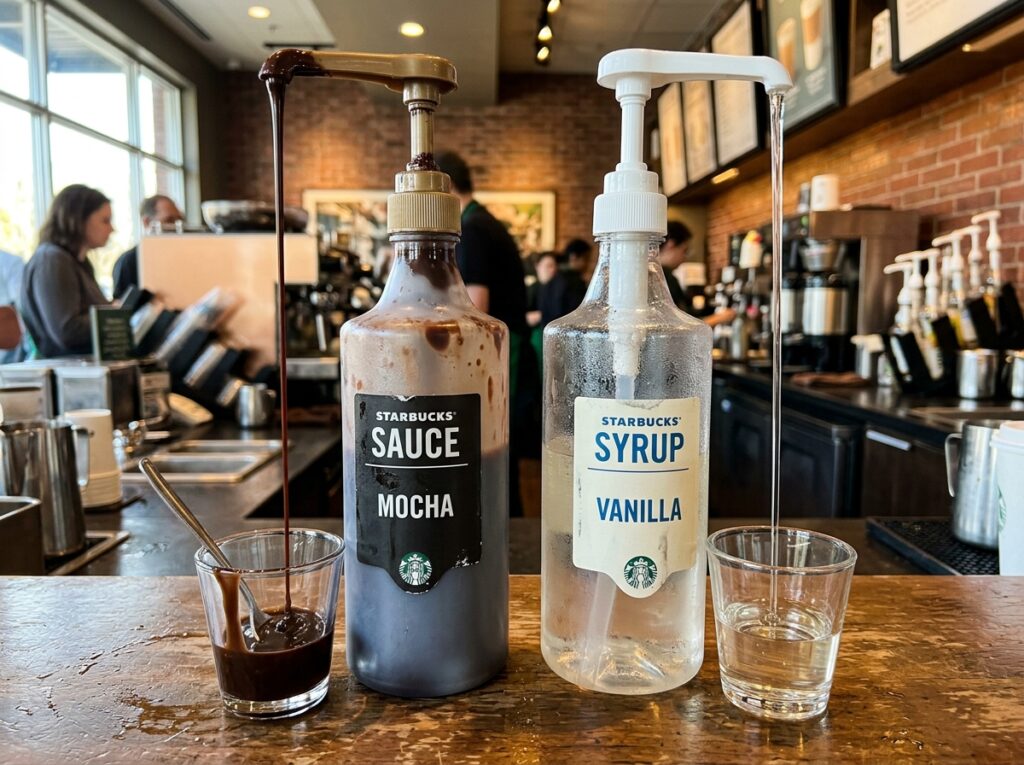
Most people walk into Starbucks, order their usual drink, and never think twice about what goes into it. But here’s something that might surprise you — a single pump switch between sauce and syrup can completely change your drink’s taste, texture, and calorie count. That “off” latte you got last week? It probably wasn’t the barista’s fault. You might’ve been getting sauce when you wanted syrup, or the other way around.
If you’ve ever customized a Starbucks order on the app and wondered why “mocha sauce” and “vanilla syrup” are listed as two separate categories, you’re asking the right question. They’re not the same thing, and understanding the difference can honestly upgrade your entire Starbucks experience. Let’s break it down — no barista apron required.
What Exactly Is a Starbucks Sauce?
Think of Starbucks sauces as the thick, rich cousins of syrups. They have a denser consistency — almost like a chocolate ganache or caramel drizzle you’d put on ice cream. Sauces typically contain dairy-based ingredients or cocoa, which gives them that creamy, heavy body.
You’ll notice sauces coat the inside of your cup more than syrups do. They blend into steamed milk differently, creating a richer mouthfeel. When a barista pumps mocha sauce into your latte, it doesn’t just flavor your drink — it actually changes the weight of it on your tongue.
The key starbucks sauce ingredients usually include some combination of sugar, water, cocoa (for mocha), condensed milk or milk derivatives, and natural flavorings. Because of these dairy or cocoa components, sauces tend to be higher in calories per pump compared to syrups.
Starbucks currently offers a handful of sauces on their standard menu. Mocha sauce is the most popular one — it’s the backbone of every Mocha Frappuccino and Caffè Mocha on the menu. White mocha sauce is another staple, known for its intensely sweet, creamy vanilla-cocoa butter flavor. There’s also the dark caramel sauce and pistachio sauce (though pistachio tends to appear seasonally).
Quick Fact: Mocha sauce has been on the Starbucks menu since the chain started expanding its espresso lineup in the early 1990s. It’s one of the oldest flavor additions still available today.
What About Starbucks Syrups?
Syrups are thinner, pourable, and behave exactly like the flavored syrups you’d see at an Italian soda bar. They dissolve quickly into both hot and cold drinks, which makes them incredibly versatile.
The base of most Starbucks syrups is simple — sugar, water, natural flavoring, and sometimes citric acid or potassium sorbate as a preservative. No dairy, no cocoa butter, no thick emulsifiers. Just clean, straightforward sweetened flavor.
And here’s where Starbucks really goes wide. The starbucks syrup flavors lineup is significantly larger than the sauce selection. You’ve got classics like vanilla, caramel, hazelnut, and toffee nut. Then there are seasonal favorites like peppermint (which sticks around most of the year at many locations), cinnamon dolce, brown sugar, and raspberry. Seasonal rotations bring flavors like chestnut praline, toasted vanilla, and sugar cookie into the mix.
Because syrups are dairy-free by default, they’re generally a safer pick if you’re vegan or lactose intolerant. Sauces? Not so much — most contain some form of milk product.
If you’re someone who keeps an eye on calories, exploring low-calorie Starbucks drinks can give you a much clearer picture of which syrups and modifications help you keep things lighter.
Mocha Sauce vs Syrup — The Confusion Everyone Has
This is the single most common point of confusion, so let’s tackle it head-on. When someone says “mocha” at Starbucks, they almost always mean mocha sauce. It’s a thick, chocolate-based sauce that gets pumped from a bottle with a wide nozzle.
But some coffee chains and grocery stores sell “mocha syrup” — a thinner, chocolate-flavored syrup. And people naturally assume Starbucks uses the same thing. They don’t.
Here’s why the mocha sauce vs syrup distinction actually matters for your drink:
Mocha sauce blends into steamed milk slowly. It creates pockets of chocolatey richness throughout your drink. If you’ve ever sipped a Caffè Mocha and hit a slightly thicker, more intensely chocolate swirl near the bottom — that’s the sauce not fully integrating, and honestly, a lot of people love that.
A mocha-flavored syrup, on the other hand, would dissolve almost instantly. You’d get a uniform chocolate flavor from the first sip to the last, but it would taste thinner and less indulgent. The texture would feel more like flavored coffee and less like a coffee-meets-hot-chocolate hybrid.
So when you order a “Mocha Frappuccino” or “Caffè Mocha” at Starbucks, you’re always getting sauce. If you ever ask for “mocha syrup” specifically, expect a confused barista — because it doesn’t exist in their standard lineup.
Pro Tip: If a barista does seem unsure, just say “the mocha that goes in a Caffè Mocha.” That removes all ambiguity.
How Pumps Work — Your Starbucks Pump Guide
Pumps are the measurement system Starbucks uses for both sauces and syrups. But here’s the catch — not all pumps are created equal.
Syrup bottles at Starbucks use a standard pump that dispenses roughly a full-size portion. Sauce bottles, because the product is thicker, typically use a slightly smaller or differently calibrated pump. The result? A pump of sauce and a pump of syrup don’t deliver the exact same volume of product.
Here’s the standard pump count by drink size:
A Tall (12 oz) hot drink gets 3 pumps of syrup or 3 pumps of sauce. A Grande (16 oz) gets 4 pumps. A Venti (20 oz hot) gets 5 pumps. And a Venti Iced (24 oz) gets 6 pumps of syrup — though sauce-based drinks sometimes stick to 5 even in iced Ventis.
For Frappuccinos, the counts shift a little. Tall Frappuccinos get 2 pumps, Grande gets 3, and Venti gets 4. This applies to both sauce and syrup Frappuccinos.
Why does this matter? Because if you’re customizing your order and you ask for “half the sweetness,” you need to know the baseline. Telling your barista “2 pumps of vanilla in a Grande” makes a lot more sense when you know the default is 4. Same logic applies if you’re watching sugar intake or just prefer a subtler flavor.
This is also useful when you’re ordering from the Starbucks secret menu — many of those recipes call for very specific pump counts, and knowing the defaults helps you adjust to your taste.
Taste and Texture — Side by Side
Let’s get practical. If you put a pump of vanilla syrup and a pump of mocha sauce on two separate spoons and tasted them back-to-back, here’s what you’d experience.
The vanilla syrup would taste like sweetened vanilla extract mixed into simple syrup. It’s light, clean, and disappears on your tongue quickly. The sweetness hits fast and fades fast.
The mocha sauce would feel heavier immediately. There’s a cocoa bitterness that balances the sweetness, and the texture would almost coat your mouth like melted chocolate. It lingers longer, and you’d feel the richness even after swallowing.
Now drop both into a hot latte. The vanilla syrup integrates within seconds of stirring. Your latte tastes like vanilla throughout, consistently, from top to bottom. The mocha sauce takes more work — a barista will usually pump it in before pulling the espresso shot so the hot espresso helps break it down. Even then, you might get slight variations in chocolate intensity as you drink.
In cold drinks, the gap becomes even more noticeable. Syrups dissolve reasonably well in cold milk or water. Sauces can clump or settle if the drink isn’t blended properly. That’s exactly why Frappuccinos work so well with sauces — the blending process forces everything to combine.
If you’re someone who enjoys non-coffee drinks at Starbucks, you’ll mostly encounter syrups in those beverages. Sauces are heavily concentrated in the espresso and Frappuccino lineup.
Calories and Nutritional Differences
This is where a lot of health-conscious Starbucks fans start paying attention. And rightfully so — the calorie difference between sauces and syrups adds up faster than you’d expect.
A single pump of most Starbucks syrups (vanilla, caramel, hazelnut) runs about 20 calories and 5 grams of sugar. That’s pretty standard across the board. Sugar-free vanilla syrup drops that down to essentially zero calories and zero sugar, which is why it’s such a popular modification.
A single pump of mocha sauce? Roughly 25 calories and 5 grams of sugar — but with added fat from the cocoa and dairy components. White mocha sauce is even heavier, clocking in at around 60 calories per pump with nearly 8-9 grams of sugar. That’s three times the caloric impact of a standard syrup pump.
Let’s put this in perspective. A Grande White Mocha with the standard 4 pumps of white mocha sauce adds approximately 240 calories just from the sauce. Swap that for 4 pumps of vanilla syrup? You’re looking at about 80 calories. That’s a 160-calorie difference from just one modification.
Did You Know? Asking for fewer pumps is the single easiest way to cut calories at Starbucks without changing the core flavor of your drink. Going from 4 pumps to 2 pumps cuts the sweetener calories in half while still keeping the flavor profile recognizable.
If you’re curious about what’s actually in your favorite blended drinks, the Vanilla Frappuccino caffeine and nutrition breakdown covers the specifics, including how syrups affect the total calorie count.
Can You Swap Sauce for Syrup (and Vice Versa)?
Yes, but with a big asterisk.
You can ask your barista to substitute a syrup where a sauce would normally go. Want vanilla syrup instead of mocha sauce in your Mocha Frappuccino? Totally doable. It’ll taste different — lighter, sweeter, less chocolatey — but they’ll happily make it.
Going the other direction is trickier. If a drink normally calls for syrup and you want sauce instead, the barista can add it, but the flavor balance might feel off. Sauces are more intense per pump, so you might want fewer pumps than the default syrup count.
Some popular swaps that actually work really well:
Replacing white mocha sauce with vanilla syrup creates a lighter, less cloyingly sweet version of drinks like the White Chocolate Mocha. Some regulars swear by doing 2 pumps of white mocha plus 2 pumps of vanilla instead of the full 4 pumps of white mocha — it keeps the creamy character without overwhelming your taste buds.
Adding a pump of mocha sauce to a drink that normally only uses caramel syrup gives you a “salted caramel mocha” vibe without ordering the actual seasonal drink.
Pro Tip: When swapping, always tell your barista the exact pump count you want. Don’t just say “mocha sauce instead of vanilla” — say “2 pumps of mocha sauce instead of vanilla.” This avoids any guesswork and gives you a consistently good drink every time.
Which Sauces and Syrups Are Available Year-Round?
Starbucks rotates flavors seasonally, and it’s genuinely frustrating when your favorite disappears for months. Here’s a rough breakdown of what stays and what goes.
Always available (core lineup): Vanilla syrup, caramel syrup, classic syrup (plain sweetener), hazelnut syrup, mocha sauce, and white mocha sauce. These are the backbone of the Starbucks flavor system, and nearly every location keeps them stocked 365 days a year.
Mostly available (nearly year-round at most stores): Cinnamon dolce syrup, peppermint syrup, toffee nut syrup. Peppermint tends to be thought of as a holiday flavor, but most Starbucks locations carry it well beyond the winter season. If you’re curious about toffee nut and whether it actually tastes nutty, that’s a whole separate conversation worth exploring.
Seasonal (limited time): Pumpkin spice sauce (fall), chestnut praline syrup (winter), toasted vanilla syrup (spring), brown sugar syrup (appeared with the Oatmilk Shaken Espresso, now largely permanent at many locations). Pistachio sauce typically drops in January and sticks around through early spring.
One thing to keep in mind — “seasonal” doesn’t always mean exactly the same dates every year. Starbucks corporate decides the rollout, but individual stores run out at different rates. If you love a seasonal flavor, stock up on your orders early in the season. By the last few weeks, many locations are already running dry.
How to Order Like You Know What You’re Doing
Knowing the difference between sauce and syrup is only useful if you can actually communicate it to your barista clearly. Here’s how to structure a custom order that won’t get lost in translation.
Start with the size. Then the drink type. Then the modifications.
Example: “Grande Iced Latte with 2 pumps of white mocha sauce and 1 pump of vanilla syrup.”
That’s clean, specific, and impossible to misinterpret. Compare that to “Can I get a vanilla white mocha iced thing, like, medium?” — which leaves a lot of room for the barista to guess.
If you’re ordering through the Starbucks mobile app, sauce and syrup options are separated into their own categories under “Flavors.” The app actually makes it easier to see what’s a sauce and what’s a syrup because it labels them clearly. You can adjust pump counts with a simple plus or minus button.
For anyone who loves exploring beyond the standard menu, the Starbucks Caffè Misto vs Latte comparison is worth reading — it shows how even your base drink choice changes how sauce and syrup interact with the final product.
Storage, Shelf Life, and Buying for Home Use
This question comes up a lot — can you buy Starbucks sauces or syrups and use them at home?
Syrups? Absolutely. Starbucks sells several of their syrup flavors in retail bottles, both in-store and online. The most commonly available retail bottles are vanilla and caramel, usually in 12.7 oz sizes. You can also find them at grocery stores like Target and Walmart. Once opened, a bottle of Starbucks syrup stays good for about 30 days at room temperature, though some people stretch that to a couple of months if stored properly.
Sauces are harder to find in retail. Starbucks doesn’t widely sell their mocha sauce or white mocha sauce in consumer-sized bottles. You can occasionally find them through third-party sellers or in bulk sizes on restaurant supply sites, but there’s no official retail channel the way there is for syrups.
If you’re making drinks at home and want that sauce experience, Ghirardelli or Torani make chocolate sauces that come reasonably close to the Starbucks mocha sauce in terms of consistency and flavor. They won’t be identical, but they’ll get you in the same ballpark.
For those building a home coffee setup, making sure your equipment is running well matters just as much as your ingredients. Something like knowing how to properly descale your Breville espresso machine ensures your espresso base is clean and fresh before you add any flavoring.
What Baristas Wish You Knew
After talking to current and former Starbucks baristas (and reading what feels like hundreds of Reddit threads), a few consistent points come up.
Most baristas genuinely don’t mind when you customize your drink. What frustrates them is vague orders. Saying “make it less sweet” without specifying whether you want fewer pumps, a sugar-free option, or a different flavor entirely puts the barista in a guessing position. Specific pump counts solve this instantly.
Another thing — baristas know their sauces and syrups by heart. If you ask “what’s the difference between sauce and syrup?” at the counter, most will give you a quick, helpful explanation. They’re not gatekeeping this information. But during a morning rush with 15 drinks in the queue, a detailed Q&A session isn’t always possible. That’s why it’s helpful to know the basics before you walk up.
One more thing baristas mention frequently: the “extra caramel drizzle” that people love on their Caramel Macchiatos isn’t technically a sauce or a syrup. It’s a separate caramel drizzle product — thicker than sauce, meant for topping rather than mixing. So when you ask for “extra caramel,” the barista is reaching for a completely different bottle than the one they use for caramel syrup pumps.
FAQ
Is mocha a sauce or a syrup at Starbucks?
Mocha is a sauce at Starbucks, not a syrup. It’s a thick, cocoa-based product that gets pumped into espresso drinks and Frappuccinos. It has a richer consistency and slightly higher calorie count than standard syrups. You’ll find it listed as “mocha sauce” on the app and on barista recipes.
Are Starbucks sauces dairy-free?
Most Starbucks sauces contain some form of dairy or milk-derived ingredients. The mocha sauce contains dairy, and the white mocha sauce definitely does. If you’re vegan or lactose intolerant, syrups are the safer choice since most of them are dairy-free. Always double-check with your barista for the latest ingredient info, especially with seasonal sauces.
How many pumps should I ask for if I want less sweetness?
A good rule of thumb is to cut the default pump count in half. For a Grande drink that normally gets 4 pumps, ask for 2. This gives you noticeable flavor without that overwhelming sweetness. You can also ask for just 1 pump if you want a very subtle hint. Remember, sauces tend to be richer per pump than syrups, so even 1 pump of white mocha sauce is still pretty present in the drink.
Can I mix a sauce and a syrup in the same drink?
Absolutely. Mixing is one of the best ways to create a unique custom drink. A popular combination is 2 pumps of mocha sauce with 2 pumps of toffee nut syrup — it creates a chocolate-nutty flavor that a lot of regulars love. The app makes this easy to set up, or you can just tell your barista your exact pump counts for each.
Do sauces cost extra compared to syrups?
If your drink already includes a sauce (like a Caffè Mocha), you won’t pay extra. If you’re adding a sauce to a drink that doesn’t normally include one, Starbucks typically charges a flavor addition fee — the same fee they charge for adding any syrup. The pricing is generally the same for both sauce and syrup additions.
Your Next Starbucks Order Just Got Smarter
Now you know something that a surprising number of daily Starbucks customers don’t — sauces and syrups aren’t interchangeable labels for the same thing. They’re different products with different textures, different calorie counts, different ingredient profiles, and different effects on your drink.
The real takeaway here? Next time you’re standing at the counter or tapping through the app, you can make intentional choices. Want something rich and indulgent? Lean into the sauces. Want something clean and lightly sweet? Syrups are your friend. Want the best of both? Mix them — it’s your drink.
If you’re someone who likes to explore the full Starbucks menu, checking out a full caffeine ranking of Starbucks drinks can help you pair your flavor choices with the right energy level. Because the best Starbucks order isn’t just about taste — it’s about getting exactly what you want, every single time.