Imagine standing in a Starbucks line, craving something warm and sweet, and your eyes land on “Toffee Nut Latte.” Sounds perfect — until a thought hits you. Wait… does toffee nut actually contain nuts? If you have a nut allergy, that two-word menu item can feel like a tiny landmine. And even if allergies aren’t your concern, you might just be curious about what you’re actually drinking. The name is confusing, and you’re not alone in questioning it. Let’s break this down properly so you can order with confidence.
What Exactly Is Toffee Nut Flavor?
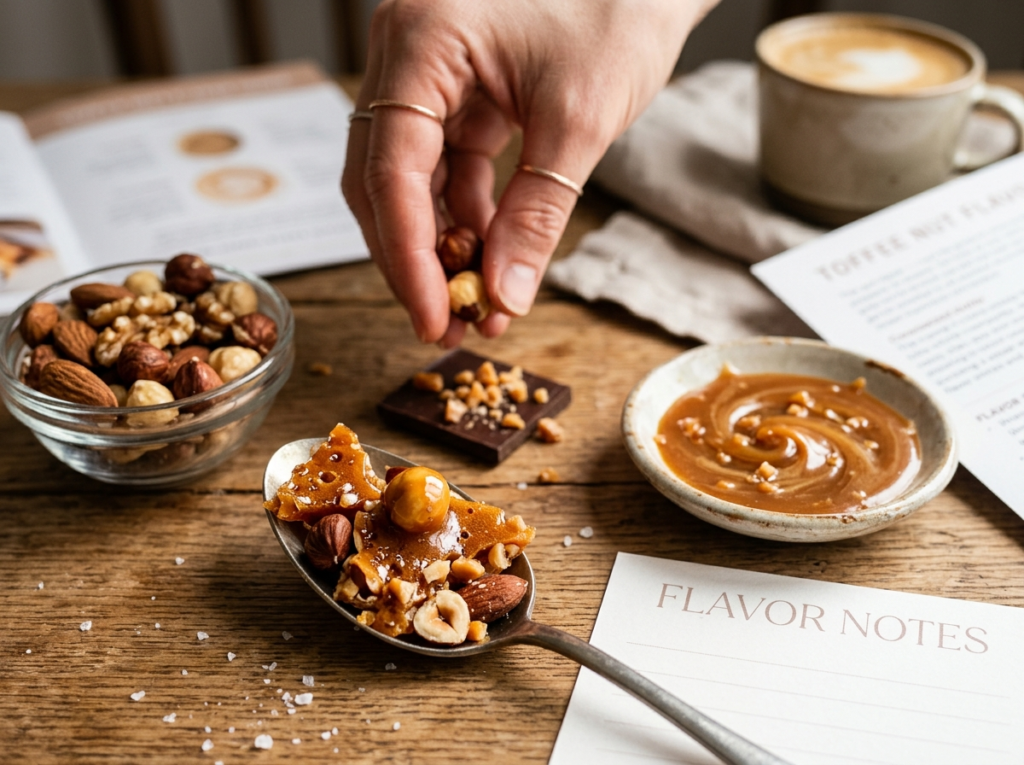
Toffee nut is a flavor profile, not a description of an actual ingredient. Think of it the way “butterscotch” doesn’t literally mean scotch made with butter. The toffee nut flavor is designed to mimic the taste of butter toffee with a warm, slightly nutty undertone — that rich, caramelized sweetness you’d associate with toffee candy that’s been studded with almonds or pecans.
The flavor itself has been around in coffee culture for years, but it really entered the mainstream thanks to Starbucks, which introduced its Toffee Nut Latte as a seasonal holiday offering. It’s become such a fan favorite that people actively search for it outside of the holiday season, looking for copycat recipes or alternative syrups to recreate it at home.
So right off the bat: the word “nut” in toffee nut refers to the flavor inspiration, not necessarily what’s inside the bottle. But that distinction matters a lot more if you’re dealing with allergies, so let’s get specific.
Does Toffee Nut Syrup Actually Contain Nuts?
Here’s where things get a little nuanced, and honestly, this is the part most articles skim over too quickly.
Starbucks Toffee Nut Syrup — the version used in their stores — does not contain tree nuts or peanuts as direct ingredients. If you look at the toffee nut ingredients on Starbucks’ official allergen information, you’ll find sugar, water, natural and artificial flavors, citric acid, potassium sorbate, and caramel color. No almonds. No hazelnuts. No peanut oil. The nutty taste comes from flavoring compounds, not from actual nuts.
But — and this is a big “but” — Starbucks does not classify their toffee nut syrup as allergen-free. Their official position is that they can’t guarantee any drink is completely free from allergens because of the way their stores operate. Baristas use shared equipment. Pumps, blenders, steam wands, and countertops all handle multiple ingredients throughout the day. Cross-contamination is a real possibility.
⚠️ Important: If you have a severe nut allergy, the ingredient list alone isn’t the full picture. The environment where your drink is made matters just as much as what goes into the syrup bottle.
Is Toffee Nut Safe for Nut Allergies?
This is the question that drives most people to search “is toffee nut safe for nut allergy,” and the answer isn’t a simple yes or no. It depends on how severe your allergy is and where you’re getting your toffee nut drink.
For someone with a mild sensitivity, the Starbucks toffee nut syrup is likely fine since it doesn’t contain nut-derived ingredients. Many people with mild tree nut allergies have reported ordering toffee nut lattes without any reaction. But anecdotal evidence from Reddit threads and allergy forums isn’t medical advice — and it shouldn’t replace a conversation with your allergist.
For someone with a severe or anaphylactic-level nut allergy, the risk profile changes. Starbucks stores also stock actual nut-containing products — almond milk, certain pastries, and other syrups or toppings that could introduce trace amounts of nut proteins to shared surfaces. One barista using the same steam wand after making an almond milk latte could theoretically introduce enough cross-contact to trigger a reaction in highly sensitive individuals.
🔑 Pro Tip: If you’re concerned about toffee nut syrup allergy risks at Starbucks, ask the barista to clean the equipment before making your drink. Most Starbucks employees are trained to handle allergy requests, though the company still won’t guarantee an allergen-free result.
If you want to enjoy the toffee nut Starbucks flavor at home with more control, buying a nut-free toffee nut syrup from brands like Torani or Monin is a safer route. These brands clearly label their allergen information, and you control the environment — your blender, your cups, your countertop.
What Does Toffee Nut Taste Like?
Let’s step away from the allergy conversation for a moment and talk about the actual flavor, because plenty of people land on this topic simply wondering if they’d enjoy it.
Toffee nut tastes like warm caramel met a toasted almond at a holiday party. There’s a buttery sweetness from the toffee side and a roasted, slightly earthy warmth from the “nut” side. It’s not aggressively sweet like vanilla or white mocha. It has more depth — almost a smoky quality that makes it pair really well with espresso and darker roast coffees.
If you enjoy flavors like caramel, praline, or hazelnut, toffee nut will feel right at home on your palate. It sits in that sweet-but-not-candy-sweet category that works in both hot and iced drinks.
Some people describe the Starbucks toffee nut flavor as reminiscent of a Werther’s Original candy melted into a latte, which honestly is a pretty accurate comparison. The buttery toffee flavor dominates, with the nuttiness playing a supporting role rather than the star.
Toffee Nut at Starbucks: How It’s Used
The toffee nut syrup at Starbucks has traditionally been a seasonal offering, appearing during the holiday season alongside Peppermint Mocha and Gingerbread Latte. That said, availability varies by location and year, so don’t be surprised if your local store has it in October or runs out by mid-December.
Here’s how Starbucks typically uses it:
The Toffee Nut Latte is the classic — espresso shots, steamed milk, toffee nut syrup, topped with whipped cream and toffee nut sprinkle topping. It’s available hot, iced, or blended.
But toffee nut syrup is also one of those customization-friendly additions. You can add it to practically any drink on the menu — a Caffè Misto, a cold brew, even a hot chocolate. If you’re someone who likes experimenting with Starbucks secret menu drinks, toffee nut syrup is a solid base for custom creations.
Quick fact: The toffee nut topping sprinkled on top of whipped cream is a separate product from the syrup. It adds a crunchy, textured element that enhances the overall experience. If you’re concerned about allergens, ask specifically about the topping as well — it may have a different ingredient profile than the syrup itself.
If toffee nut isn’t available at your location, a decent workaround is combining caramel syrup with a pump of hazelnut. It won’t taste identical, but it gets you in the same neighborhood.
Toffee Nut Ingredients: A Closer Look
Let’s actually look at what goes into toffee nut syrup, because understanding the toffee nut ingredients helps you make smarter decisions — whether for allergy reasons or just general health awareness.
Starbucks Toffee Nut Syrup typically contains sugar, water, natural flavors, artificial flavors, citric acid, potassium sorbate (a preservative), and caramel color. It’s a fairly standard flavored syrup formula — similar to what you’d find in their vanilla, caramel, or hazelnut syrups.
On the calorie front, each pump of Starbucks toffee nut syrup adds roughly 20 calories and 5 grams of sugar. A standard grande latte gets four pumps, so that’s about 80 extra calories from the syrup alone. If you’re watching your intake, asking for fewer pumps is always an option. And if you’re looking for lower-calorie Starbucks options in general, there are quite a few drinks worth exploring.
Store-bought alternatives from brands like Torani and Monin have similar ingredient lists, though they sometimes use cane sugar instead of standard sugar. Sugar-free versions are also available, typically sweetened with sucralose or erythritol. The flavor profile in sugar-free versions is close but not identical — you lose a bit of that caramelized richness that real sugar provides.
Here’s a useful comparison:
| Brand | Contains Nuts? | Sugar-Free Option? | Calories Per Pump |
|---|---|---|---|
| Starbucks | No | No | ~20 |
| Torani | No | Yes | ~20 (regular), 0 (sugar-free) |
| Monin | No | Yes | ~20 (regular), 0 (sugar-free) |
| DaVinci | No | Yes | ~18 (regular), 0 (sugar-free) |
None of these major brands include actual nuts in their toffee nut syrup formulations. The “nut” flavor is achieved through flavoring compounds. That said, always check the specific bottle you’re buying — formulations can change, and limited-edition versions might differ from the standard product.
Toffee Nut vs. Other Nut-Named Flavors
This part confuses a lot of people, so let’s clear it up.
Not every “nut” flavor at a coffee shop works the same way. Hazelnut syrup at Starbucks, for instance, also doesn’t contain actual nuts in the syrup itself — it’s flavoring. But almond milk obviously contains real almonds. And some pastries and food items contain tree nuts as actual ingredients.
The pattern is pretty consistent: syrups labeled with nut names are generally flavored artificially or with natural flavor extracts that don’t contain nut proteins. But anything labeled as a milk alternative (almond milk, macadamia milk) or a food item (nut bread, almond croissant) almost certainly contains the real thing.
This distinction matters because someone might safely drink a toffee nut latte made with oat milk but have a reaction if the barista accidentally grabs the almond milk carton instead. The syrup isn’t usually the problem — it’s the surrounding environment and other ingredients in the drink.
If you’re ordering at Starbucks and want to avoid nuts entirely, non-coffee drinks made with coconut milk or oat milk and nut-free syrups (like vanilla, caramel, or classic) are your safest bet. You can add toffee nut syrup to these options too — just communicate your allergy clearly.
Making Toffee Nut Drinks at Home
If the allergy-risk factor at coffee shops makes you nervous, or if toffee nut syrup simply isn’t in season at your local Starbucks, making toffee nut drinks at home is surprisingly easy.
You’ve got two main routes. The first is buying a bottle of toffee nut syrup from Torani, Monin, or DaVinci — available at most grocery stores, Amazon, or specialty food shops. One bottle lasts a long time since you only need 1–2 tablespoons per drink. This gives you the most consistent and convenient flavor.
The second route is making your own toffee nut syrup from scratch. It’s not complicated:
Combine one cup of brown sugar with one cup of water in a saucepan. Heat over medium until the sugar dissolves completely. Add a teaspoon of butter extract, half a teaspoon of vanilla extract, and a quarter teaspoon of almond extract (or skip this if you’re avoiding nut-related flavoring). Stir, let it cool, and store it in a glass bottle in the fridge. It’ll keep for about two weeks.
The homemade version won’t taste exactly like Starbucks’ formulation — theirs has a more polished, manufactured consistency — but it’s close enough that most people can’t tell the difference once it’s mixed into a latte.
Pro Tip: For the best at-home toffee nut latte, pull a strong espresso (or brew concentrated coffee using a proper coffee-to-water ratio), steam your milk until frothy, add two tablespoons of toffee nut syrup, and top with whipped cream. A pinch of sea salt on top takes it to another level.
What About That Toffee Nut Topping?
We touched on this briefly, but it deserves its own section because the topping is a separate concern from the syrup.
The Starbucks Toffee Nut Crunch Topping — that sprinkle they dust over whipped cream — has its own ingredient list. It typically contains sugar, butter (milk), and other ingredients. In some formulations and markets, this topping may contain or be processed alongside tree nuts. The topping situation is less clear-cut than the syrup.
If you’re worried about nut allergens, you can enjoy a Toffee Nut Latte without the topping by simply asking the barista to skip it. You still get the full flavor experience from the syrup — the topping is just an aesthetic and textural bonus, not essential to the taste.
This is a detail that a lot of people overlook. They do their research on the syrup, feel confident, order the drink, and forget that the topping sitting on their whipped cream might be the actual risk factor. Always specify “no topping” if allergens are a concern.
Toffee Nut Around the World
The toffee nut flavor profile isn’t exclusive to Starbucks, and its availability — and formulation — varies depending on where you are.
In the UK and Europe, Starbucks locations have offered toffee nut as a holiday staple for years, and it’s one of the most popular seasonal syrups alongside gingerbread. European Starbucks locations follow similar allergen policies, though EU regulations require more detailed allergen labeling, which can actually give you more clarity about what’s in your drink.
Costa Coffee, one of the biggest coffee chains in the UK, also offers toffee nut flavored drinks during the winter season. Their formulations differ from Starbucks, so don’t assume the allergen profile is identical.
In Australia and parts of Asia, toffee nut availability is more sporadic. Some locations carry it year-round; others don’t stock it at all. If you’re traveling and craving the flavor, it’s always worth asking — but don’t count on it being available everywhere.
For fans of Dunkin’, the chain doesn’t typically offer a toffee nut flavor in their standard syrup lineup. They lean more toward classic flavors like French vanilla, caramel, and hazelnut. If you’re a toffee nut devotee switching between coffee chains, this is worth knowing so you’re not disappointed at the counter.
The Allergy Conversation: What Your Allergist Would Say
I want to be careful here because I’m not a doctor, and this article isn’t medical advice. But based on published guidance from organizations like FARE (Food Allergy Research & Education) and the American College of Allergy, Asthma & Immunology, here’s the general framework they recommend for navigating flavored syrups with nut names:
Check the ingredient label first. If actual tree nuts or peanuts aren’t listed as ingredients, the syrup itself is likely not going to trigger an IgE-mediated allergic reaction.
Ask about cross-contamination. The manufacturing facility and the point of service (the coffee shop) both matter. Some syrups are produced in facilities that also process tree nuts. The bottle’s label will usually say something like “produced in a facility that also processes tree nuts,” which is important information for severely allergic individuals.
Carry your EpiPen. If you have a diagnosed anaphylactic allergy and choose to try toffee nut anything, always have your emergency medication accessible. This isn’t about being paranoid — it’s about being prepared.
Talk to your allergist about your specific risk level. Someone allergic to peanuts may have zero issues with a syrup that mimics tree nut flavor, since peanuts and tree nuts are different allergen categories. Your specific allergy matters more than a general “nut allergy” label.
⚠️ Disclaimer: This article provides general information only. If you have a diagnosed food allergy, consult your healthcare provider before trying any new food or beverage product.
FAQ
Does Starbucks toffee nut syrup contain real nuts?
No. The Starbucks toffee nut syrup does not list tree nuts or peanuts as ingredients. The nutty flavor comes from flavoring compounds. That said, Starbucks warns that cross-contamination can occur in their stores due to shared equipment, so they don’t guarantee any drink is completely allergen-free.
Can I get toffee nut syrup year-round at Starbucks?
Toffee nut is traditionally a seasonal flavor offered during the holiday season (roughly November through January). Some locations may stock it slightly longer if they have extra supply, but it’s not a permanent menu item in most markets. Your best bet for year-round access is buying Torani or Monin toffee nut syrup for home use.
What’s the difference between toffee nut syrup and toffee nut topping at Starbucks?
The syrup is a liquid flavoring pumped into your drink. The topping is a crunchy sprinkle dusted over whipped cream. They have different ingredient lists, and the topping may carry a higher allergen risk than the syrup. If you have nut allergies, ask for your drink without the topping.
Is toffee nut the same as hazelnut?
No. Toffee nut has a buttery, caramelized, toffee-forward flavor with a subtle nutty undertone. Hazelnut is more distinctly nutty with earthy, slightly floral notes. They’re different syrups with different taste profiles, though neither contains actual nuts at Starbucks.
Are there sugar-free toffee nut syrup options?
Starbucks doesn’t offer a sugar-free version of their toffee nut syrup. Brands like Torani and DaVinci do sell sugar-free toffee nut syrups that you can use at home. These are sweetened with artificial sweeteners and contain zero calories per serving.
Your Next Move
So, is toffee nut a nut? In terms of flavor — yes, it’s inspired by the taste of buttery toffee and toasted nuts. In terms of actual ingredients — no, the major toffee nut syrups on the market don’t contain tree nuts or peanuts. The real risk isn’t what’s in the bottle; it’s what happens around it in a busy coffee shop environment.
If you don’t have a nut allergy, go ahead and enjoy that Toffee Nut Latte without a second thought. If you do have an allergy, you’ve now got the information to make a smart, informed choice — whether that means ordering with extra precautions, skipping the topping, or making your own version at home where you control every ingredient.
Either way, toffee nut is one of those flavors that deserves more attention than just the holiday season. It’s warm, it’s interesting, and it plays beautifully with coffee. Try adding it to your next drink order and see what you think. You might just find your new favorite.