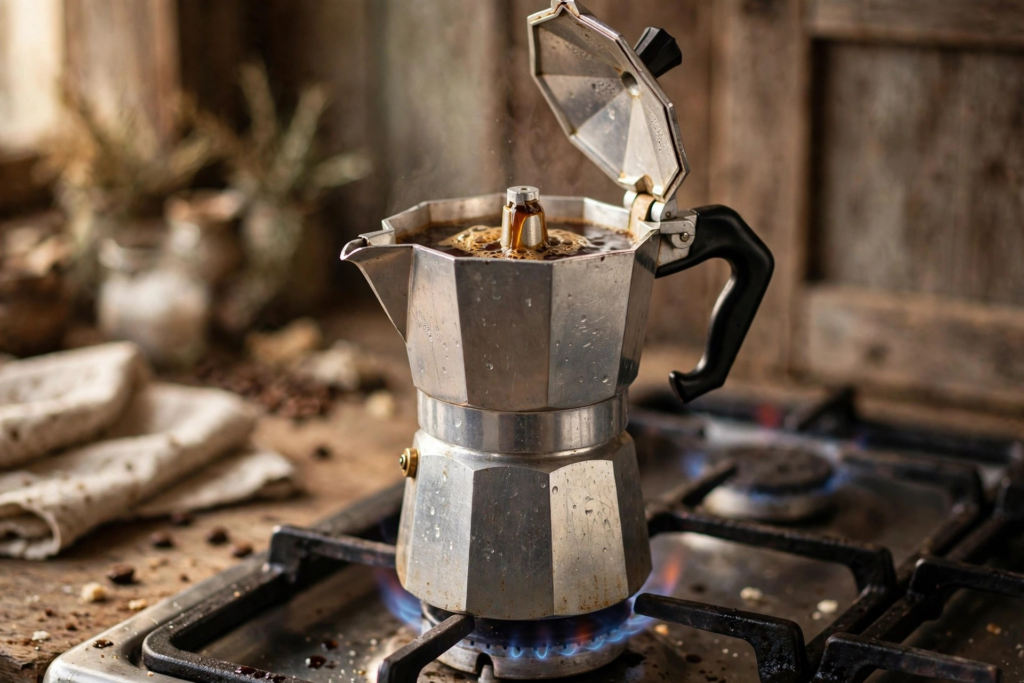
Walk into any Italian kitchen and you’ll find one: a small octagonal aluminum pot, usually with a little cartoon man on the side, sitting next to the stove like it owns the place. The moka pot has been making Italy’s morning coffee since 1933 — no electricity, no pumps, no thousand-dollar hardware. For strong, concentrated, espresso-style coffee at home without an espresso machine, it’s the cheapest and most storied route.
First, a Word About What This Is (and Isn’t)
A moka pot is often called a stovetop espresso maker, but that’s close rather than right. True espresso comes from water forced through finely ground coffee at about nine bars of pressure, which creates the thick shot and tawny crema. A moka pot runs on steam pressure — roughly one to two bars — pushing water up through the grounds into the top chamber. The result is stronger and more concentrated than drip or French press, but without true crema, and it won’t match a machine shot sip for sip.
This isn’t a criticism — the moka pot is its own thing, and once you stop judging it as a failed espresso machine it makes complete sense. Curious what true nine-bar espresso tastes like? Our guide to pulling the perfect shot covers that craft. But for mornings when you want intensity without the machine, the moka pot is waiting.
A Quick History: 1933, a Washing Boiler, and an Italian Icon
The moka pot was designed in 1933 by Luigi De Ponti for Alfonso Bialetti, whose Italian metal company sold it as the Moka Express. Legend says the idea came from a primitive washing boiler that pushed soapy water up a central pipe — Bialetti’s spark was using steam pressure to push water up through coffee instead. The name comes from Mocha, the historic coffee port in Yemen.
After the war, Bialetti’s son Renato marketed it relentlessly, and the eight-sided aluminum body and the little mustachioed mascot became as familiar as the coffee itself. The design has barely changed in ninety-plus years, and in Italy, “caffè” at home still usually means moka pot coffee.
What You’ll Need
The list is short: a moka pot, coffee, water, a stove, and a kettle. If you cook on induction, get a stainless steel pot — the classic aluminum ones won’t work there. Sizes are measured in tiny espresso-sized cups, not mugs, so a six-cup pot makes roughly eight ounces; pick the size that matches how much you drink, because a half-filled pot brews poorly.
Whole beans ground fresh are the single biggest upgrade you can make. A decent burr grinder matters more here than a fancy pot, and while a scale helps, the pot itself sets the recipe: fill the basket, fill the water, go.
The Grind: Medium-Fine, and Never Tamp
Grind medium-fine, like table salt — coarser than espresso, finer than drip. Too fine and the steam can’t push through: the pot chokes, coffee sputters or never rises. Too coarse and the water passes through without grabbing enough flavor, leaving you with something thin and sour.
And don’t tamp the grounds — this is where espresso instincts betray you. A packed bed creates dangerous pressure instead of good extraction; the pot has no over-pressure system like a machine, so a clogged filter can blow out seals. The grounds should sit level, loose and even, nothing more.
Hot Water to the Valve
Here’s the habit that separates moka pot people from everyone else: start with hot water. Fill the bottom chamber to just below the safety valve, not above it — the valve must stay clear, and water touching the filter basket will waterlog the grounds before brewing starts.
Hot water shortens the pot’s time on the burner. With cold water it sits there heating for ages, the metal overheats, and the grounds effectively bake before water ever reaches them — that’s the harsh, metallic flavor behind the moka pot’s bad reputation. Hot water gets the brew moving in a couple of minutes.
Fill, Level, and Wipe the Rim
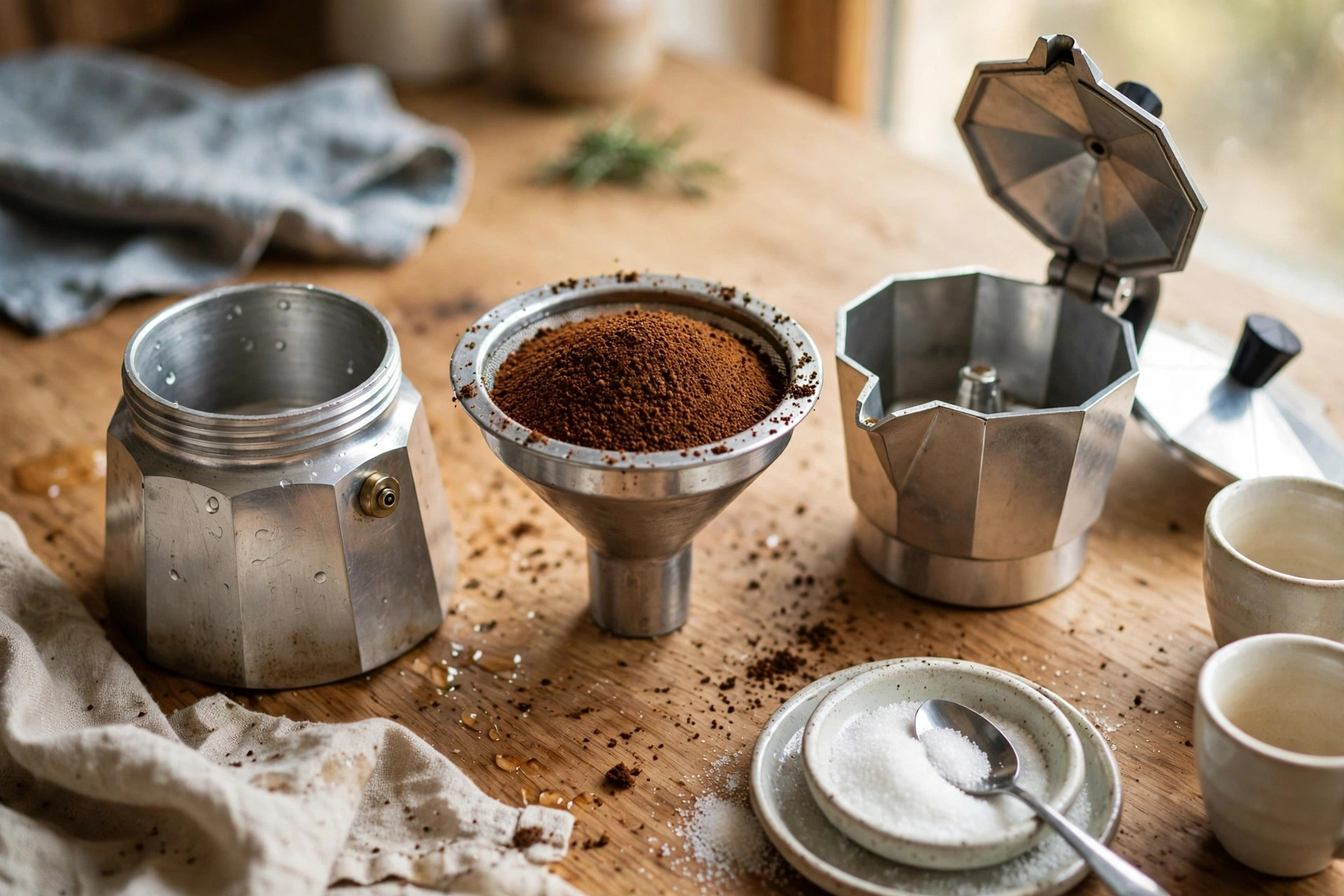
Set the funnel basket into the base and fill it generously, then level with a finger or the back of a spoon. The basket should be full — a half-empty one brews unevenly because the steam takes shortcuts through the loose bed. Level, untamped, and nothing more.
Now the step people skip: wipe the rim clean. Grounds on the funnel edge or gasket keep the pot from sealing, and a bad seal means steam or coffee escapes sideways. Brush the rim with your finger, then hold the hot base with a towel and screw the top on firmly — not violently, but firm.
Low Heat, Lid Open
Set the pot over low to medium heat with the lid open. A low flame brews gently rather than blasting it — you want a slow, steady rise of dark, honey-like coffee in the top chamber, not a violent fountain. High heat is the fastest route to bitterness: it scorches the grounds and pushes the brew too hard and too fast.
The lid stays open so you can watch. The whole brew takes four to six minutes depending on your pot and your stove, and those minutes are the entire show.
Listening for the Gurgle: Knowing When to Pull
You’ll hear the coffee before you see it: a soft bubbling as the first dark stream rises. Let it flow — the first coffee out is the richest and most concentrated part of the brew, and what follows gets progressively thinner.
The moment the stream turns pale and honey-colored and starts sputtering, it’s over — that’s steam blowing through the nearly-dry grounds, and letting it run extracts the bitter tail you don’t want. Pull the pot off the heat and run the base under cold water, or wrap it in a cold wet towel, to kill the brew dead. This one habit is the difference between a sweet, chocolatey cup and a harsh one. Stir the coffee in the top chamber before pouring, since the first and last parts out taste quite different.
The Neapolitan Cremina Trick
To brew like Naples, add a finishing step most guides skip: while the pot brews, put a teaspoon of sugar per cup into a small container. The moment the first coffee appears, pull the pot off the heat and pour just a splash — the darkest, strongest part — onto the sugar, then whip the two together until they form a thick slurry like loose peanut butter. Pour the rest of the brewed coffee over it and stir.
This is the cremina, a hand-made foam built with sugar instead of pressure. It won’t match a machine shot’s crema, but the sugar-whipped surface gives every cup a silky, caramel-topped richness. Be conservative with the coffee you add at first — too little is easy to fix, too much thins the whole thing past saving.
Troubleshooting: Bitter, Weak, Sputtering, Stuck
Bitter and burnt usually means the heat was too high, the brew ran too long, or the grind was too fine — start with hot water, keep the heat low, and pull at the first gurgle. Weak or sour points the other way: grind coarser than needed, an under-filled basket, or water that started too cool. Coffee gushing out of the top means the flame was too aggressive; lower it the moment coffee appears.
If little or no coffee comes out, something is blocking the path: the grind is too fine, the grounds were tamped, or the filter screen is clogged with old oils. Steam leaking around the middle is almost always grounds on the rim or a worn gasket — wipe the rim, and replace the gasket if the pot has a year on it. A metallic taste from a new aluminum pot is normal; brew and discard two or three batches to season it.
Care and Cleaning: No Soap, Please
After each use, let the pot cool, knock out the grounds — don’t bang the funnel on the sink, it dents easily and a dented funnel ruins the seal — and rinse every part in warm water. On aluminum pots, skip the soap and the dishwasher; both dull and discolor the metal. Dry everything thoroughly and store the pot unscrewed with the lid up, so moisture can’t collect and the gasket doesn’t get squashed.
Hard water will scale the chamber, so run a plain brew with a little white vinegar or citric acid every month or two — no coffee — followed by a rinse brew. The gasket and filter screen are wear items; replace them yearly, or whenever the pot leaks despite a clean rim. And never heat the pot without water in it.
Serving It the Italian Way
Pour into small ceramic cups and drink it promptly — a moka pot brew cools fast and loses its best aromatics within minutes. Warmed cups, swirled in hot water just before brewing, keep it hot longer. In Italy this is the coffee you drink standing at the kitchen counter, maybe with a splash of steamed milk, before getting on with the day.
For another route to strong coffee without a machine, our AeroPress tutorial covers a different instrument with the same idea. But for a device that has sat in Italian kitchens for ninety years and costs less than a week of café lattes, the moka pot is hard to argue with.
2 Comments