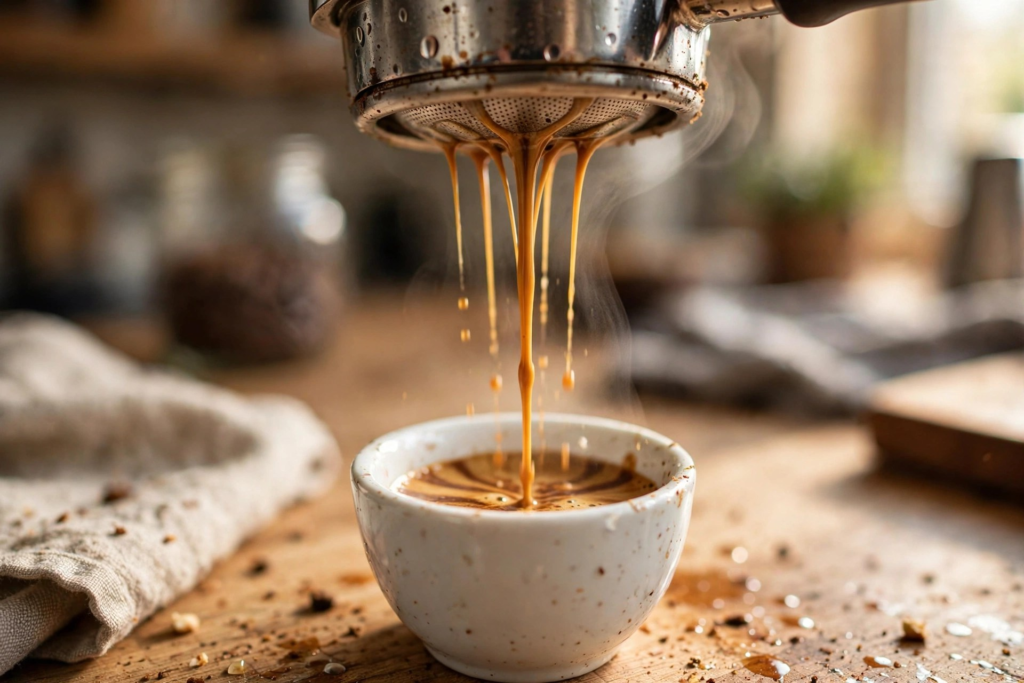
There comes a point in every home barista’s journey where the shots stop improving no matter how carefully you dial in the grinder. You’ve changed the grind, weighed the dose, tamped with conviction — and still, some cups sing while others taste like a lemon rolled in ash. The problem is that with a normal portafilter, you’re diagnosing in the dark. All you see is coffee coming out of two metal spouts, and spouts are excellent at hiding sins.
The naked portafilter — also called bottomless — takes the spouts away. The basket hangs exposed, and for the first time you get to watch exactly how water moves through your coffee puck. It is the single best diagnostic tool in espresso, and it is not even close.
What “Naked” Actually Means
A bottomless portafilter is simply a portafilter with the bottom cut away, so the underside of the filter basket is fully visible while the shot pulls. Nothing else changes. Same basket, same coffee, same machine. But instead of the espresso collecting inside the spouts and streaming out of two tips, it drips and streams directly from the basket into the cup.
The first time you pull a shot with one, expect mild horror. A shot that looked perfectly respectable through the spouts will reveal uneven drops, a stream leaning to one side, maybe a sudden sideways jet decorating your drip tray. This is the tool doing its job: every mistake in your puck prep — unbroken clumps, a tilted tamp, a light dose — plays out live, in dripping brown detail.
The First Ten Seconds Are Everything
Watch the basket from the moment the pump starts. At first nothing happens — water is soaking into the puck. Then drops form across the metal. In a well-prepared puck they appear more or less everywhere at once, then gather and merge into a single, centered stream.
A few separate drips at the start are fine — they should flow toward each other and merge into one centered stream. If they show up late in one area, or only on one side, or if three or four separate streams persist halfway through the shot and never join, your puck has density problems and the cup will taste hollow and muddled. Once extraction is underway there’s nothing left to adjust; the diagnosis is for the next shot.
Channeling: Sprays, Spurts, and Sideways Streams
Channeling is the big one: water carving a shortcut through a crack, a clump, or a low-density pocket instead of flowing through the whole bed. The coffee in the channel over-extracts while the surrounding grounds barely get touched, and the cup tastes sour and bitter at the same time — the classic confusing shot, bad in two directions.
Through a naked portafilter, channeling is unmistakable. You’ll see thin jets of espresso spraying out sideways at odd angles — spurters — or one thick stream blasting off to the side while the rest of the basket barely drips. Sometimes the flow simply leans hard to one edge, like the shot is trying to escape.
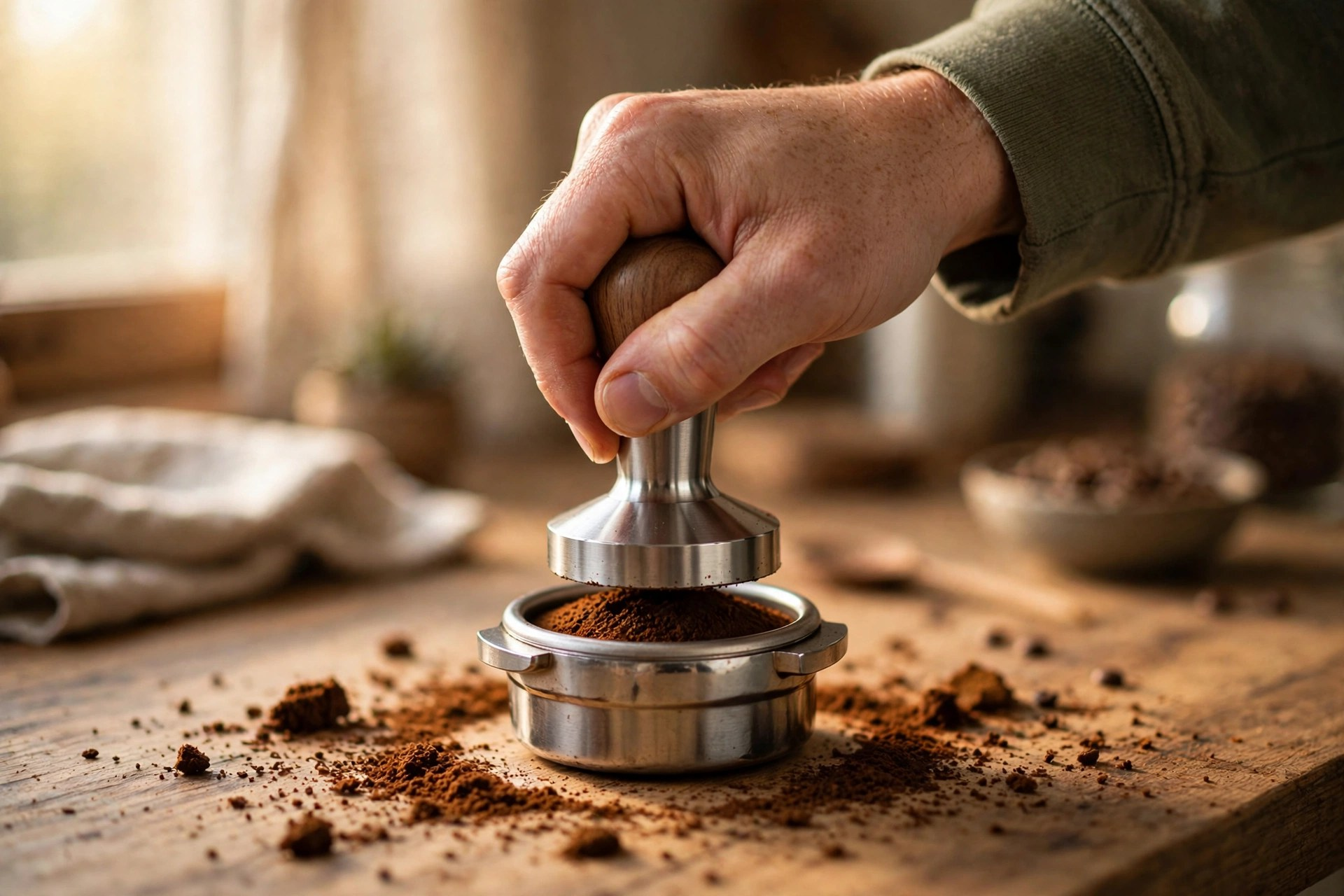
The fixes live entirely in puck preparation, and distribution is the main culprit: grounds must be level and clump-free before the tamper touches them. Stir them with a fine needle tool or even a straightened paper clip, then tamp straight down, level and firm — our espresso tamping tutorial covers the motion in detail. Tamp once, with conviction, and skip the habitual tap on the portafilter afterward: that tap can crack the puck right before the brew, creating exactly the channel you were preventing.
Overdosing causes it too. Too much coffee in the basket and the puck presses against the shower screen, the bed fractures under pressure, and the water never had an even start. If you’re spilling grounds when you lock in, back the dose down.
The Donut: When the Edges Run and the Center Sleeps
There’s a subtler pattern: sometimes the espresso beads up around the outer edge of the basket while the center stays dry — the donut — which usually means the center of your puck is packed denser than the sides.
It’s a distribution artifact: how you pour and level the grounds shapes where the dense and loose zones end up. If you see the donut regularly, a more careful leveling pass — not a harder tamp — is what erases it.
Blonding: The Pale Truth About the End of the Shot
Espresso starts dark and syrupy and gets paler as it runs. That shift — blonding — is the visual cue for when to end the shot. As the soluble flavors wash out of the puck, what follows is thin, watery, and increasingly bitter. The standard guidance of a two-ounce double running roughly twenty-five to thirty seconds exists precisely because most coffees start to blonde right around then.
What you’re watching for is timing. A little blonding near the end is the shot telling you it’s done. But if the stream turns pale and thin ten seconds in and the whole pull finishes in a hurry, something is wrong: grind too coarse, dose too low, or channeling so severe that water is blowing straight through. That cup will be weak, sour, and watery all at once.
Plenty of baristas diagnose with the naked portafilter and pull their daily shots with the spouted one, which some find easier for reading blonding — use whichever tells you the truth.
Tiger Striping and the God Shot
Not everything you see is a problem. When a shot is extracting well, the stream often shows alternating darker and lighter bands — tiger striping — which is generally a good sign as long as the stripes are mostly medium to dark and the shot runs at a sane pace. It’s visual texture from different parts of the puck extracting at slightly different rates, and it correlates with shots that taste full and sweet.
And then there’s the shot people photograph: dark honey-colored drips gathering slowly and evenly, merging into a thick, centered column that pours like warm honey, topped with persistent hazelnut-brown crema. Nobody agrees on the perfect recipe, but everyone recognizes the look — and it happens because your prep was repeatable enough that the water had no choice but to behave.
The Choker: When Nothing Moves
At the other extreme, the basket may weep dark, reluctant drops while the timer climbs past forty seconds — a choked shot from a grind too fine or a basket with too much coffee. The cup will be bitter and heavy, with none of the brightness that makes espresso worth the trouble.
A choke is actually the easiest problem to solve: grind a notch coarser or drop the dose a gram. It takes far less fiddling than channeling, which is why experienced baristas would rather adjust around a choker than chase a sprayer.
Fixing What You See, Not What You Guess
The real value of the naked portafilter isn’t the diagnosis — it’s the tight feedback loop. Change one variable, watch the next shot, and you learn in minutes what used to take weeks of tasting-and-guessing. Work through problems in this order:
First, the grind: a choker needs coarser, a gusher needs finer. Second, the dose — weigh it and match it to the basket’s capacity. Third, distribution: level the grounds and break up the clumps. Fourth, the tamp: level, straight down, one motion, no tap afterward. Fifth, the beans — stale coffee extracts unevenly no matter how careful you are, so grind fresh seconds before brewing.
Change one thing at a time. The naked portafilter punishes shotgun debugging because it shows you everything; resist the temptation to fix everything at once and you’ll actually learn what each change did.
Taste Gets the Last Word
Here’s the honest caveat: a beautiful-looking shot can taste mediocre, and an ugly one can occasionally taste wonderful. The visual is a map, not the territory. Let the naked portafilter guide your technique, then let the cup confirm — our guide to pulling the perfect shot covers what the finished product should taste like.
But once your eyes and your palate start agreeing, the improvement curve steepens fast. You’ll know what a level tamp looks like as it extracts, what fresh beans look like when they bloom under pressure, and what a puck that’s packed wrong looks like before you’ve wasted the milk. That knowledge never leaves you, spouts or no spouts.
Finding One That Fits Your Machine
Portafilter sizes are frustratingly non-standard — 58mm for E61 group heads, 54mm for Breville/Sage, 51mm for DeLonghi, and plenty of other oddballs — and even same-diameter portafilters don’t always fit across brands. Before buying, check with a parts supplier that the bottomless matches your machine exactly, not approximately. A portafilter that almost locks in will leak, and a leak tells you nothing about your extraction.
Treat the first dozen shots as training, not drinking — you’re learning to read a new instrument. By the end of the bag, one glance at the basket mid-shot will tell you whether to brace for joy or start thinking about the next grind setting.