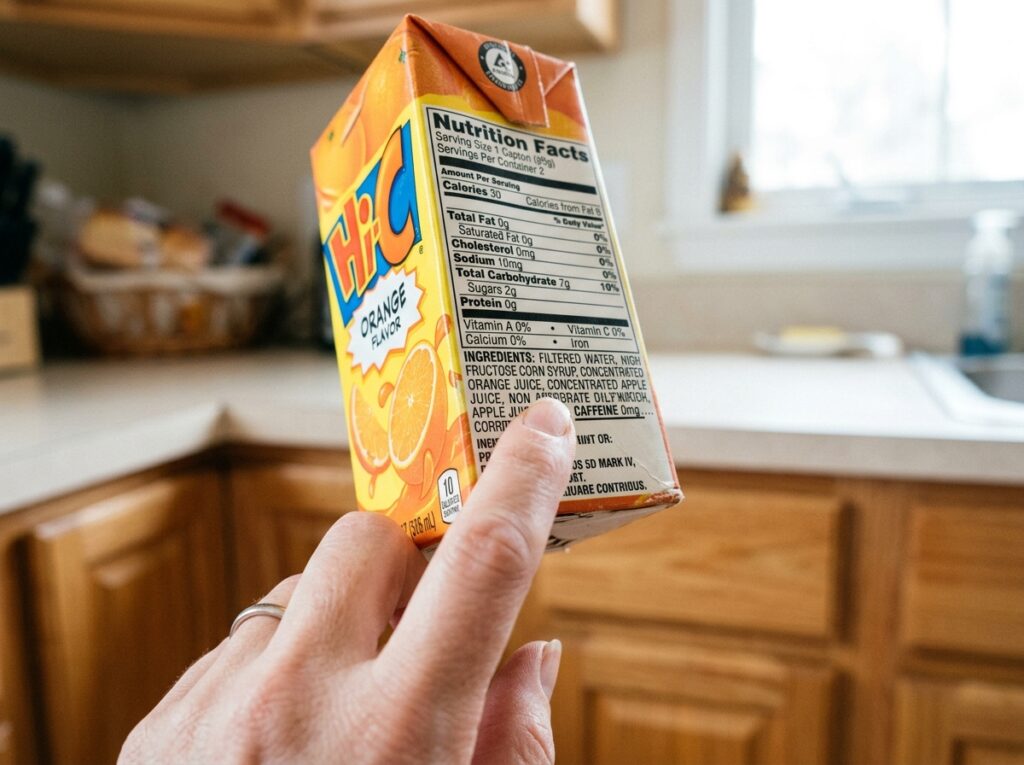
You’re standing in front of a McDonald’s fountain machine, your kid tugging at your sleeve asking for a Hi-C Orange Lavaburst. Or maybe you’re grabbing one yourself because you’re trying to cut back on caffeine and you just need something fruity and simple. Either way, a question pops into your head — does Hi-C have caffeine?
It’s a fair question. With caffeine sneaking into so many drinks these days — from sodas and teas to even some flavored waters — you can’t always tell what’s caffeinated just by looking at the label. And if you’re watching your caffeine intake for health reasons, or you’re picking a drink for a child, you want a clear answer before you take that first sip.
So let’s sort this out, once and for all.
The Quick Answer: Is Hi-C Caffeine Free?
Yes. Hi-C is completely caffeine free. Every flavor, every variety, every box and every fountain pour — zero caffeine. Not a trace.
Hi-C is a fruit-flavored drink, not a tea, coffee, or cola-based beverage. It’s never been made with any caffeine-containing ingredient, and Coca-Cola (the company behind Hi-C) confirms that none of its Hi-C products contain caffeine.
So if your main concern was caffeine, you can relax. Hi-C won’t give you a buzz, keep you up at night, or make your child bouncy from stimulants. That energy you see after they drink one? That’s probably the sugar talking — but we’ll get to that shortly.
If you’re curious about other popular drinks and whether they’re hiding caffeine, you might want to check out whether Fanta has caffeine or the caffeine situation with Sprite. Spoiler: most fruit-flavored sodas and drinks skip the caffeine entirely.
What Exactly Is Hi-C? A Quick Background
Hi-C has been around since 1947, which makes it older than most people reading this article. Niles Foster, a bottler from Texas, created it as a vitamin C-enriched orange drink. The name “Hi-C” literally comes from the high vitamin C content — pretty straightforward branding for the 1940s.
Coca-Cola acquired the brand in 1960, and since then Hi-C has become a staple in juice boxes, vending machines, and fast-food restaurants across America. For an entire generation, Hi-C Orange Lavaburst (originally called Hi-C Orange) at McDonald’s was practically a childhood rite of passage. When McDonald’s briefly removed it in 2017, there was a genuine public outcry. They brought it back in 2021, and all was right with the world again.
But here’s something people often get wrong: Hi-C isn’t juice. It’s a “fruit drink.” That distinction matters, and it has everything to do with the ingredients.
Hi-C Ingredients: What’s Actually Inside?
Let’s look at what goes into a typical Hi-C drink. The exact ingredients vary slightly between flavors, but the Hi-C Orange Lavaburst (the most popular variety) gives us a good picture.
Hi-C Orange Lavaburst ingredients typically include: high fructose corn syrup, water, concentrated juices (orange, apple, pear), citric acid, ascorbic acid (vitamin C), natural flavors, and beta-carotene for color.
A few things stand out here.
It’s mostly water and sweetener. High fructose corn syrup sits near the top of the ingredient list, which tells you sugar is doing a lot of the heavy lifting in the flavor department. The actual fruit juice content is relatively small — usually around 2% or so, depending on the flavor. That’s why it’s legally labeled a “fruit drink” rather than a “fruit juice.”
There’s added vitamin C. Ascorbic acid is listed in Hi-C ingredients across all flavors. This is the whole reason the brand exists — that “Hi-C” vitamin C angle. One serving does give you a decent percentage of your daily recommended vitamin C intake, though you’d obviously get more nutritional value from eating an actual orange.
No caffeine-containing ingredient appears anywhere on the list. You won’t find tea extract, guarana, coffee, kola nut, or any of the other common caffeine sources that show up in energy drinks or colas. The Hi-C caffeine content is genuinely zero, and the ingredients confirm it.
For comparison, if you look at what goes into a Monster Energy drink, you’ll see a very different ingredient panel — one loaded with caffeine, taurine, and various stimulants. Hi-C is on the complete opposite end of that spectrum.
Hi-C Sugar Content: The Thing You Should Actually Worry About
Here’s where things get a little less cheerful. While Hi-C is caffeine free, it’s far from a “healthy” drink choice. The Hi-C sugar content is pretty significant and worth understanding — especially if you’re giving it to kids regularly.
A standard 6.75 oz (200 mL) Hi-C juice box contains about 25 grams of sugar. That’s roughly 6 teaspoons of sugar in one small box. A 12 oz serving from a fountain machine? You’re looking at around 40-44 grams of sugar, which rivals a can of regular Coca-Cola.
To put this in context, the American Heart Association recommends that children ages 2-18 consume less than 25 grams of added sugar per day. One juice box basically hits that entire daily limit. For adults, the recommendation is under 36 grams for men and 25 grams for women. A fountain-sized Hi-C blows past those numbers easily.
Quick fact: The sugar in Hi-C primarily comes from high fructose corn syrup, not from the fruit juice itself. The small percentage of actual fruit juice in the drink contributes minimal natural sugar compared to the added sweetener.
So while you don’t need to worry about caffeine in Hi-C, the sugar content is something to keep on your radar — especially for daily consumption. An occasional treat? Sure, no big deal. But swapping it in as a regular water alternative isn’t a great move nutritionally.
Hi-C Flavors: Are ANY of Them Caffeinated?
You might be thinking, “Okay, Orange Lavaburst is caffeine free, but what about the other flavors?” Fair question. Let’s cover this so there’s zero doubt.
Hi-C has offered various flavors over the years, including Orange Lavaburst, Flashin’ Fruit Punch, Poppin’ Lemonade, Blazin’ Blueberry, and others that rotate in and out of the lineup. None of them contain caffeine. Not a single one.
The entire Hi-C product line is built around fruit flavors. There’s no “Hi-C Energy” variant or tea-infused version hiding on a shelf somewhere. The brand has stayed in its lane as a fruity, kid-friendly, caffeine-free drink since the beginning.
This actually makes sense from a branding perspective. Hi-C has always positioned itself as a drink for children and families. Adding caffeine would undermine that identity completely and likely cause regulatory headaches around marketing to kids.
Why Do People Ask If Hi-C Has Caffeine?
This question comes up more often than you’d expect, and there are a few good reasons for it.
Caffeine is everywhere now. Twenty years ago, you mainly found caffeine in coffee, tea, and colas. Now it shows up in sparkling water, gum, protein bars, and even some brands of bottled water. That reality makes people second-guess drinks they would have assumed were caffeine-free in the past.
The McDonald’s connection adds confusion. Many people primarily know Hi-C from McDonald’s, where it sits in the same fountain machine as Coca-Cola, Dr Pepper, and sweet tea — all of which contain caffeine. When your drink comes from the same machine as caffeinated options, it’s natural to wonder if yours has caffeine too. But the fountain dispenser doesn’t add caffeine. Each drink flows from its own separate syrup supply.
Color and sweetness create assumptions. Hi-C is bright, sweet, and bold-tasting. Some people subconsciously associate that intensity with energy drinks or caffeinated sodas. Your brain makes a connection that isn’t actually there.
There’s also just a general trend of parents being more cautious about what their kids consume, which is a good thing. Asking questions like “does Hi-C have caffeine” shows you’re paying attention. Asking is always better than assuming.
Hi-C vs. Other Popular Drinks: A Caffeine Comparison
Sometimes the best way to understand where a drink falls is to see it next to its peers. Here’s how Hi-C stacks up against other beverages people commonly wonder about.
Hi-C has 0 mg of caffeine per serving. Compare that to Coca-Cola with about 34 mg per 12 oz, Pepsi at roughly 37-38 mg per 12 oz, or sweet tea which can pack 40-50 mg depending on how it’s brewed. Even drinks that sound innocent, like some Starbucks Refreshers, contain green coffee extract with caffeine.
On the caffeine-free side, Hi-C sits comfortably alongside Sprite, Fanta, root beer (most root beer brands are caffeine free too), and regular lemonade. If you’re building a list of safe, caffeine-free drink options — for yourself or your family — Hi-C belongs on that list.
Where Hi-C doesn’t win is the sugar and nutrition comparison. A glass of water, unsweetened tea, or actual 100% fruit juice will always be a healthier choice. But when the question is specifically about caffeine? Hi-C is clean.
Is Hi-C a Good Choice for Kids?
This is really the heart of why most people are Googling “does Hi-C have caffeine” in the first place. They’re parents trying to make a decent choice at the drive-through or in the grocery store juice box aisle.
From a caffeine standpoint, yes — Hi-C is perfectly fine for kids. Zero caffeine means no stimulant effect, no sleep disruption, and no jitteriness. The American Academy of Pediatrics recommends that children under 12 avoid caffeine entirely, and Hi-C aligns with that guidance.
From a nutritional standpoint, it’s an “occasional” drink. The high sugar content means it shouldn’t be a daily staple. The small amount of real fruit juice means it’s not delivering much actual nutrition beyond added vitamin C. And the high fructose corn syrup base is something many parents prefer to limit.
A practical approach? Treat Hi-C like you’d treat any sweet treat — it’s fine for a birthday party, a restaurant meal, or a special occasion. Pair it with water the rest of the time, and you don’t need to stress about it.
Pro Tip: If your kid loves the fruity taste of Hi-C but you want something with less sugar, try diluting 100% fruit juice with water (half and half works great). You get the flavor without the sugar overload, and you’re getting real fruit nutrition instead of added sweeteners.
What About Hi-C at McDonald’s Specifically?
Since McDonald’s is where most Americans encounter Hi-C, this deserves its own section. The Hi-C Orange Lavaburst available at McDonald’s fountain machines is the same formulation as the boxed/retail version. It contains zero caffeine.
One thing to watch at McDonald’s, though, is portion size. A small fountain drink at McDonald’s is 16 oz, a medium is 21 oz, and a large is 30 oz. That large Hi-C could easily contain 70+ grams of sugar. For a child, even the small size is a significant sugar load.
An interesting bit of history: when McDonald’s replaced Hi-C Orange Lavaburst with Sprite TropicBerry in 2017, the outcry was so strong that petitions circulated online demanding its return. McDonald’s brought it back in 2021, confirming what many already knew — Hi-C has a genuinely passionate fanbase. That kind of loyalty is rare for a fruit drink, but it tells you how deeply this beverage is woven into people’s memories and routines.
Can You Drink Hi-C Before Bed?
Absolutely. Since Hi-C is caffeine free, there’s nothing in it that will interfere with your sleep from a stimulant perspective. You won’t experience the wakefulness that comes from drinking a cola or an energy drink that lasts hours in your system.
That said, drinking anything sugary right before bed isn’t ideal for your teeth or your blood sugar levels. And the acidity from citric acid can contribute to acid reflux if you lie down right after drinking it. So while caffeine isn’t a concern, you might want to finish your Hi-C at least 30 minutes before hitting the pillow.
FAQ
Does Hi-C Orange Lavaburst have caffeine?
No. Hi-C Orange Lavaburst — whether from McDonald’s fountain, a juice box, or any other format — contains absolutely zero caffeine. It’s a fruit-flavored drink made with water, high fructose corn syrup, and a small amount of fruit juice. No caffeine-containing ingredients are used in any Hi-C product.
Is Hi-C healthier than soda?
That depends on how you define “healthier.” Hi-C has no caffeine and includes some added vitamin C, which gives it a slight edge over caffeinated colas. But the sugar content is nearly identical — a 12 oz Hi-C has roughly the same amount of sugar as a 12 oz Coca-Cola (around 40+ grams). Neither drink is a healthy everyday beverage. If you’re choosing between the two for a child, Hi-C wins on the caffeine front, but neither wins nutritionally.
How much sugar is in a Hi-C juice box?
A standard 6.75 oz Hi-C juice box contains approximately 25 grams of sugar, which equals about 6 teaspoons. That’s already at the American Heart Association’s daily recommended limit for children. The sugar comes primarily from high fructose corn syrup, not from the fruit juice content (which is typically around 2%).
Is Hi-C actually juice?
No. Hi-C is classified as a “fruit drink,” not a “fruit juice.” The difference matters. To be labeled “juice” in the United States, a product must contain 100% fruit juice. Hi-C contains only a small percentage of real juice (around 2%), with the rest being water, sweeteners, and flavoring. The FDA requires this distinction on the packaging.
Can diabetics drink Hi-C?
Because Hi-C is high in sugar and has a high glycemic impact, it’s generally not recommended for people managing diabetes. A single serving can cause a significant blood sugar spike. If you have diabetes or pre-diabetes, talk to your healthcare provider about which beverages fit your dietary plan. Water, unsweetened tea, and sugar-free drink options are typically safer choices.
Final Thoughts
The answer to “does Hi-C have caffeine” is refreshingly simple: no, it doesn’t. Not a milligram, not in any flavor, not from any source. It’s one of the easiest caffeine-free picks you can make, whether you’re ordering at McDonald’s, grabbing juice boxes for the kids’ lunchboxes, or just looking for a fruity drink that won’t mess with your sleep.
Where Hi-C does deserve a second look is in the sugar department. With 25 grams in a small juice box and 40+ grams in a fountain serving, it’s not the kind of drink you want to lean on daily. Think of it as an occasional treat, not a hydration strategy.
If you’re on a broader mission to understand which drinks have caffeine and which don’t, you’ll find that most fruit-flavored beverages — including Twisted Tea (which surprises people) — are either caffeine free or very low in caffeine. The biggest caffeine culprits remain coffee, energy drinks, certain teas, and dark colas.
So go ahead and enjoy your Hi-C without the caffeine worry. Just maybe grab a water to go with it. 🍊