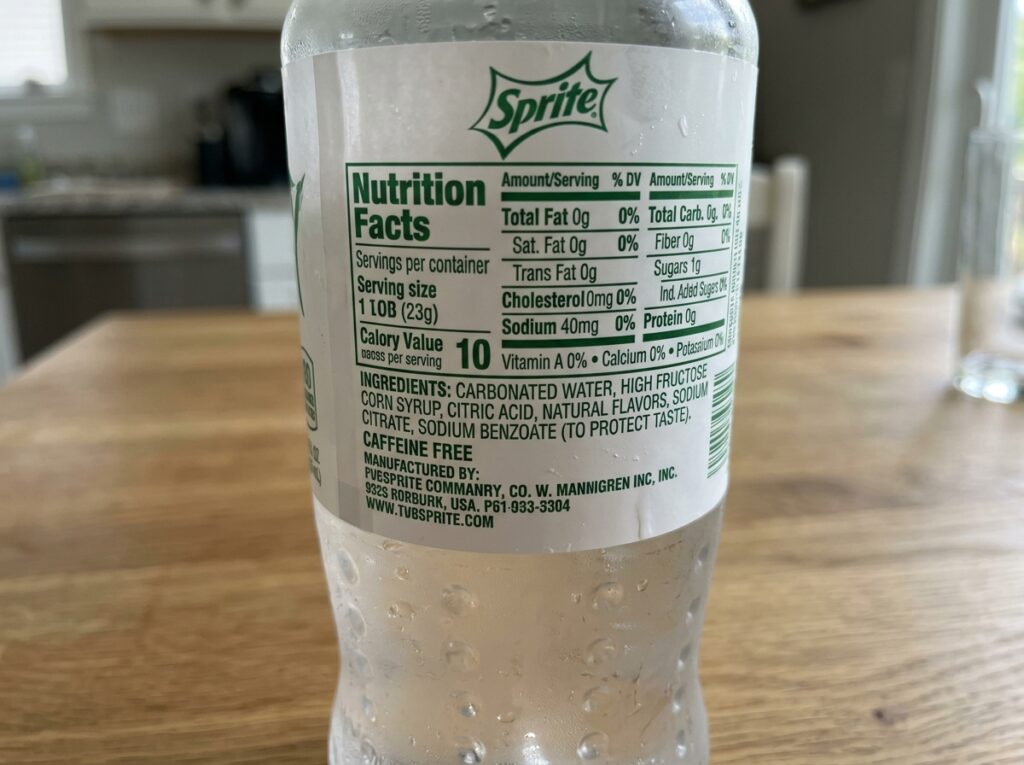
You’re standing in front of a vending machine late at night, debating between a Coke and a Sprite. You want something fizzy, something refreshing — but you also don’t want to be staring at the ceiling at 2 AM because of caffeine. So, does Sprite have caffeine?
No. Sprite is completely caffeine free. It always has been, and The Coca-Cola Company has never added caffeine to its classic Sprite formula. Not even a trace amount.
That’s the short answer. But if you’re curious about why Sprite doesn’t contain caffeine, what’s actually inside that green can, how it stacks up against other sodas, and which drinks to pick (or avoid) if you’re watching your caffeine intake — stick around. There’s more to this than just a yes or no.
What’s Actually Inside Sprite? A Look at the Ingredients
Before we go any further, let’s look at what you’re actually drinking. The Sprite ingredients list is surprisingly straightforward. A standard 12 oz (355 ml) can of Sprite in the United States contains:
- Carbonated water
- High fructose corn syrup (or sugar, depending on your region)
- Citric acid
- Natural flavors
- Sodium citrate
- Sodium benzoate (preservative)
That’s it. No caffeine. No mysterious stimulants hiding behind the label. The flavor profile comes from lemon and lime — hence why it’s categorized as a lemon lime soda. Caffeine is a bitter compound, and it simply doesn’t belong in a drink designed to taste crisp and citrusy.
Quick Fact: Caffeine naturally occurs in ingredients like kola nuts, tea leaves, and coffee beans. Since Sprite’s flavor base is citrus — not cola — there’s no natural reason for caffeine to be part of the recipe, and Coca-Cola doesn’t add it artificially either.
Now, you might be wondering about Sprite’s nutritional numbers. A regular 12 oz can packs about 140 calories and 38 grams of sugar. Zero caffeine, yes — but it’s not exactly a health drink. If sugar content is a concern for you, Sprite Zero Sugar is the alternative. It swaps out the sugar for artificial sweeteners (aspartame and acesulfame potassium) while keeping the same caffeine-free promise.
Why Doesn’t Sprite Have Caffeine?
This is a question people don’t ask often enough. Most of us just accept that some sodas have caffeine and some don’t — but there’s actually logic behind it.
It comes down to flavor category. Cola-flavored drinks — like Coca-Cola, Pepsi, and their many variations — traditionally contain caffeine. Historically, colas were made with kola nut extract, which naturally contains caffeine. Even though most modern colas use synthetic caffeine now, the tradition stuck. People expect their cola to have that slight bitter kick caffeine provides.
Lemon lime sodas like Sprite, 7UP, and Sierra Mist (now called Starry) were designed as a different experience altogether. They’re meant to be clean, light, and citrus-forward. Adding caffeine would change the taste profile and, frankly, would go against the whole point of the drink.
There’s also a marketing angle here. Sprite has consistently positioned itself as a refreshing, anytime beverage. Parents give it to kids. People drink it when they’re feeling unwell (the carbonation can help settle a stomach). Doctors sometimes suggest clear sodas for mild nausea. Caffeine would complicate all of that.
Pro Tip: If you’re someone who avoids caffeine due to anxiety, heart conditions, pregnancy, or simply because it messes with your sleep — Sprite is one of the safer mainstream soda choices. But always check the label of any flavored or limited-edition variety, just to be safe.
Sprite vs. Other Sodas: Caffeine Comparison
This is where things get interesting. People often assume that all sodas are loaded with caffeine, but the reality is more nuanced. Some are packed with it, and some — like Sprite — have absolutely none.
Here’s how Sprite’s caffeine content (0 mg) compares to other popular drinks per 12 oz serving:
Coca-Cola Classic contains about 34 mg of caffeine. Pepsi sits at roughly 38 mg — you can read more about caffeine in Pepsi if you’re curious about how it compares to coffee and energy drinks. Diet Coke actually has more caffeine than regular Coke, at about 46 mg per can. Dr Pepper comes in around 41 mg.
Then you’ve got the caffeine-free soda club. Sprite sits here alongside 7UP (0 mg), Fanta (0 mg), root beer varieties (mostly 0 mg, with a few exceptions), and Sierra Mist/Starry (0 mg). If you want to know more about Fanta specifically, here’s a detailed look at whether Fanta has caffeine. And for root beer fans, the caffeine in root beer story has a couple of surprises.
And then there’s a completely different league — energy drinks. A single can of Monster Energy contains about 160 mg of caffeine. That’s nearly five times what you’d get from a Coke. If you’ve ever wondered what that much caffeine does to your body, take a look at the Monster Energy caffeine content breakdown.
The takeaway? If you’re specifically trying to avoid caffeine, lemon lime sodas and fruit-flavored sodas are generally your safest bet. Cola-flavored drinks almost always contain some caffeine unless the label explicitly says “caffeine-free.”
What About Sprite Zero Sugar and Other Sprite Varieties?
Coca-Cola has expanded the Sprite lineup over the years, and you might be wondering if any of these spin-offs sneak caffeine into the formula.
Sprite Zero Sugar — caffeine free. It replaces sugar with artificial sweeteners but keeps the same no-caffeine formula. You get fewer than 5 calories per can.
Sprite Lymonade (and Sprite Lymonade Legacy) — also caffeine free. These blended Sprite with lemonade flavors but didn’t add caffeine.
Sprite Ginger — caffeine free. This one added a ginger flavor twist, but still no stimulant.
Sprite Tropical Mix and other limited-edition flavors — every Sprite variant released so far has been caffeine free. The brand has stayed remarkably consistent on this point.
The general rule? If it says “Sprite” on the can, you can expect zero caffeine. Coca-Cola hasn’t deviated from this across any market or flavor extension. That said, I always recommend a quick glance at the nutrition label, especially with limited-edition or region-specific releases. Companies do change formulas occasionally, and it’s better to spend five seconds reading than to make assumptions.
Who Should Care About Caffeine-Free Drinks?
You might think this is a trivial question — it’s just soda, right? But for certain groups of people, knowing the Sprite caffeine content (or lack thereof) is genuinely important.
Pregnant women are typically advised to limit caffeine intake to 200 mg per day or less, according to guidelines from the American College of Obstetricians and Gynecologists. A caffeine-free soda removes one variable from that equation entirely.
Children and teens are another big group. The American Academy of Pediatrics recommends that kids under 12 avoid caffeine altogether, and teens should keep it under 100 mg per day. Sprite is often a go-to at birthday parties and family events because parents know it won’t wire their kids up the way a Coca-Cola or — God forbid — an energy drink might.
People with anxiety disorders or heart conditions sometimes find that caffeine worsens their symptoms. Even moderate amounts can trigger palpitations or heighten anxious feelings in sensitive individuals. Choosing a caffeine-free drink isn’t about being overly cautious — it’s about knowing your own body.
Late-night soda drinkers — if you’re someone who likes to sip on something fizzy while watching TV at night, Sprite won’t interfere with your sleep the way a caffeinated cola or a can of Red Bull would.
And honestly, even if you don’t fall into any of these categories, it’s just smart to know what’s in the drinks you consume regularly. Awareness isn’t paranoia — it’s basic self-care.
Does Caffeine-Free Mean “Healthy”?
This is a point worth addressing because people sometimes make a mental leap that goes like this: “Sprite has no caffeine, so it must be better for me than Coke.”
Not exactly. While Sprite is caffeine free, it still contains a significant amount of sugar — 38 grams in a regular 12 oz can. That’s about 9.5 teaspoons. The American Heart Association recommends no more than 36 grams of added sugar per day for men and 25 grams for women. One can of Sprite, and you’ve already hit or exceeded that limit.
Caffeine-free doesn’t automatically mean a drink is good for you. It just means it won’t affect you the way caffeine does. You’re still dealing with sugar, acidity (citric acid can affect tooth enamel over time), and empty calories.
If you want a lower-sugar option, Sprite Zero Sugar gives you the same taste without the calorie load. But even diet sodas come with their own debates — artificial sweeteners have been scrutinized for years, and the research is ongoing.
The balanced take? Sprite is a perfectly fine occasional drink. It won’t give you a caffeine jolt, and it won’t keep you up at night. But treating it as a “healthy” choice just because it lacks caffeine would be a stretch. Water is still the best thing you can drink. You already knew that, though.
Why Do People Think Sprite Has Caffeine?
It’s a surprisingly common confusion. Here’s why it happens.
Most people mentally group all sodas together. They know Coke has caffeine, Pepsi has caffeine, and Mountain Dew has caffeine (quite a lot, actually — about 54 mg per 12 oz), so they assume every carbonated soft drink follows the same formula. It’s a reasonable assumption, but it’s wrong.
The confusion also comes from the energy you feel after drinking soda. A can of Sprite has 38 grams of sugar, and that sugar hits your bloodstream pretty fast. You might experience a brief sugar rush — a quick spike in energy followed by a crash. That feeling can mimic a mild caffeine buzz, especially if you’re not paying close attention to the difference. But sugar-driven energy and caffeine-driven energy are two very different things biochemically.
There’s also the fact that Coca-Cola — the parent company — is so closely associated with caffeinated beverages that people sometimes transfer that association to all of its products. But Coca-Cola sells plenty of caffeine-free drinks. Fanta, Minute Maid, Dasani, Simply juices — none of these have caffeine. Sprite fits right into that non-caffeinated category.
Best Caffeine-Free Alternatives If You Love Sprite
Maybe you’re a Sprite fan looking to explore other caffeine-free options. Or maybe you’re trying to cut back on soda in general but still want something bubbly and satisfying. Here are some directions to consider.
Other caffeine-free sodas include 7UP, Starry (PepsiCo’s newer lemon lime offering), Fanta (all flavors), most root beers, cream soda varieties, and ginger ale. If you enjoy fruit-flavored sodas, you’ll find that the vast majority of them skip caffeine entirely. Even Hi-C doesn’t contain caffeine, if you’re exploring juice-soda crossover drinks.
Sparkling water has become massively popular over the past few years. Brands like LaCroix, Topo Chico, Spindrift, and Bubly give you the fizz without sugar, calories, or caffeine. If you find plain sparkling water too boring, Spindrift adds a touch of real fruit juice for flavor.
If you’re at a coffee shop and want to skip caffeine entirely, there are actually more options than you’d think. Starbucks, for example, has a solid lineup of non-coffee drinks that range from steamers to lemonades. Some of their refreshers do contain a small amount of caffeine, though, so it’s worth checking — here’s the caffeine content in Starbucks Refreshers for reference.
The point is, you’ve got options. Going caffeine-free doesn’t mean limiting yourself to water and milk (though both are great choices). There’s a whole world of beverages that won’t touch your nervous system.
Does Sprite Help When You’re Sick?
This isn’t directly about caffeine, but it comes up so often in connection with Sprite that it’s worth a quick mention.
You’ve probably heard someone say — maybe your mom, maybe your grandmother — that flat Sprite or flat ginger ale can help settle an upset stomach. There’s a grain of truth here, but it’s not magic.
The carbonation in Sprite can sometimes help relieve feelings of nausea temporarily. The sugar provides a small amount of quick energy when you can’t keep solid food down. And because Sprite is caffeine free, it won’t dehydrate you the way a caffeinated drink might (caffeine is a mild diuretic).
That said, Sprite isn’t a medical treatment. If you’re dealing with serious nausea, vomiting, or dehydration, an oral rehydration solution (like Pedialyte) is far more effective because it replaces electrolytes — something Sprite barely does.
Did you know? The reason clear sodas are recommended over dark ones during illness isn’t about the color — it’s because lemon lime sodas tend to have simpler flavor profiles that are less likely to irritate a sensitive stomach.
Frequently Asked Questions
Is Sprite completely caffeine free?
Yes. Sprite contains zero milligrams of caffeine per serving. This applies to all sizes — whether you’re drinking a 12 oz can, a 20 oz bottle, or a 2-liter. The Coca-Cola Company confirms this on their official product pages, and it’s clearly listed on every Sprite nutrition label.
Does Sprite Zero Sugar have caffeine?
No. Sprite Zero Sugar is also completely caffeine free. The only significant difference between regular Sprite and Sprite Zero Sugar is the sweetener — Zero Sugar uses aspartame and acesulfame potassium instead of high fructose corn syrup. The caffeine content remains at 0 mg for both.
Why do some sodas have caffeine and Sprite doesn’t?
It largely comes down to the drink’s flavor base. Cola-flavored sodas traditionally use kola nut extract (or synthetic caffeine that mimics the slight bitterness kola nuts provide). Lemon lime sodas like Sprite are built around citrus flavors, and caffeine would add an unwanted bitter note that clashes with the crisp, clean taste Sprite is known for.
Can kids drink Sprite safely since it has no caffeine?
From a caffeine perspective, yes — Sprite won’t give children any caffeine-related side effects. The bigger consideration for kids is the sugar content. A 12 oz can has 38 grams of sugar, which is a lot for a child. Moderation is key, just as it would be with any sugary beverage.
Is Sprite a good mixer because it’s caffeine free?
Sprite is one of the most popular soda mixers in bars and at home parties, partly because it doesn’t add caffeine to the equation. Mixing caffeine with alcohol can mask how intoxicated you feel, which can lead to overconsumption. A caffeine-free mixer like Sprite avoids that risk. It’s commonly paired with vodka, rum, and various fruit liqueurs.
Your Quick Takeaway
Sprite has no caffeine — never has, and based on how the brand is positioned, it almost certainly never will. It’s a lemon lime soda built on citrus flavors, carbonated water, and sugar. If avoiding caffeine matters to you, Sprite is one of the most straightforward mainstream choices you can make.
Just don’t mistake “caffeine free” for “healthy.” The sugar content is real, and it adds up fast if you’re drinking multiple cans a day. Enjoy it for what it is — a crisp, refreshing soda that won’t mess with your sleep or give you the jitters. And if you’re ever unsure about any drink, flip the can around and read the label. Five seconds of reading beats five hours of wondering.